
This article has been professionally reviewed by Specialist level II Huỳnh Thị Hiên MD., in Obstetrics and Gynecology at the Department of Obstetrics and Gynecology, Vinmec Nha Trang International General Hospital.
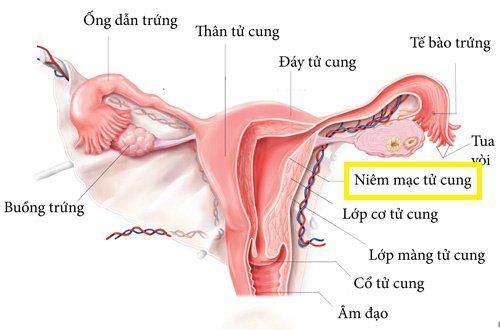
Every month, women experience menstruation, which involves vaginal bleeding lasting between 3-7 days. This phenomenon occurs due to the shedding of the uterine lining. The thickness of the endometrium varies throughout each menstrual cycle.
1. What is the menstrual cycle?
The menstrual cycle is divided into two phases:
- Pre-ovulation phase (Estrogen phase): This is the first stage of each menstrual cycle. During this phase, the endometrium is influenced by the hormone estrogen. This phase begins with menstruation and lasts until ovulation, usually about 14 days.
- Post-ovulation phase (Luteal phase or Progesterone phase): During this phase, the endometrium is influenced by the hormone progesterone. The corpus luteum, which is the remainder after ovulation, is active from the beginning of ovulation and self-degenerates until the first day of menstruation in the next cycle.

2. How does the endometrium change during the menstrual cycle?
- Phase 1: Pre-ovulation
After menstruation, the endometrial lining sheds almost completely, leaving only a thin layer of stromal tissue and a few epithelial cells at the base of the glands. Under the influence of the hormone estrogen, these components proliferate rapidly and re-epithelialize within 4-7 days. The endometrium gradually thickens, and the glands elongate along with the development of blood vessels. By the end of this stage, the endometrium thickens by about 3-4 mm. The cervical glands secrete mucus, forming a channel for sperm to move into the cervix. Consequently, women may notice increased vaginal mucus secretion around ovulation.
- Phase 2: Post-ovulation
In this stage, the endometrium is influenced not only by estrogen but also by progesterone, which causes it to thicken rapidly and secrete fluids. The glands elongate, become convoluted, and fill with secretions. Blood vessels grow and coil, providing blood supply for the developing endometrium. After ovulation, the endometrium thickens to about 6-8 mm and continues to increase until menstruation, reaching approximately 8-12 mm. This thickening supplies the endometrium with nutrients for a fertilized egg to implant and develop in the uterine cavity.
If the egg is not fertilized, the corpus luteum degenerates. The levels of estrogen and progesterone suddenly drop to very low levels. The blood supply to the endometrium stops, causing it to atrophy. At this time, the endometrial thickness is usually 12-15 mm. After a few days, the entire endometrial lining sheds.
Under the uterine contractions, the shed endometrium is expelled along with some fluid mixed with blood. This is the menstrual phenomenon, typically lasting 3-5 days. The average blood loss per cycle is 38.13 ± 24.76 ml, and menstrual blood (comprising blood and fluids) is non-clotting.
After menstruation ends, the endometrium regenerates under the influence of estrogen. The endometrium plays a crucial role in conception as it is where the fertilized egg implants. An excessively thick or thin endometrium can be detrimental to implantation and the development of the embryo.
3. How does a thick endometrium affect conception?
According to specialists, if:
Endometrial thickness is less than 6mm: It is considered a thin endometrium, which makes it difficult for implantation to occur during conception. Even if fertilization is successful, the embryo may struggle to develop and implant in the endometrium, resulting in early miscarriage or poor embryo development.
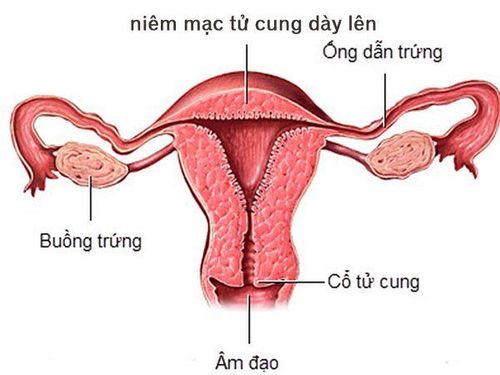
Endometrial thickness is more than 20mm: It can also hinder conception because excess estrogen in the body causes an imbalance between estrogen and progesterone. This imbalance can lead to issues such as amenorrhea (absence of menstruation), menorrhagia (excessive menstrual bleeding), polycystic ovary syndrome (PCOS), ovulation disorders, and difficulties in embryo implantation.
4. Endometrium hyperplasia
During reproductive age, a thick endometrium can cause conditions such as amenorrhea (absence of menstruation), menorrhagia (excessive menstrual bleeding) and prolonged menstrual periods. During menopause, a thick endometrium can lead to abnormal uterine bleeding. The underlying cause is an excess of estrogen in the body. This can result in endometrial pathologies, including uterine cancer.
5. How to improve endometrial thickness?
For individuals with a thick endometrium, hormone therapy is typically recommended to re-establish the balance of estrogen and progesterone in the body, which helps increase the chances of conception and normal menstruation. Treatment should be administered and guided by obstetrician-gynecologists.
Additionally, women can improve endometrial thickness through other methods such as:
- If using estrogen after menopause, it should be combined with progestin or progesterone.
- Consult a doctor to determine whether to use medications containing estrogen and progestin if experiencing irregular menstruation.
- Achieve a moderate weight loss, as this can help reduce the risk of endometrial hyperplasia.
To arrange an appointment, please call HOTLINE or make your reservation directly HERE. You may also download the MyVinmec app to schedule appointments faster and manage your reservations more conveniently.