According to the Ministry of Health's guidelines for diagnosing and treating diseases, recurrent malaria must be accurately identified to implement appropriate interventions. Additionally, it is essential to differentiate recurrent malaria from other diseases to ensure patients complete the prescribed treatment regimen with confidence.
1. Causes of recurrent malaria
In malaria-endemic areas, some patients experience recurrent malaria. Consecutive fever episodes lead people to believe that malaria is a chronic, lifelong disease that cannot be cured. In reality, malaria is not a chronic disease. Individuals with strong immunity may recover spontaneously without treatment once the parasites have completed their life cycle in the human body (provided that there is no recurrence).
There are several causes of recurrent malaria, including:
- Residual asexual forms of malaria parasites in red blood cells from a previous episode continue to develop and reach a threshold that triggers fever;
- The Plasmodium falciparum and Plasmodium vivax parasites cause an early relapse within 7 to 14 days (a phenomenon known as recrudescence);
- The Plasmodium falciparum may sometimes appear after 3 to 6 months in individuals who have previously developed immunity;
- The dormant forms of Plasmodium vivax and Plasmodium ovale in the liver become activated, develop, and release into the bloodstream, leading to late relapses after several weeks or even 9 to 10 months;
- Some cases of Plasmodium malariae infections have a latent asexual cycle in red blood cells, which later becomes activated and causes recurrent malaria.
2. Characteristics of recurrent malaria

2.1. Affected individuals
Recurrent malaria commonly occurs in patients who:
- Drug-resistant Plasmodium falciparum infection, or the failure of antimalarial drugs to completely eliminate asexual parasites in red blood cells;
- Have Plasmodium vivax infections but fail to follow treatment guidelines to eliminate the dormant liver stages, in combination with medication to halt fever episodes;
- Have a medical history of malaria infection between 1 to 5 years ago, depending on the parasite’s survival duration in the body;
- Have undergone strenuous labor during the first six months of an initial malaria infection.
2.2. Symptoms
Patients typically experience periodic fever episodes from the onset, characterized by three distinct stages:
Cold stage malaria
This stage lasts between 15 minutes to 1 or 2 hours. Fever begins along the spine and spreads throughout the body. The patient experiences chattering teeth, shivering, severe chills despite being covered with blankets, pale lips, dark circles under the eyes, goosebumps, rapid and weak pulse, spleen enlargement, and frequent urination.
Hot stage malaria
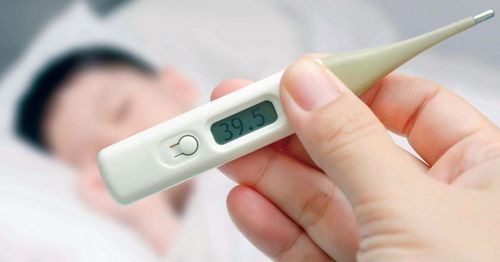
After the cold stage, the fever rises to 40-41°C, lasting an average of 2-4 hours or more, depending on severity. The patient feels intensely hot, removes blankets, and exhibits flushed face and red eyes. Other symptoms include dry and hot skin, headaches, dizziness, nausea, rapid and strong pulse, rapid breathing, mild liver and spleen pain, and reduced urine output with dark-colored urine.
Sweating stage malaria:
The body temperature declines, and the patient sweats heavily, starting from the forehead, head, and face, then spreading throughout the body. At this point, the patient experiences significant relief, feels thirsty, and may fall into occasional sleep.
3. Differentiating recurrent malaria from other diseases

3.1. Primary malaria infection
Primary malaria infection occurs in individuals who:
- Have recently traveled from non-endemic areas to malaria-endemic regions and have no immunity against malaria;
- Are children aged 4 months to 2-4 years in malaria-endemic regions.
3.2. Reinfected Malaria
Reinfected malaria is common among individuals who:
- Have experienced only mild fever episodes previously but now have continuous high fever similar to primary malaria. Parasite density is typically high, with no gametocytes detected in the initial stage, coexisting with trophozoites (unlike in recurrent malaria);
- Have relocated to and are living in high-endemic malaria regions, often presenting severe clinical symptoms. If the reinfection involves a parasite strain different from the previous infection, diagnosis is relatively straightforward;
- Have had previous malaria infections successfully treated, with no relapses for several years. If reinfected, clinical symptoms resemble those of primary malaria infection (even if the parasite strain is the same as before).
3.3. Other diseases
Common infectious diseases that may be misdiagnosed as recurrent malaria include:
- Septicemia: Severe toxic conditions cause multiple shivering episodes within a day. White blood cell and neutrophil counts are elevated, erythrocyte sedimentation rate (ESR) is high, and blood cultures may detect the causative bacteria;
- Urinary tract infection: Persistent fever with possible intermittent episodes but no cyclical pattern, accompanied by urinary disorders and pain in the urinary tract. Urine tests may reveal red blood cells, white blood cells, and granular casts; kidney stones may also be present;
- Cholangitis: Pain in the bile ducts, gallbladder, or liver, accompanied by continuous fever and frequent shivering throughout the day. Severe cases exhibit jaundice, elevated peripheral white blood cell counts, and increased ESR. Imaging may reveal thickened bile duct and gallbladder walls or gallstones;
- Liver abscess: Severe pain in the liver region, significant liver enlargement, positive Ludlow’s sign, and detectable hypoechoic areas on imaging.l
4. Management of recurrent malaria

When treating malaria, the following principles must be followed:
- Early and correct treatment with a full dose of medication;
- Fever reduction therapy combined with anti-transmission treatment if the patient has
- Plasmodium falciparum infection;
- Radical cure treatment for Plasmodium vivax infections;
- Plasmodium falciparum malaria should not be treated with a single antimalarial drug. Instead, combination therapy should be used to limit drug resistance of the parasites and enhance treatment efficacy;
- Specific antimalarial drugs should be combined with supportive therapy to improve the patient’s overall health condition.
Once a definitive diagnosis is made, first-line antimalarial drugs should be used based on the causative parasite:
- Plasmodium falciparum: the three-day fixed-dose combination regimen of dihydro-artemisinin and piperaquine (Brand name is Arterakine and CV Artecan)) is now recommended, plus a single dose of Primaquine on day 4;
- Plasmodium vivax: Chloroquine for 3 days to eliminate asexual forms in red blood cells. Because it is only used to reduce fever, it should be combined with a 14-day Primaquine regimen starting simultaneously to eradicate the hypnozoite of liver-stage parasites and prevent relapses;
- Plasmodium malariae: Chloroquine for 3 days.
Doctors must monitor patients' clinical and parasitological aspects throughout treatment to detect and manage recurrent malaria promptly. If malaria parasites reappear:
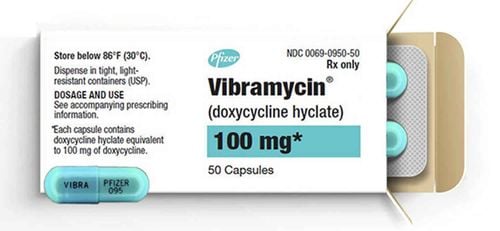
- Within 14 days: Second-line treatment with Quinine and Doxycycline for 7 days. Quinine and Clindamycin are used for pregnant women and children under 8 years old for 7 days.
After 14 days: First-line treatment for recurrent malaria.
If multiple treatment failures with the same drug occur at a medical facility, the medical team must promptly report to higher-level authorities for verification of drug-resistant malaria parasites.
During the first three days of treatment, if malaria parasites persist, emergency treatment for severe malaria must be administered if the patient exhibits any of the following dangerous symptoms:
- Transient mild consciousness disorders, lethargy, delirium, agitation...;
- Persistent high fever, digestive disorders, frequent vomiting, diarrhea and dehydration, acute abdominal pain;
- Severe headache, severe anemia, pale skin, pallor of mucous membranes...
To prevent malaria recurrence, treatment principles must be strictly followed, and mosquito bites from infected Anopheles mosquitoes must be avoided by consistently using mosquito nets, especially in endemic areas or while traveling to malaria-prone regions and forests.
Source: impe-qn.org.vn
To arrange an appointment, please call HOTLINE or make your reservation directly HERE. You may also download the MyVinmec app to schedule appointments faster and manage your reservations more conveniently.