This article was professionally consulted by an Ophthalmologist - Department of Examination and Internal Medicine - Vinmec Hai Phong International General Hospital
Working a lot with computers or after a long exam period, many people feel their eyesight get much worse, but when trying on glasses, people see clearly and brightly. This could be a sign of pseudomyopia or temporary myopia.
1. What is pseudo myopia?
Pseudomyopia is also considered a pathological condition. However, pseudomyopia is not inherent but a temporary disorder with symptoms similar to normal myopia. Pseudomyopia is defined as a temporary change, non-permanent change in the eye refraction, the image of the object when viewed will converge in front of the retina like real myopia. This phenomenon is explained by the transient contraction of the ciliary muscle increasing the refractive power of the eye.
2. Classification of pseudomyopia
Refractive disorders or temporary myopia are divided into two types: organic pseudomyopia or functional pseudomyopia.
- The organic form occurs due to overstimulation of the parasympathetic nervous system.
- The functional form occurs due to eyestrain or temporary discomfort of the eyes.
Both of these types of pseudomyopia are very common in people who have long working hours requiring a lot of eye accommodation or students during stressful exam preparation periods.
3. What are the signs of pseudomyopia?
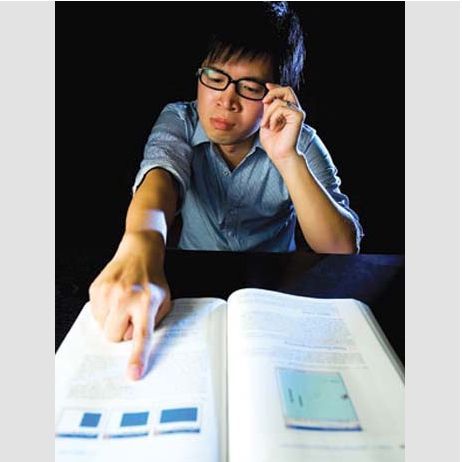
In fact, after a period of intense exam preparation, students begin to experience eye pain, watery eyes, poor distance vision and often have to squint to see.
However, at first, people with pseudomyopia will see more clearly when wearing glasses, but after 1-2 weeks of wearing glasses, they will feel tired eyes, sore eyes, frequent headaches and everything will gradually become blurred. If the patient continues to try to wear glasses, this condition will last longer, the eyes will have to accommodate too much due to wearing glasses with an inappropriate glasses power that leads to real myopia.
The main signs of pseudomyopia are difficulty in taking notes after long working hours at close distance or visual fatigue and temporary improvement when wearing glasses. The patient negligence and self-prescribing glasses without an eye examination are the main cause of the disease progression.

4. Distinguishing between real - fake myopia
Distinguishing between true and false myopia is not too difficult for ophthalmologists. However, if patients with pseudomyopia visit optical stores for an on-site eye exam and vision measurement, it can lead to an inaccurate diagnosis, leading to true myopia and increases after prolonged use of glasses.
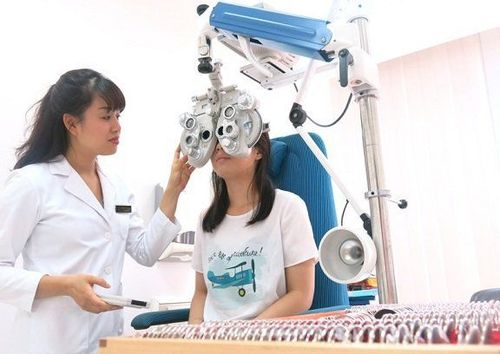
Diagnosing pseudomyopia is very simple, the doctor will administer cycloplegic eye drops such as Atropine or Cyclopentolate to paralyze the ciliary muscle, reducing the ability of accommodation then the eye will return to normal. When doing a refraction test for people with myopia or astigmatism, before determining the refractive error, the use of cycloplegic eye drop for examination is mandatory.
5. Treatment of pseudomyopia
- In case the patient has pseudomyopia due to working at too close a distance, it’s necessary to just use eye drops as prescribed by the doctor, combined with rest and a proper diet to help the eyes return to normal.
- If the eye condition is severe, the doctor will prescribe specialized glasses to ease the eye accommodation process. Stop wearing glasses as soon as the eyes recover.
- To avoid eye fatigue due to prolonged working hours, let the eyes rest for 5-10 minutes every 1 hour by massaging the eyes or looking into the blue spaces to relax the eyes.
- It is necessary to keep an optimal distance for the eyes but too close to objects.
- People over 50 years old should use supplementation for the eyes as prescribed by the doctor.
- Add vitamin-rich food, such as: A, B, D... in the diet. Use eye drops to prevent eye fatigue and degeneration.
- Pseudomyopia is not difficult to treat and can achieve visual recovery 10/10 in a short time. However, if not treated properly, it can lead to real myopia and many other dangerous consequences for the eyes. In young children, if they wear glasses while they only have pseudomyopia, it can easily cause amblyopia.
Conclusion, pseudomyopia (Refractive error) is a phenomenon of accommodation disorder with the manifestation of blurry vision at times and then clear vision after a few minutes for eye rest. Temporary myopia often occurs in elderly individuals due to poor elasticity of the lens (cataract) allowing patients to see clearly near but far vision is blurry. Therefore, when there are abnormal signs of the eye, the patient should go to a specialist, clearly classify myopia for examination and eye care, avoiding dangerous complications that may occur.

Taking care of eyes is an important part of general health. To detect eye diseases early, patients should seek medical examination when experiencing abnormal eye symptoms, avoiding dangerous disease progression leading to unfortunate complications.
To arrange an appointment, please call HOTLINE or make your reservation directly HERE. You may also download the MyVinmec app to schedule appointments faster and manage your reservations more conveniently.