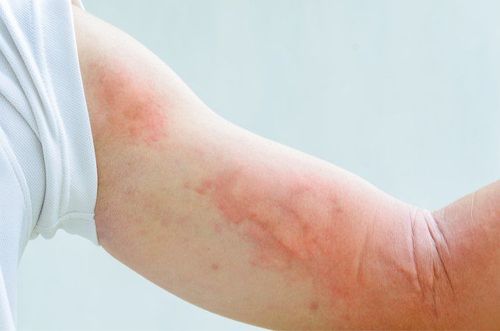
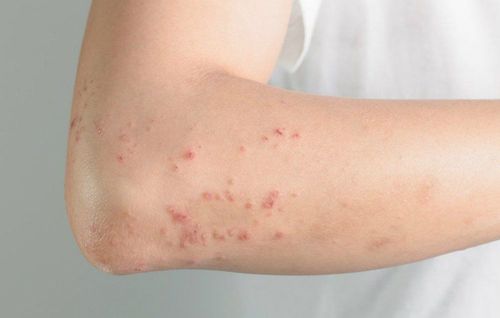
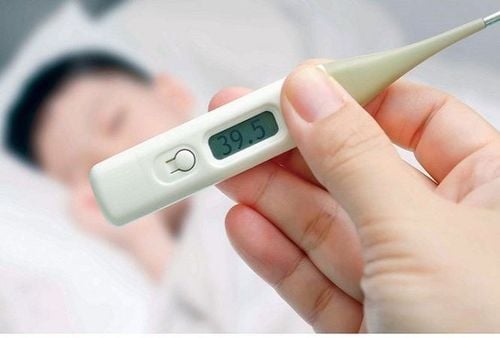
The discharge criteria for patients with dengue fever include being fever-free for 2 days and being alert. Additionally, the patient's pulse and blood pressure should be normal, with no shortness of breath or respiratory failure due to abdominal or pleural effusion. The final criterion is that the platelet count must be greater than 50,000/mm3.
1. Overview of Dengue Fever
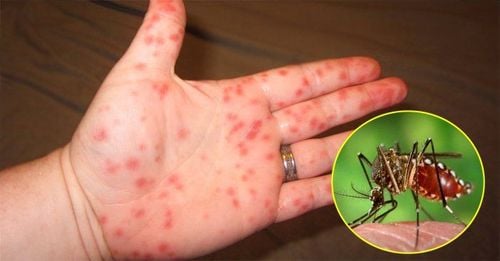
Dengue fever is an infectious disease caused by the Dengue virus. This virus is transmitted from infected individuals to healthy ones primarily through the bite of the Aedes aegypti mosquito. The disease occurs year-round but often increases during the rainy season and can lead to outbreaks. The disease is characterized by fever, hemorrhage, and plasma leakage, which can result in shock, reduced circulating volume, and coagulopathy. If not diagnosed early and managed promptly, Dengue fever can be life-threatening.
2. Diagnosis of Dengue Fever
2.1. Clinical
- The patient experiences a sudden high fever that lasts from 2 days to 1 week.
- There are manifestations of petechiae under the skin when applying a tourniquet or mucosal bleeding. Internal bleeding is a severe manifestation.
- Shock, acute circulatory failure, restlessness, lethargy, cold extremities, rapid weak pulse, low blood pressure, and decreased urine output.
- Hepatomegaly.
2.2. Paraclinical
Paraclinical tests show hemoconcentration due to plasma leakage.
Platelet count is reduced to ≤ 100,000 cells/mm3.

3. Classification of Dengue Fever Severity
Patients with dengue fever are classified into 4 degrees of severity:
- Degree 1: Sudden fever lasting 2 - 7 days with a positive tourniquet test.
- Degree 2: Similar to degree 1, but accompanied by petechiae or mucosal bleeding.
- Degree 3: Signs of circulatory failure, rapid weak pulse, low blood pressure, cold clammy skin, restlessness or lethargy.
- Degree 4: Severe shock, difficult to palpate pulse, unable to measure blood pressure (BP = 0).
The classification of clinical degrees is intended to assist doctors in appropriate management, especially in cases of circulatory failure. During the course of the illness, patients can progress from mild dengue to severe dengue.
4. Treatment of Dengue Fever
4.1. Dengue Fever Grade 1 and 2
Primarily treated on an outpatient basis or monitored at a healthcare facility to detect shock early and manage it promptly.
- Symptomatic treatment: Reduce fever with medication and loosen clothing, sponge the body with warm water.
- Rehydrate early by drinking plenty of oral rehydration solution, cooled boiled water, coconut water, lemon juice,... or diluted rice porridge.
- Administer Ringer's lactate and 0.9% NaCl: When the patient cannot drink, is vomiting a lot, is dehydrated, or is lethargic,...Note that patients over 15 years old can discontinue intravenous fluids when they stop vomiting and are able to eat and drink.
4.2. Dengue Fever Grade 3
- Prepare Ringer's lactate solution, isotonic saline solution (0.9% NaCl), and high molecular weight solutions.
- Quickly replace the lost plasma volume.
- Reassess the patient's condition every hour.
Note that when changing the infusion rate, caution must be taken based on multiple factors.
4.3 Dengue Fever Grade 4
In cases of severe dengue fever, admitted in a state of severe shock, emergency management is required.
- Position the patient with the head down.
- Administer oxygen.
- Infuse fluids, then reassess the patient.

5. Notes on treating dengue fever
- When treating shock, it is important to adjust electrolyte imbalances and acid-base balance.
- Be cautious when administering blood and blood products.
- All patients in shock need to receive oxygen.
- Use vasopressor medications like Dopamine in appropriate cases.
- Care for and monitor shock patients according to the correct protocol.
6. Discharge criteria for patients with dengue fever
To be discharged, the patient must meet the following criteria:
- No fever for 2 days, and the patient is alert.
- Pulse and blood pressure are within normal ranges.
- No shortness of breath or respiratory failure due to abdominal or pleural effusion.
- Platelet count shows a tendency to recover, greater than 50,000/mm3.

6. How long does dengue fever last?
Currently, the dengue fever outbreak is spreading in many places, so many readers are concerned about "How many days does dengue fever last?" According to doctors, the end of fever does not mean the end of the illness; it only indicates that the patient has passed the dangerous phase lasting 3 - 4 days, starting from the 4th to the 7th day of fever. After 1 - 2 days, the patient will enter the recovery phase lasting 2 - 3 days, and only after that will they be completely cured.
Some signs that indicate the patient is recovering and is about to fully recover are:
- No longer dehydrated, wanting to urinate and urinating frequently after 5 - 7 days of treatment.
- Feeling less tired, having an appetite, and eating well.
- No new rashes have appeared, and after 2 - 3 days, the existing ones have faded and the itching has decreased.
Currently, there is no vaccine to prevent dengue fever; the main measures are to control the insects that transmit the disease. Specifically, the Ministry of Health advises people to avoid mosquito bites, eliminate larvae/tadpoles, kill adult mosquitoes, and maintain a clean living environment by removing stagnant water. Accordingly, if you notice symptoms similar to dengue fever, you should go to medical facilities for examination, treatment, and prevention of severe dengue complications.
To arrange an appointment, please call HOTLINE or make your reservation directly HERE. You may also download the MyVinmec app to schedule appointments faster and manage your reservations more conveniently.