
1. What are the symptoms when pain radiates from the shoulder blade to the arm?
Shoulder‑blade pain is common, often seen in patients with musculoskeletal disorders. When the pain becomes more serious, it may spread down the arm, making movement and everyday tasks difficult. The joints around the shoulder area are among the most mobile in the body, helping us perform many important movements. Because of this, they are prone to weakening, wear and tear, and external stresses.
Depending on individual physiology and underlying disease, pain from the shoulder blade down the arm may present differently. Some of the frequent symptoms include:
- Dull or intense aching pain in the shoulder, neck, or upper back region;
- Pain in both shoulder blades, which may extend down the upper part of both arms;
- Difficulty moving the head because pain occurs in the neck and shoulder‑blade region, with an inability to raise the shoulders;
- The two arms or even the fingers may feel numb, tingling or lose sensation; difficulty grasping objects;
- In some cases the patient may feel dizziness, light‑headedness, nervous system dysfunction, or unsteady walking;
- Symptoms of nerve pain or partial paralysis;
- Impaired function of the shoulder blade or arm, reduced range of motion.
2. Causes of pain in the shoulder blade spreading down the arm
There are many causes of pain from the shoulder blade radiating into the arm. These include:
2.1 Poor posture or incorrect movement
In daily activities you may overuse the shoulder blade and arm, sit or lie in the wrong posture for extended periods, etc. These actions may cause tightness of the neck‑shoulder blade muscles, leading to poor circulation, inadequate nourishment of muscles, bones and nerves, resulting in pain in the shoulder blade and arm.
Those at risk from this cause typically include: office workers, drivers, students, factory workers, etc.
2.2 Spinal conditions
If you have spinal disease, you are also more likely to have pain in both shoulder blades radiating down the arms. Common spinal conditions include:
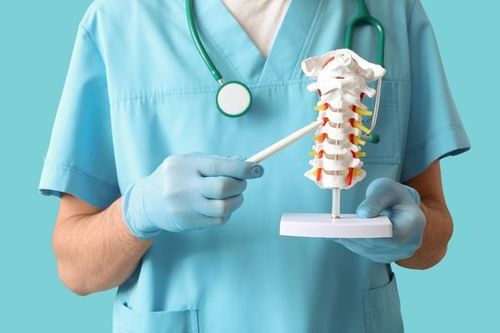
Cervical spondylosis and spinal canal narrowing: In older adults, the cervical discs degenerate, begin bulging. The discs gradually become dry and harder, the vertebrae move closer together, bone spurs develop around the disc to reinforce its load‑bearing capacity. However, these spurs can narrow the space where nerve roots exit, compressing them, leading to pain from the shoulder blade down the arm.
Cervical disc herniation: The disc contains a gel‑like nucleus. When the disc degenerates, hardens and ruptures, the nucleus extrudes and compresses nerves, causing pain that radiates from the shoulder blade down the arm. This condition often occurs when lifting or pushing heavy objects, or performing twisting movements.
2.3 Nerve root and spinal cord compression
Pain from the shoulder blade and arm may occur if the spinal cord or nerve roots are compressed, causing loss of motor and sensory conduction. Causes may include cervical spinal tumours, tuberculosis, inflammation of the spinal arachnoid, etc.
2.4 Other causes
Other possible causes of pain from the shoulder blade to the arm include:
- Clavicle (collarbone) fracture: After a fall, your clavicle may fracture, causing shoulder and arm pain. This injury is common in cyclists falling off bikes;
- Scapula (shoulder‑blade) fracture: This typically results from relatively strong trauma, causing significant pain;
- Bursitis: The bursa is a sac over the joint that cushions the joint and muscles. When it becomes inflamed, it swells, stiffens and hurts, causing pain in the shoulder blade and arm;
- Injury of the acromioclavicular joint (shoulder junction): The clavicle and scapula are connected by ligaments. If shoulder injury occurs, those ligaments may be stretched or torn, causing pain;
- Rotator‑cuff injury: The rotator cuff is composed of four tendons and muscles surrounding the shoulder joint. In repetitive motion sports or long‑term repeated movements, the rotator cuff can be injured, causing pain during shoulder movement and even chronic loss of shoulder function. This is often seen in carpenters, athletes, painters, etc.;
Additional other causes: Impact injuries, tendonitis, brachial‑plexus inflammation, post‑herpes (shingles) pain, postsurgical pain, peri‑joint inflammation, peptic ulcers, myocardial infarction, gallbladder disease, lung disease, bronchitis, …
3. How to Treat Shoulder Blade and Arm Pain
In cases where the pain from the shoulder blade down the arm is due to overuse or soft‑tissue injury, the patient may recover with appropriate rest and care. If the cause is a musculoskeletal disease such as degeneration, arthritis, disc herniation…, the patient needs early diagnosis and treatment to avoid serious complications like joint deformity, stiffness, … Treatments include:
3.1 Home care
For mild pain, you can apply home care methods such as:
- In many cases, mild injuries from muscle strain or bruise may heal without medication or heavy intervention. The patient only needs rest to allow muscles, ligaments and cushions in the shoulder‑blade region to recover;
- If the pain is mild, transient and caused by lying/sitting in the wrong posture or lack of movement, you can perform stretching exercises to relax muscles and improve joint mobility;
- Heat‑therapy: Applied for both acute and chronic pain. Under the influence of heat, the tight shoulder‑blade muscles relax, and blood flow to the region increases; thus the patient feels more comfortable and less pain;
- If soft‑tissue pain affects the shoulder blade and arm, you can use non‑steroidal anti‑inflammatory drugs (NSAIDs) or paracetamol. However, medication must follow the doctor’s prescription (after ruling out stomach ulcers);
- Supplement vitamins B, C, D, E to boost immunity; supplement calcium to prevent osteoporosis in the elderly.
3.2 Medical treatment
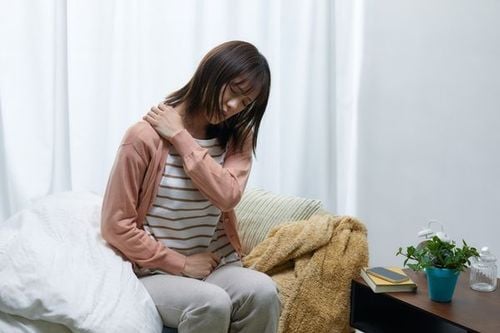
If the pain in the shoulder blade and arm becomes more severe, the patient should seek medical examination early. Specifically:
- If pain from the shoulder blade down the arm is caused by spinal conditions, the patient may receive combined therapy of traditional (Eastern medicine) and modern medicine. For example, acupuncture combined with functional rehabilitation;
- If the patient has osteoarthritis, they may be treated with NSAIDs or local corticosteroid injections to reduce pain and restore daily activity;
- In severe cases surgery or interventional treatment may be required;
- If the patient experiences severe pain, weakness, coldness, arm deformity, changes in facial colouring, high fever, severe headache, chest pain, shortness of breath, nausea, dizziness, … then immediate emergency care is needed.
In addition, you can prevent pain in the shoulder blade and arm by maintaining correct lying or sitting posture, placing a pillow about 10 cm high under the head when sleeping. Also follow a proper diet and lifestyle, avoid heavy lifting. At the same time, each person should have periodic medical check‑ups to detect musculoskeletal issues early and choose appropriate intervention.
To arrange an appointment, please call HOTLINE or make your reservation directly HERE. You may also download the MyVinmec app to schedule appointments faster and manage your reservations more conveniently.


