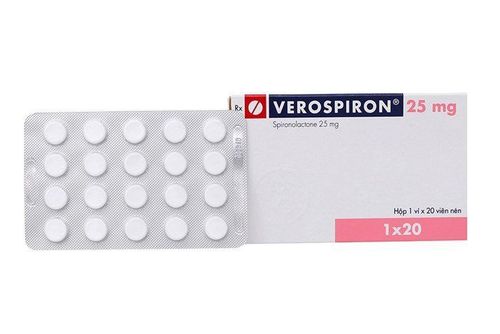
Verospiron is commonly used to treat certain conditions such as unexplained high blood pressure, severe heart failure or edema. So what is Verospiron and how is it used?
1. What is Verospiron?
Verospiron's main active ingredient is spironolactone, which is a potassium-sparing diuretic, a competitive antagonist of aldosterone. Verospiron acts on the distal tubule of the glomerulus, inhibiting the water and Na+ retention effect and the drug also inhibits the K+ excretion effect of aldosterone.
Verospiron not only increases the excretion of Na+ and Cl-, reduces the excretion of K+, but also inhibits the excretion of H+ into the urine. As a result, this drug also lowers blood pressure.
Verospiron is indicated in the following cases:
Short-term treatment before surgery in primary hyperaldosteronism or long-term treatment, if the patient cannot undergo surgery or refuses surgery.
Edema due to various causes.
Edema, associated with congestive heart failure, if the patient does not respond, or if other therapies cannot be applied or the physician desires a synergistic effect with other diuretics.
Edema and/or ascites associated with cirrhosis.
Nephrotic syndrome: If treatment of the underlying disease or restriction of fluid and salt intake, and the use of other diuretics do not achieve the desired effect.
Essential hypertension: Used in combination with other antihypertensive drugs, especially in cases of hypokalemia.
Hypokalemia in cases where other therapies cannot be applied.
Verospiron is also used to prevent hypokalemia in patients treated with digitalis, if other treatments are no longer possible.
Verospiron is contraindicated in the following cases:
- Anuria
- Acute renal failure
- Severe renal failure with glomerular filtration rate < 10ml/min).
- Hyperkalemia
- Hyponatremia
- Pregnant women, and breastfeeding.
- People who are hypersensitive to any ingredient of the drug.
2. Interactions of Verospiron with other drugs
- Salicylates reduce the diuretic effect of Verospiron.
- Other diuretics will increase diuresis.
- Potassium and other potassium-sparing diuretics increase the risk of hyperkalemia.
- Other antihypertensive drugs will increase the antihypertensive effect.
- NSAIDs have a risk of hyperkalemia.
- ACE inhibitors have a risk of hyperkalemia.
- Ammonium chloride increases the risk of acidosis.
- Flucocortisone paradoxically increases potassium excretion.
- Digoxin: Verospiron increases the half-life of digitalis, increasing the risk of digoxin toxicity.
- Mitotane: Verospiron reduces the effect of mitotane).
- Coumarin derivatives: Verospiron reduces the effect of these drugs.
- Triptoreline, busereline, gonadoreline: Verospiron increases the effects of these drugs.
3. Side effects that may occur when using Verospiron
Long-term use of Verospiron may cause the following side effects:
• Hyperkalemia
• Hyponatremia
• Gynecomastia in men
• Impotence in men
• Menstrual disorders, breast tenderness in women
• Voice changes in both sexes.
• Rare rash or erythema
• Digestive disorders such as nausea, vomiting, diarrhea, gastric bleeding, gastric ulcers, gastritis.
• Central nervous system disorders such as ataxia, drowsiness, headache.
• Agranulocytosis.
• These side effects usually disappear when stopping Verospiron.

4. Treatment of hyperaldosteronism
Before surgery, a dose of 100 - 400 mg per day can be used.
In cases where the patient is not suitable for surgery, long-term maintenance treatment with Verospiron is performed with the minimum effective dose determined for each patient. The initial dose can be reduced every 14 days until the minimum effective dose is reached. It is best to combine Verospiron with other diuretics when used long-term to reduce unwanted effects.
Treatment of edema (congestive heart failure, cirrhosis, nephrotic syndrome):
Adults: The starting dose is usually 100 mg/day, divided into two doses per day, but the dose can be from 25-200 mg/day. When using higher doses of Verospiron, it is recommended to combine it with another diuretic, preferably one that acts on the proximal tubule. In this case, the dose of Verospiron remains unchanged.
Children: Use a dose of 3.0 mg/kg body weight/day, divided into two doses, or taken once a day.
Treatment of hypertension: The initial dose of Verospiron is 50 - 100 mg/day, divided into two doses, and combined with other antihypertensive drugs. Treatment with Verospiron is continuous for at least 2 weeks, because the maximum antihypertensive effect of this drug can only be achieved after 2 weeks of treatment. Then adjust the dose of Verospiron according to each patient.
Treatment of hypokalemia: The daily dose of Verospiron varies from 25-100 mg, if sufficient K+ cannot be provided orally or other potassium-sparing methods cannot be used.
There is no specific antidote for Verospiron overdose. Rehydration and electrolyte replacement for Verospiron overdose:
- Use potassium-wasting diuretics
- Inject glucose and insulin
- In severe cases, perform dialysis.
The above is important information about Verospiron. Understanding the uses and dosage of the drug will bring the best treatment results for the patient.
To arrange an appointment, please call HOTLINE or make your reservation directly HERE. You may also download the MyVinmec app to schedule appointments faster and manage your reservations more conveniently.