Flexing or contracting muscles is not only a common pose in bodybuilding competitions but also a workout method that can enhance muscle strength. When you flex, you create temporary tension, causing muscle fibers to contract. Certain specialized exercises, such as Isometric training, strengthen muscles by engaging them in a static hold where force is exerted without changing the length of the muscle.
1. Benefits of muscle contraction exercises
Incorporating Isometric exercises into your daily routine can provide several benefits, including:
- Lowering systolic and diastolic blood pressure.
- Allowing training even when regular muscle movements might cause pain.
- Supporting spinal and core stability, improving balance and abdominal strength.
- Being convenient, often requiring no equipment or specific workout space. Some Isometric exercises can be performed with additional weights or resistance bands.
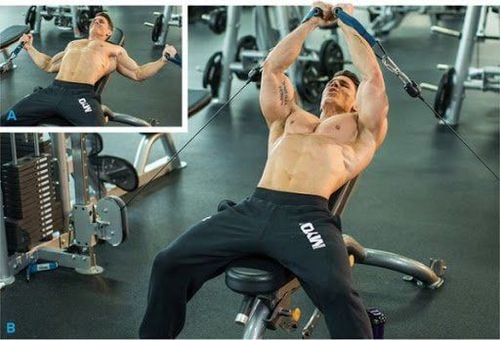
2. Does Flexing Your Muscles Make Them Stronger?
Occasionally flexing your muscles will not make them stronger or more toned. However, consistently performing Isometric exercises such as Planks, Wall Sits, and Glute Bridges, along with other endurance workouts, can significantly strengthen your muscles.
For a more comprehensive muscle workout, it is important to engage in flexing and twisting exercises in various positions and within a coordinated range of motion. While Isometric training is beneficial for muscle strength, it does not enhance flexibility as much as other types of exercise.
3. When Should You Perform Isometric Exercises?
Isometric exercises can be especially useful for individuals recovering from injuries, particularly those affecting the shoulder or knee joints. Holding a muscle in a contracted position reduces stress on the joints. If you have joint injuries or arthritis, Isometric training can be an ideal and less painful alternative to traditional strength training.
Additionally, Isometric exercises require minimal time, so if you only have a few free minutes, you can still fit in a workout without needing any extra equipment. These exercises can also help prevent sudden spikes in blood pressure, making them beneficial for individuals with high blood pressure or those at risk.

4. Suggested Isometric Exercises for Muscle Strength
There are various Isometric exercises that you can perform anytime, anywhere. Below are some simple yet effective exercises to strengthen major muscle groups:
4.1. Plank
A well-known exercise that helps tighten core, leg, and hip muscles.
How to perform:
- Maintain a straight body line, supporting yourself on your forearms and toes.
- Engage your core and glutes throughout the movement.
- Perform 3-4 sets daily, holding for 30 seconds each time. Beginners can start with 20-second holds.
4.2. Wall Sit
Strengthens the quadriceps, hamstrings, and glutes.
How to perform:
- Stand with your back against a wall, feet about 50 cm away.
- Lower yourself into a 90-degree squat position as if sitting on an invisible chair. Hold for 15 seconds, then stand up.
- Rest briefly and repeat four more times, 15 seconds between sets.

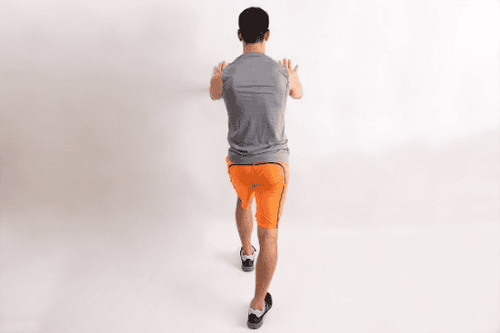
4.3. Bent-over Wall Press
Targets the chest and shoulder muscles.
How to perform:
- Stand facing a wall, one foot slightly ahead of the other.
- Lean forward and press both hands against the wall.
- Hold for 20 seconds, then rest and repeat four more times.
- A more upright stance focuses on the chest, while a deeper lean benefits the shoulders.
4.4. Biceps and Triceps Squeeze
Engages both the biceps (front upper arm) and triceps (back upper arm).
How to perform:
- Bend your left arm at a 90-degree angle with the palm facing upward.
- Use your right hand to grasp your left wrist while flexing your left arm.
- Hold for 20 seconds, then switch sides.
- Repeat 3-4 times for each arm.

4.5. Adductors Squeeze
Strengthens the inner thigh muscles (adductors).
How to perform:
- Lie on your back with feet flat on the floor and knees bent.
- Place a small exercise ball or similar object between your knees and squeeze.
- Hold for a few seconds, then release.
- Repeat 8-10 times per set, performing 2-3 sets daily.

4.6. Body Hold
Tones and strengthens abdominal muscles.
How to perform:
- Sit on the floor with knees bent and feet flat.
- Extend your arms forward while straightening your legs to form a "V" shape with your body.
- Hold for 15 seconds, rest, and repeat four more times.

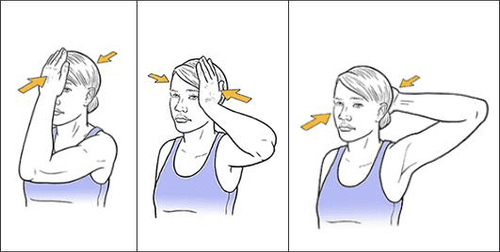
4.7. Neck Squeeze
Enhances and stabilizes neck muscles.
How to perform:
- Stand with feet shoulder-width apart, placing your palm on your forehead.
- Gently push your palm against your forehead while engaging your neck muscles. Hold for 10 seconds.
- Place your hand at the back of your head, apply pressure, and hold for another 10 seconds.
- Repeat on both the left and right sides.
5. Important Considerations
Although flexing and twisting exercises are generally safe, some precautions should be taken to avoid potential risks. One common mistake is holding your breath while flexing, which can lead to a sudden increase in blood pressure. Always maintain a steady breathing pattern and relax muscles that are not actively engaged in the exercise.
Isometric exercises provide an effective way to build muscle strength. Since these exercises are short and focus on specific muscle groups, they can be beneficial for people with high blood pressure, injuries, or those who need a limited range of movement. As with any new workout regimen, it is advisable to consult a doctor or fitness expert to ensure the exercises are suitable and safe for you.
To arrange an appointment, please call HOTLINE or make your reservation directly HERE. You may also download the MyVinmec app to schedule appointments faster and manage your reservations more conveniently.