
This article was medically reviewed by MSc, MD Lê Anh Việt, a diagnostic imaging specialist at the Department of Diagnostic Imaging and Nuclear Medicine, Vinmec Times City International Hospital.
Facial nerve palsy, also known as peripheral seventh cranial nerve palsy, is a condition in which a patient partially or completely loses movement in the muscles on one side of the face. The condition occurs when the facial nerve (cranial nerve VII) is damaged.
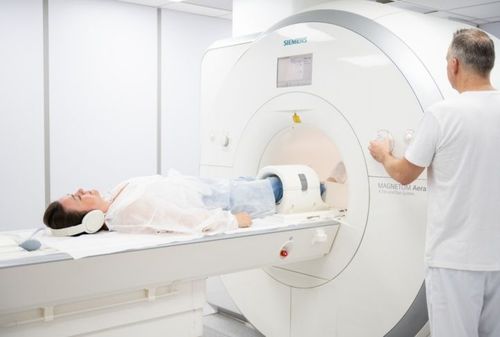
To detect and diagnose facial nerve damage, doctors may order MRI (Magnetic Resonance Imaging) or CT (Computed Tomography) scans.
1. What Is Facial Nerve Palsy?
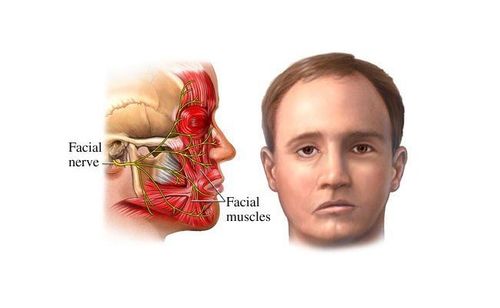
The seventh cranial nerve (facial nerve) controls the muscles of the face and neck. Facial palsy is caused by damage to this nerve. In traditional medicine, facial nerve palsy is sometimes referred to as "wind stroke."
2. What Causes Facial Nerve Damage?
Ischemia & Nerve Compression: Vasospasms (blood vessel constriction) can reduce blood supply to the nerve, leading to nerve swelling and compression. Cold weather exposure is a common trigger.
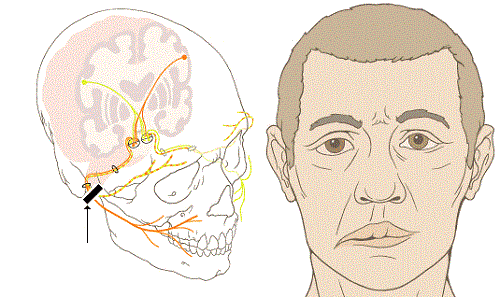
Complex Pathway of the Facial Nerve: The nerve originates in the brain, passes through the temporal bone and parotid gland, before controlling facial muscles.
Viral Infections: Viruses can attack the facial nerve, leading to inflammation and dysfunction.
Other Possible Causes:
- Bacterial infections
- Head or neck trauma
- Cerebrovascular diseases
- Tumors in the head or neck
- Stroke (Cerebrovascular accident)
- Surgical complications or medical procedures
3. Symptoms of Facial Nerve Palsy
Patients will have the following common symptoms:
- Facial drooping or stiffness
- Asymmetrical mouth (mouth pulled to one side)
- Inability to close one eye completely
- Difficulty drinking water (liquid spills out of the mouth)
- Facial numbness or weakness on one side
- Difficulty smiling or speaking
- Ear pain or headaches
- Loss of taste
- Excessive tearing or saliva production
4. MRI vs. CT Scan: Which Is Better for Diagnosing Facial Nerve Palsy?
What Are MRI and CT Scans?
- Both MRI and CT scans are medical imaging techniques used to capture detailed images for diagnosis.
- Each method works differently and has its own advantages.
5. Magnetic Resonance Imaging (MRI)
How Does MRI Work?
- Uses radio waves and magnetic fields to create detailed images.
- The magnetic field and radio waves interact with hydrogen atoms in the body, causing them to release energy.
- This energy is detected, processed, and converted into high-resolution images.

Advantages of MRI for Facial Nerve Palsy:
- High-resolution images with excellent contrast and anatomical detail
- Can reconstruct 3D images for better visualization
- More effective than CT in diagnosing certain neurological disorders
6. Computed Tomography (CT Scan)
How Does CT Work?
- Uses X-rays to generate cross-sectional images of the body.
- Modern CT scanners provide faster scanning times and high-quality images.
Advantages of CT for Facial Nerve Palsy
- Clear images without overlapping structures
- Better visualization of soft tissue compared to standard X-rays
- Quick scan time
- Suitable for patients who cannot undergo MRI
Example: Patients with pacemakers, metallic heart valves, permanent hearing aids, or metal implants.
7. Limitations of CT Compared to MRI
- CT scans have lower sensitivity for detecting soft tissue damage
- Difficult to differentiate structures with similar densities
- Lower image resolution for small lesions
- Uses X-ray radiation (though within safe limits)
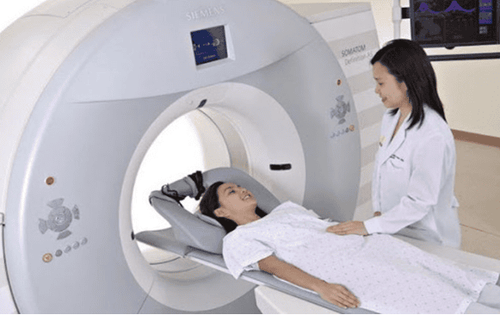
8. When Should You Choose MRI or CT for Facial Nerve Palsy?
Both MRI and CT scans can be used for diagnosing facial nerve palsy. The choice depends on clinical presentation and suspected cause
CT Scan is recommended if facial palsy is linked to:
- Trauma-related nerve damage
- Ear infections
MRI is preferred if a doctor needs to:
- Assess the facial nerve directly
- Evaluate potential brain involvement
For more health, nutrition, and beauty tips, visit Vinmec International General Hospital to safeguard the health of yourself and your loved ones.
To arrange an appointment, please call HOTLINE or make your reservation directly HERE. You may also download the MyVinmec app to schedule appointments faster and manage your reservations more conveniently.