This article is professionally consulted by MSc, MD Vu Huy Binh, Department of Outpatient & Internal Medicine at Vinmec Hai Phong International General Hospital. Dr. Binh has 9 years of experience in the field of digestive endoscopy.
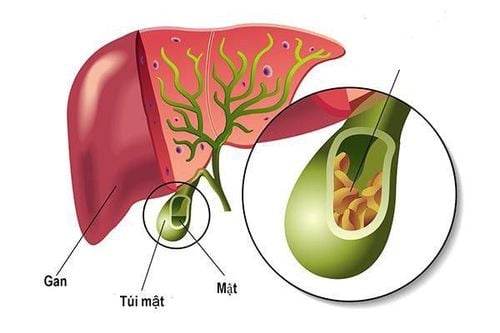
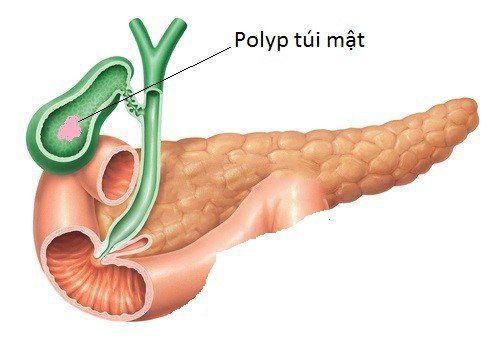
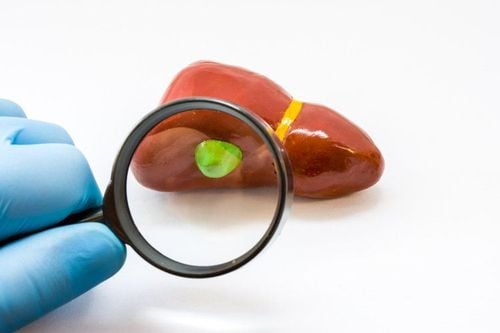
Gallbladder polyps are tumor-like or pseudotumor lesions that develop on the mucosal surface of the gallbladder. Gallbladder polyps are a fairly common condition and can occur at any age. So how can gallbladder polyps be diagnosed and treated? Please follow the article below.
1. Diagnosis of Gallbladder Polyps
1.1 Clinical Symptoms
- Functional: Often vague, not severe, and only show clinical symptoms when the polyp causes biliary secretion or drainage disorders, or when there are gallstones or accompanying cholecystitis. There may be mild pain in the right hypochondrium or epigastric area, often after eating. Other symptoms can include bloating, indigestion, nausea, and vomiting.
- Systemic: The patient usually does not have a fever and shows no signs of biliary obstruction.
- Physical Examination: During the abdominal exam, mild tenderness may be found in the right hypochondrium. Most of the time, no other abnormal signs are detected. Other organs should be examined to identify any accompanying conditions.
1.2 Paraclinical Tests
Abdominal Ultrasound: This method is useful for screening gallbladder diseases, including gallstones and polyps. Gallbladder polyps on ultrasound appear as hyperechoic areas with no shadowing.
Ultrasound helps in identifying the polyp, its location, size, and shape (whether pedunculated or not), and allows for monitoring its progression to determine the appropriate course of action. The accuracy of ultrasound in diagnosing gallbladder polyps is over 90%.
Oral Contrast Cholangiography: Polyps appear as an area of contrast uptake in the gallbladder.
Endoscopic Retrograde Cholangiopancreatography (ERCP): This method is typically indicated when ultrasound of the biliary tract fails.
Computed Tomography (CT - MSCT): Applied in cases of large polyps with a potential for malignancy. On CT scans, polyp lesions appear as a dense mass protruding into the gallbladder. CT with contrast injection helps provide an accurate diagnosis of nearly 90%.
Magnetic Resonance Imaging (MRI): This method is indicated when there is suspicion of malignant polyp lesions. On MRI, polyps appear as hyperintense masses in the T2 phase.
Biochemistry: Liver and kidney function tests, hepatitis virus tests (HCV, HBsAg...), and tumor markers (CEA, CA 19-9).
2. Treatment of Gallbladder Polyps
Approximately 92% of gallbladder polyps are benign (non-cancerous), so patients typically do not require gallbladder removal surgery.
For small polyps under 10mm (or under 15mm), frequent monitoring every 3-6 months is often sufficient without the need for gallbladder removal.
Polyps larger than 10mm have a higher risk of developing into cancer, especially those over 15mm. Therefore, gallbladder removal may be recommended to prevent the development of gallbladder cancer.
Doctors have established a treatment protocol for gallbladder polyps as follows:
- If gallbladder polyps are detected on ultrasound and the patient is asymptomatic (no pain, fever, etc.), a follow-up examination should be conducted after 6-12 months for confirmation.
- If after this period the polyp is no longer visible, no further action is needed. If the polyp remains, regular monitoring through ultrasound every 6 months is recommended if the polyp is larger than 10mm. If malignant signs are detected through blood tests or other examinations, or if clinical symptoms like recurrent pain and fever develop, early surgery should be considered.
Early diagnosis and detection of gallbladder polyps are crucial for doctors to determine the appropriate management, improving the prognosis for gallbladder polyp treatment. Therefore, you should proactively visit reputable hospitals if you notice any unusual symptoms that may suggest gallbladder polyps.
To arrange an appointment, please call HOTLINE or make your reservation directly HERE. You may also download the MyVinmec app to schedule appointments faster and manage your reservations more conveniently.