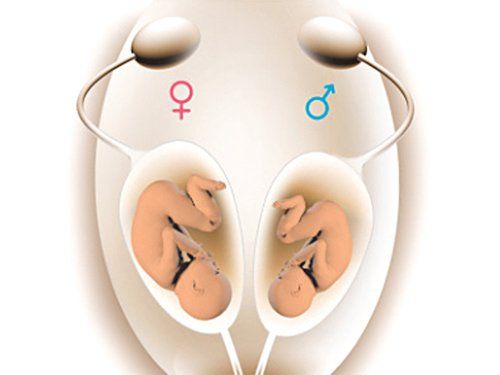
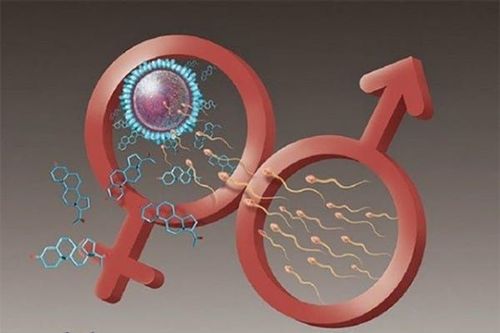
Typically, each cell in the human body has 46 chromosomes, including 22 pairs of autosomes and two sex chromosomes. Females have two X chromosomes, and males have one X chromosome and one Y chromosome. This creates the major difference between males and females.
X and Y are chromosomes that play extremely important roles in human reproduction. Although there have been many studies exploring this issue, some inaccurate information about X and Y sperm still exists. The article below will provide you with useful information about X and Y chromosomes.
1. Is it true that Y sperm swim faster than X sperm?
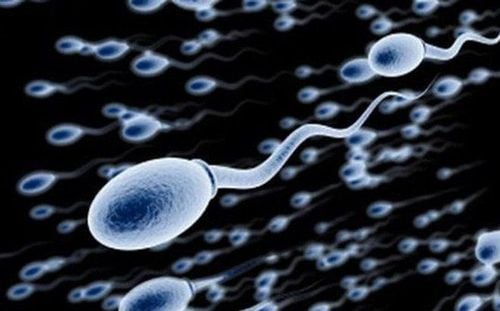
In 1960, Shettles' research concluded that sperm carrying the Y chromosome (Y sperm) swim faster than sperm carrying the X chromosome (X sperm). These two populations also differ morphologically. Y sperm have smaller heads while X sperm have larger heads. A year later, he reiterated these findings and further claimed that smaller-headed sperm could move faster and fertilize eggs more frequently.
Shettles' reports in Nature and other peer-reviewed journals led many subsequent researchers to believe that Y sperm swim faster than X sperm. This finding particularly influenced research on sperm extraction.
Although many studies were conducted to verify whether this conclusion was actually correct, it wasn't until the advent of computer-assisted sperm analysis (CASA) that reliable observations showed Y sperm to be completely different from what Shettles had previously reported. To date, researchers have not found morphological differences between X and Y sperm. Neither mature sperm nor spermatids show significant morphological differences between X and Y genotypes; and Y sperm do not swim faster than X sperm.

2. Revealing the mysteries of X and Y sperm
Not only the Y chromosome but also the X chromosome may play a primary role in sperm development. According to Jeremy Wang, a PhD at the Whitehead Institute for Biomedical Research in Cambridge (England): "Some cases of male infertility are due to X-linked disorders transmitted from mother to son."
David Page, Professor of Biology at the Massachusetts Institute of Technology, along with his colleagues, traced the 300-million-year history of the Y chromosome, seeking clues to the mysteries of disease, reproduction, and infertility. What they found is enough to eliminate conventional thinking about gender as well as misunderstandings about X and Y sperm.
3. How were X and Y chromosomes formed through human evolution?
300 million years ago, reptiles existed on Earth including males and females. Males produced sperm, females produced eggs, but they had no sex chromosomes, only regular chromosomes. Their gender was likely predetermined.
However, as humans advanced in evolution, it appears that genes controlled spermatogenesis, that is, the production of sperm. This became very necessary for species with chromosomes that were repeatedly replicated, and typical chromosomes would be converted to new sex chromosomes.
Steven A. Wasserman - PhD, Professor of Biology at the University of California (San Diego - USA) says: "Spermatogenesis began with an ancestral gene in flies and worms. It was then duplicated in higher animals. And recently, in monkeys and humans, there has been copying into the Y gene, and that Y gene has been duplicated. What is special in humans is that these genes go to the Y chromosome, which will be responsible for spermatogenesis and sex selection."
4. Is the Y chromosome actually more important than the X chromosome?
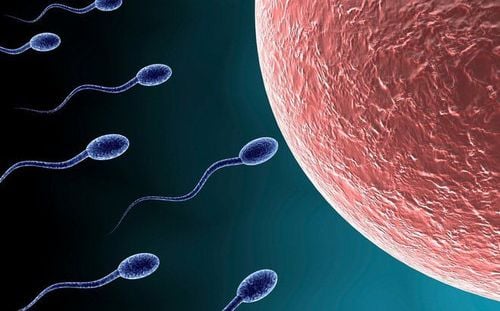
About half of the genes found on the Y chromosome are active and can produce sperm in the testes. The most common cause of male infertility is the absence of a portion of the Y chromosome. This chromosome has many different parts, and if any of these parts are missing, sperm production will cease.
However, the Y chromosome is only part of the story. In male mice and men, the X chromosome carries about 10 genes that are crucial in producing primordial cells in the developing embryo, which will later determine sperm production or its absence.
Findings about the X chromosome have changed the thinking of many people. Previously, everyone thought that the Y chromosome played the main role in spermatogenesis without considering the X chromosome. Now, it can be affirmed that the X chromosome doesn't just play a normal role; it seems to play the most important role.
To arrange an appointment, please call HOTLINE or make your reservation directly HERE. You may also download the MyVinmec app to schedule appointments faster and manage your reservations more conveniently.