
Treating a rib fracture must be done correctly and timely to prevent serious complications that may affect mobility and overall health. When a patient fractures multiple ribs simultaneously, the broken fragments may injure the lungs, heart, liver, or other internal organs, and in severe cases can lead to death.
This article is written under the professional guidance of doctors from the Department of Orthopedic Trauma & Sports Medicine - Vinmec International General Hospital.
1. Number and Function of the Ribs
The rib cage is made up of 12 pairs of ribs, arranged symmetrically on both sides of the chest and upper back. Each rib originates from the spinal column at the back, attaches to a vertebra in the upper back, and wraps around the body from the side to the chest wall. Specifically:
- The first 7 pairs of ribs connect directly to the sternum at the front of the chest.
- The next 3 pairs (ribs 8, 9, 10) do not attach directly to the sternum but join the upper ribs via cartilage; these are called “false ribs.”
- The last 2 pairs (ribs 11 and 12) have no anterior attachment and are known as “floating ribs.”
Both men and women typically have 24 ribs (12 pairs). Rarely, some individuals may have fewer or more than this number.
Major functions of the ribs include:
- Protecting vital organs in the thoracic cavity such as the heart, lungs and major blood vessels.
- Aiding expansion of the chest cavity (thorax) to facilitate breathing.
- Forming a stable skeletal framework for the chest to prevent collapse of the thoracic cage
2. Classification of Rib Fractures
In trauma cases, chest injury accounts for 10‑15% and rib fractures are the most common type, making up to 85% of chest wall injuries.
Rib fractures can be divided primarily into two categories: simple and complex.
- Simple rib fracture: Occurs when a single rib is broken and the fragments do not shift from their original position.
- This is the most common chest injury, accounting for more than half of non‑penetrating thoracic trauma. About 10% of patients presents with simple rib fractures affecting one or several ribs after chest wall trauma
- Although a simple rib fracture rarely endangers life, it may signal hidden damage to thoracic or abdominal organs.
- Complex rib fracture: Occurs when there is displacement of the rib fragments.
The location of the fracture can affect and cause injury to internal organs:
- Fracture of the lower ribs: The risk of injury to abdominal internal organs is higher compared to the lung parenchyma.
- Fracture of the lower left ribs has a high risk of spleen injury.
- Fracture of the lower right ribs has a high risk of liver injury.
- Fracture of the floating ribs (ribs 11 and 12): Often associated with kidney injury.
- Fracture of the first rib carries a high risk of leading to severe spinal or vascular injury, even death. Because it is well protected by the shoulder, the lower neck muscles, and the clavicle, fracture of the first rib is the rarest among all rib fractures. Fracture at this location was once considered a sign of severe trauma. In addition, fracture of the first rib can also lead to complications such as delayed subclavian thrombosis, aortic aneurysm, tracheal fistula, thoracic outlet syndrome, and Horner syndrome.
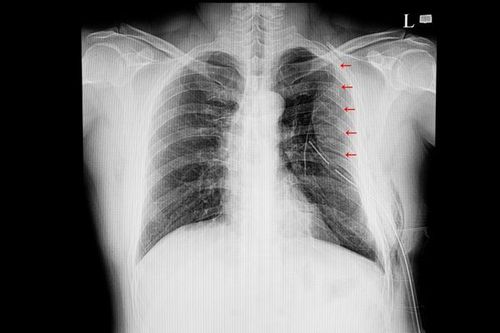
3. Causes and Symptoms of Rib Fractures
Causes include:
- Motor vehicle accidents: strong blunt force to the chest leading to rib fracture.
- Crush injury (heavy object falling onto chest)
Falls from height - Direct blow (e.g., a wooden beam or metal rod striking the chest)
- Sports injuries (golf, rowing, football)
- Severe coughing in older adults may cause hairline rib fractures,
- Osteoporosis causes reduced bone density, and more brittle bones which are easily fractured
- Bone cancer

The first and most common symptom of a rib fracture is pain. The pain intensifies when:
- The patient breathes, causing shallow and irregular breathing.
- The body moves, such as bending or twisting.
- Pressure is applied to the fracture site.
- The patient coughs or sneezes.
In addition, the patient may experience the following symptoms:
- Shortness of breath.
- Chest muscle spasms.
- Chest wall deformity.
- A crackling sound when pressing on the injured area.
- Some less common symptoms include dizziness, anxiety, drowsiness, and headache.
4. Is a Rib Fracture Dangerous? Complications
The danger of a rib fracture increases notably when associated injuries or complications occur.
- When multiple ribs are fractured, air or blood may enter the pleural cavity, causing pneumothorax (abnormal accumulation of air in the chest cavity) and hemothorax (accumulation of blood in the chest cavity).
- When the mediastinum accumulates air, mediastinal emphysema may occur.
- In addition to rib fractures, trauma may also cause lung injuries, including pulmonary contusion, lung laceration, or crushed lung tissue.
- Fractures of the first or second rib in an accident may injure major blood vessels such as the subclavian artery, subclavian vein, and aorta.
- Furthermore, rib fractures may damage other organs such as the trachea, myocardium, surrounding nerves, and the liver (in cases of lower rib fractures), as well as the spleen, kidneys, and diaphragm.
- If both the ribs and sternum are fractured, the heart and lungs may also be contused. The thoracic spine is likewise at risk of injury.
5. How Long for a Rib Fracture to Heal?
Patients who suffer trauma after collisions often wonder how long it takes for a rib fracture to heal. The answer primarily depends on the severity of the injury and whether complications are present.
If there are no complications, the ribs usually heal within 4 to 6 weeks. If symptoms persist beyond this period, the cause may be delayed bone healing or, in rare cases, pseudarthrosis (nonunion, where new bone fails to form between the fracture ends). In such instances, the patient should consult a doctor for proper management.
6. Do rib fractures require a cast?
The ribs are connected to the spine at the back and to the sternum at the front, forming the rib cage. Therefore, when a rib fracture occurs, casting or splinting would restrict chest expansion, leading to serious pulmonary complications such as atelectasis, pneumonia, or pleural effusion/pneumothorax. These can prolong recovery and reduce quality of life.
7. Do rib fractures require surgery?
Rib fractures generally heal naturally with rest and supportive care. However, in cases of severe displaced fractures, surgical fixation may be necessary to repair the damage, relieve pain, improve respiratory function, prevent chest wall deformity, and reduce mortality risk.
8. Diagnostic methods
8.1. Clinical examination:
The doctor will gently palpate the ribs, listen to lung sounds, and observe chest wall movement during breathing.
8.2. Paraclinical diagnosis:
Depending on the case, the doctor may order one or more imaging tests before starting treatment:
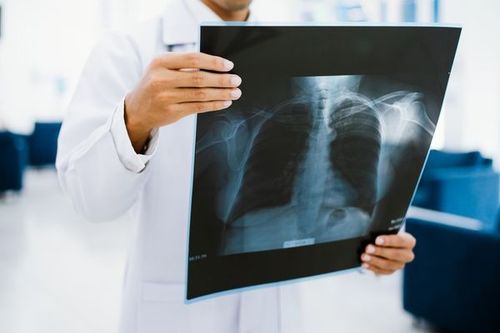
X-ray: The most common method for detecting rib fractures. However, it may miss early or minor cracks. It remains useful for detecting complications such as pneumothorax.
CT scan: Provides detailed cross-sectional images and can reveal fractures or soft tissue and vascular injuries not seen on X-rays, such as soft tissue injury or vascular injuries
MRI: Uses magnetic fields and radio waves to visualize soft tissues and nearby organs, helping detect subtle or complex fractures not easily visualized on other modalities.
Bone scan: Involves injecting a small amount of radioactive tracer into the bloodstream. It is particularly useful for identifying stress fractures from repetitive strain (e.g., prolonged coughing).
9. Treatment:
Although rib fractures are painful, they are often not life-threatening and can heal on their own. However, multiple or severe fractures require proper treatment. Conservative management is preferred, with surgery reserved for specific indications.
9.1. First aid:
First aid can significantly impact the outcome of treatment. Here are some important points
- Stay calm, assess the victim, and call emergency services (115) immediately.
- Reassure the patient, remove clothing items that may obstruct treatment and loosen tight clothing while waiting for the ambulance.
- Keep the patient in a comfortable position and avoid unnecessary movement.
- Apply gentle pressure with a clean cloth if bleeding occurs. Avoid using excessive pressure
- Use an ice pack wrapped in a clean towel to reduce swelling and pain.
Transport the patient on a stretcher, keeping the neck aligned with the body to prevent spinal injury.
9.2. Conservative treatment:
If the patient is a young, healthy athlete, casting may be considered. however, casting is rarely used routinely because it restricts breathing and may lead to pneumonia.
The focus is on pain control and respiratory support. Pain control includes
- NSAIDs (diclofenac, ibuprofen) for mild pain; opioids for severe pain.
- Intercostal nerve block with local anesthetic for temporary pain relief (6–8 hours).
- Thoracic epidural analgesia for severe or multiple bilateral fractures.
- A physician will inject medication into the epidural space of the spine to inhibit pain signalling for a time.
- Ice application for several days to reduce swelling.
- Respiratory physiotherapy: Deep-breathing exercises and airway clearance techniques to prevent pneumonia. Patients will be instructed by a physician or physiotherapist on how to do this. These breathing exercises can be done at home
9.3. Inpatient treatment:
Hospitalization is required for multiple rib fractures or fractures of ribs 1–3, as well as when complications are suspected.
Hospitalization allows for better monitoring and treatment.
If pneumothorax or hemothorax develops, a chest tube will be inserted to drain air or blood, allowing lung re-expansion.
Surgical fixation is indicated for flail chest (unstable rib segments) unresponsive to conservative management.
10. Post-treatment care
To promote rib healing:
- Sleep on your back or in a reclined position during the first few days. Avoid lying down on your belly or side
- Move gently to maintain lung function.
- Avoid heavy lifting or sudden movements to prevent pain worsening
- Perform deep breathing exercises (10 times/hour).
- Do not suppress coughing; instead, hold a pillow against your chest to reduce pain.
- Stop smoking to accelerate bone healing.
- Eat calcium-rich foods (milk, cheese, yogurt) and limit red meat, alcohol, caffeine, and sugar.

11. Simple exercises for patients with rib fractures
Exercising can promote bone healing, some exercises are as follows
- Shoulder squeeze: Stand upright, pull shoulder blades together until slight tightness is felt without discomfort, hold for 2 seconds, repeat 10 times. Be sure to do this without aggravating current symptoms
- Deep breathing: Inhale deeply using the diaphragm to the best of your ability without discomfort, then exhale slowly; repeat 5 times. Diaphragmatic breathing focuses on the lower part of the lungs and does not raise the shoulders
- Seated trunk rotation: Sit upright with hands across the chest, rotate gently to each side, hold for 2 seconds, and repeat 10 times per side. Be sure to keep the legs still during this exercise and only perform movements to the best of your ability without pain or discomfort.
- If pain persists after several weeks or is accompanied by symptoms such as fever, green/yellow sputum, chest tightness, or radiating pain to the shoulder and arm, contact your doctor promptly.
- Proper management of rib fractures requires consistent and appropriate care. Neglect or improper treatment may lead to complications, impaired mobility, and reduced quality of life. Therefore, patients should seek diagnosis and treatment at reputable medical facilities.
To arrange an appointment, please call HOTLINE or make your reservation directly HERE. You may also download the MyVinmec app to schedule appointments faster and manage your reservations more conveniently.


