This article was professionally consulted by a Dentist from the Department of General and Internal Medicine at Vinmec Hai Phong International General Hospital.
Misaligned teeth are one of the most common dental issues, affecting both oral function and facial aesthetics. Some frequently observed types of dental misalignment in clinical practice include crooked incisors, misaligned lower molars, upper teeth misalignment, impacted lower wisdom teeth, and tilted second molars.
1. Crooked Incisors
Crooked incisors refer to a condition where one or both central incisors deviate from the dental arch and adjacent teeth. Since the incisors are the most visible teeth, their misalignment significantly impacts the appearance of the smile and overall facial aesthetics. This condition may affect a single tooth or multiple teeth.
Common Types of Crooked Incisors
- V-shaped incisors: The two central incisors deviate from the alignment of other teeth, with their inner edges forming a sharp V-shaped angle at the contact point.
- Tilted incisors: The incisors grow at an angle rather than in an upright position. This misalignment can occur symmetrically or asymmetrically.
- Irregularly misaligned incisors: One central incisor may protrude outward while the other tilts inward. Alternatively, both lateral incisors may shift inward, or one may protrude while the other is pushed inward, creating an uneven appearance.
Causes of Crooked Incisors
- Congenital factors: Teeth may naturally develop in improper positions, leading to misalignment.
- Crowding or pressure from adjacent teeth: Neighboring teeth may push the incisors out of alignment.
- Early tooth loss: Conditions such as missing canines, missing molars, or premature tooth loss can create gaps, causing surrounding teeth to shift and resulting in misalignment.
- Oral habits: Prolonged thumb sucking, pacifier use, tongue thrusting, or pressing the tongue against the front teeth can contribute to crooked incisors.
Treatment Options for Crooked Incisors
- Cosmetic Dental Crowns: This is a quick and effective solution that provides visible improvement within 2-4 days. The results can last between 10-15 years, depending on individual factors and the type of crown used.
- Braces and Orthodontic Adjustments: While this method requires more time, it ensures natural and long-lasting results by guiding the teeth into their correct positions. The effects of orthodontic treatment are permanent.
- Orthognathic Surgery: In severe cases where crowns or braces are ineffective, surgical intervention may be necessary. This may involve corrective jaw surgery or tooth extraction if realignment is not feasible.
2. Inwardly Misaligned Lower Molars
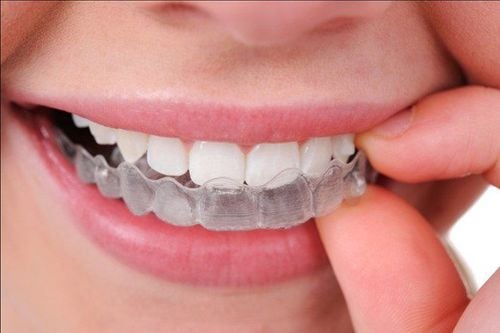
This condition occurs when the lower molars do not grow in a vertically aligned position with the upper molars but instead tilt inward. It not only affects facial aesthetics but also impairs chewing function and overall oral health.
Misaligned lower molars often lead to a condition known as reverse bite or underbite, where the lower teeth extend further inward than the upper teeth.
Causes of Inwardly Misaligned Lower Molars
- Genetic factors, inherited traits from parents
- Oral habits, frequent thumb sucking, tongue thrusting
- Early tooth loss
Optimal Solutions for Inwardly Misaligned Lower Molars
- Cosmetic Dental Crowns
- Orthodontic Treatment (Braces)
3. Upper Jaw Misalignment
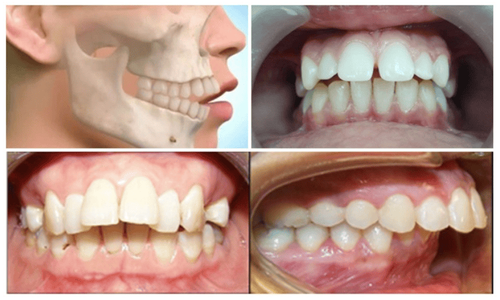
Similar to lower jaw misalignment, upper jaw misalignment occurs when the upper teeth grow in a disorganized manner, failing to align properly within the dental arch. Some teeth may protrude outward, while others may be pushed inward or crowded together. This misalignment not only affects facial aesthetics but also disrupts proper chewing function.
Upper jaw misalignment often leads to a horizontal overbite (protruding teeth).
Causes of Upper Jaw Misalignment:
- Genetic factors
- A smaller lower jaw can result in an imbalance, preventing the upper and lower teeth from fitting together correctly, leading to misalignment.
- Harmful oral habits like thumb sucking, pacifier use
4. Impacted Wisdom Teeth
Wisdom teeth can be impacted in the upper jaw, lower jaw, or both, but impaction in the lower jaw is more commonly observed.
Common Types of Wisdom Tooth Impaction:
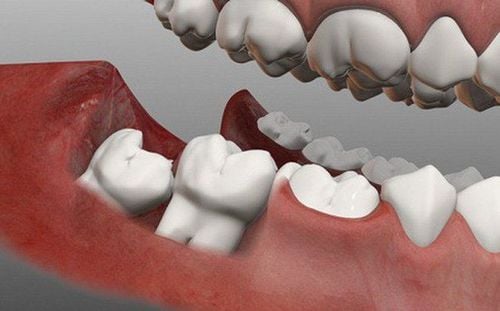
- Mesial impaction: The crown of the wisdom tooth inclines toward the second molar. This condition creates a food trap between the two teeth, increasing the risk of dental caries. In some cases, decay may extend to the second molar, and the pressure exerted by the impacted tooth can contribute to dental crowding. Infections and inflammation, leading to pain and swelling, may also occur.
- Distal impaction: In contrast to mesial impaction, the crown of the tooth tilts away from the second molar while its root exerts pressure on the adjacent tooth. This can result in persistent tooth sensitivity and, over time, root resorption of the second molar. In severe cases, extraction of both the wisdom tooth and the affected second molar may be necessary.
- Buccal impaction: The tooth is angled outward toward the cheek, often causing repeated trauma due to accidental cheek biting, leading to irritation and ulceration.
- Horizontal impaction: The wisdom tooth is positioned at a 90-degree angle, lying completely sideways. This is a common and severe form of impaction, as it not only exerts pressure on the second molar - causing bone resorption, infection, or cyst formation - but may also contribute to overall dental misalignment.
Causes of Impacted Wisdom Teeth:
- Delayed eruption: Wisdom teeth typically emerge between the ages of 18 and 25. In cases where eruption occurs late, the dental arch has often reached full stability, leaving little to no space for the wisdom tooth to properly erupt, resulting in impaction.
- Eruption misalignment: If wisdom teeth emerge after the jaw structure and dental alignment have stabilized, they may lack adequate space and become impacted, exerting pressure on adjacent teeth and leading to crowding or misalignment.
- Gum tissue resistance: The gums play a crucial role in the eruption of wisdom teeth. In adulthood, the gingival tissue becomes firmer and denser, which may obstruct the eruption process, slow down the emergence of the tooth, and contribute to impaction or complications affecting neighboring teeth.
Management of Impacted Wisdom Teeth:
For mild cases:
- Administration of antibiotics and anti-inflammatory pain relievers.
- Application of warm compresses to the affected area.
- Maintaining good oral hygiene, including rinsing with saline solution to reduce inflammation and discomfort.
For moderate to severe cases:
- Consult a dentist for guidance on the appropriate use of antibiotics and anti-inflammatory medication to reduce swelling. In cases of severe pain or functional impairment, surgical intervention or tooth extraction may be necessary.
5. Misaligned Second Molar
A misaligned second molar is also a common issue in dentistry.
Similar to wisdom teeth, second molars can grow at various angles, including a full 90-degree horizontal impaction or a partial tilt at an angle of about 45 degrees. These teeth may shift inward toward the tongue, outward toward the cheek, or even push against the first molar.
In many cases, extraction is recommended for misaligned second molars. However, both the second and first molars play a crucial role in mastication by grinding food. The loss of a second molar can not only impair chewing efficiency but also lead to dental shifting and misalignment of adjacent teeth. Additionally, the second molar region is closely associated with numerous nerves, making extraction a procedure that requires careful consideration and clinical evaluation.
Apart from the common types of misalignment mentioned above, other clinical presentations include dental spacing, overcrowding, midline deviation, and malocclusion, such as overbite or underbite.
Vinmec Times City International Hospital offers an advanced bracket-based orthodontic treatment package for patients with dental misalignment, crowding, spacing, overjet, underbite, and other malocclusions that affect facial aesthetics. This treatment aims to restore both functional occlusion and an aesthetically pleasing smile through orthodontic correction.
Advantages of the Modern Bracket-Based Orthodontic System
- Metal bracket braces are an orthodontic solution that utilizes the force exerted by brackets and archwires to guide teeth into their desired positions. Due to the durability and stability of the metal framework, this type of braces often shortens the overall treatment duration compared to other bracket systems.
- The treatment process with metal braces is less complex than lingual or ceramic braces, making it a more straightforward option. Additionally, the cost-effectiveness of metal braces is a significant advantage, making them a popular choice for many patients.
- Moreover, metal bracket braces provide highly effective orthodontic results, minimize treatment time, and can be easily replaced in case of detachment or damage.
With a team of highly skilled and experienced specialists, Vinmec’s modern orthodontic package offers an effective solution for crowded and misaligned teeth, helping patients achieve a bright, confident smile.
For further details, see: Guidelines for Diagnosing Impacted Wisdom Teeth.
To arrange an appointment, please call HOTLINE or make your reservation directly HERE. You may also download the MyVinmec app to schedule appointments faster and manage your reservations more conveniently.