Article by Master, Doctor Mai Vien Phuong - Gastroenterology Endoscopist - Department of Examination & Internal Medicine - Vinmec Central Park International General Hospital.
Although diarrhea is more common in Crohn's disease, constipation can occur due to diet, water intake, lack of exercise, or medication use. If you haven't had a bowel movement for several days, first try changing your diet to include more fiber and increase fluid intake. Talk to your doctor before using laxatives to treat constipation due to Crohn's disease.
1. What is Crohn's Disease?
Crohn's disease is a type of inflammatory bowel disease that can affect from mouth to anus. It can involve some parts of the digestive tract and skip others. The symptoms of Crohn's disease usually develop gradually over time. Although possible, it is rare for symptoms to develop suddenly. Early symptoms of Crohn's disease include:
- Diarrhea or constipation
- Abdominal cramps
- Bloody stools
- Fever, fatigue, and loss of appetite
- Weight loss
Crohn's disease can be confused with symptoms of other conditions, such as food poisoning, abdominal pain, or allergies. You should see a doctor if any symptoms persist. Early detection, diagnosis, and treatment can help you avoid serious complications.
2. Causes of Constipation due to Crohn's Disease
Diarrhea is the most common symptom of Crohn's disease, but constipation is not uncommon. Crohn's disease can affect any part of the digestive system, leading to various symptoms.
One of the functions of the large intestine is to reabsorb water from digested food. If your large intestine absorbs too much water, stool can become hard and difficult to move. Constipation can be defined as having fewer than 3 bowel movements per week or needing to strain to defecate.
The main factors that can cause constipation include:
- Low-fiber diet
- Not drinking enough fluids
- Not eating enough
- Sedentary lifestyle
- Ignoring daily bowel needs
- Taking certain medications, including anti-diarrheal drugs, pain relievers, and antidepressants.
Many people with Crohn's often avoid high-fiber foods, such as fruits and raw vegetables, as these irritate their stomachs, exacerbating symptoms. People with Crohn's disease also often take certain medications and may not drink enough water to compensate for episodes of diarrhea. For these reasons, Crohn's disease causes constipation in most cases.
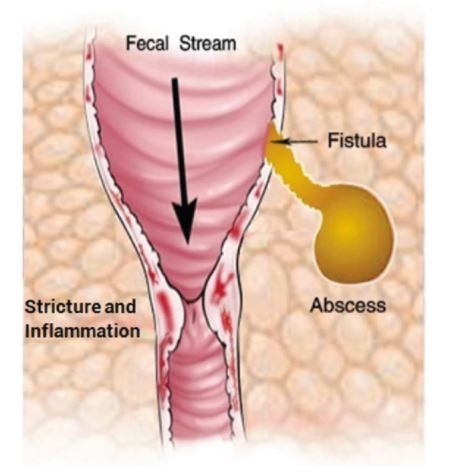
A serious complication of Crohn's disease called intestinal stricture involves narrowing of a section of your intestine due to scarring or inflammation. This can lead to blockage of your intestine. Constipation can be a sign of intestinal obstruction. You should seek medical attention immediately if you experience uncontrollable nausea and vomiting, persistent bloating, or prolonged constipation.
3. Treatment of Constipation due to Crohn's Disease
3.1. Dietary Changes
The simplest way to treat Crohn's disease-induced constipation is to eat fiber-rich foods. But you shouldn't increase fiber too quickly, as it can lead to bloating or stomach pain. Gradually add the following foods to your diet to treat constipation caused by Crohn's disease:
- Beans
- Wheat bran
- Sponge cake
- Whole wheat bread
- Cooked vegetables, such as squash, sweet potatoes, spinach, and peas
- Fruits, such as raspberries and prunes
Try to avoid processed foods, milk, meat, and fast food. These foods have little or no fiber. Also, don't eat any foods that you know may make your symptoms worse.
3.2. Ensure Adequate Fluid Intake
Increase your water intake and other liquids, such as clear soups and vegetable juices. Drink at least 1.5 liters per day or more. You should also limit caffeine and alcohol consumption, as they have a dehydrating effect.
3.3. Use Laxatives
Several types of laxatives are available to help treat constipation due to Crohn's disease. Laxatives work in many different ways. Medications can interfere with your body's absorption of certain medications and nutrients, so it's important to talk to your doctor before trying laxatives.
3.4. Use Bulk-Forming Agents
Bulk-forming agents work by absorbing fluid in your intestine and swelling stool. A bulky stool causes the intestine to contract and push stool out. Always drink plenty of water with bulk-forming agents, otherwise it may lead to intestinal obstruction. Don't use bulk-forming agents if you think you have an intestinal obstruction... Always consult your doctor before use.
3.5. Intestinal Stimulants
Intestinal stimulants work by making your intestine contract. Only use stimulants if your constipation is severe and other treatments are not effective. Use intestinal stimulants under the guidance of a doctor for safety and effectiveness.
3.6. Exercise
Lack of exercise slows down your intestinal motility. But if you have Crohn's disease, you may not feel well enough to exercise. Try to find ways to incorporate more movement into your life. Walk instead of using a car, take the stairs instead of the elevator, or leave your desk to stand up and move around. If possible, do some light exercises such as walking, cycling, swimming, or yoga.

3.7. Adjust Your Medication
Some medications can cause constipation. If you have diarrhea due to Crohn's disease, your doctor may have recommended anti-diarrheal medications such as loperamide (Imodium A-D). Because loperamide works by slowing down your intestinal activity to stop diarrhea, sometimes it can work too well and lead to constipation. If you experience constipation while taking loperamide, inform your doctor for the best advice.
In conclusion, Crohn's disease is a lifelong condition and requires continuous treatment. If constipation occurs suddenly, it may be a sign of a serious problem. You may have a blockage in your intestine or severe inflammation narrowing the intestine. See a doctor immediately if you experience symptoms of intestinal obstruction.
Although diarrhea is more common in Crohn's disease, constipation can occur due to diet, water intake, lack of exercise, or medication use. If you haven't had a bowel movement for several days, first try changing your diet to include more fiber and increase fluid intake. Talk to your doctor before using laxatives to treat constipation due to Crohn's disease.
References:Eating, diet, & nutrition for constipation. (2014, November) niddk.nih.gov/health-information/digestive-diseases/constipation/eating-diet-nutrition Managing flares and other IBD symptoms. (2009, April) ccfa.org/assets/pdfs/flares_brochure_final.pdf Mayo Clinic Staff. (2014, August 13). Crohn's disease: Complications mayoclinic.org/diseases-conditions/crohns-disease/basics/complications/con-20032061 Mayo Clinic Staff. (2015, December 31). Intestinal obstruction: Symptoms and causes mayoclinic.org/diseases-conditions/intestinal-obstruction/symptoms-causes/dxc-20168463 Mayo Clinic Staff. (2014, June 6). Over-the-counter laxatives for constipation: Use with caution mayoclinic.org/diseases-conditions/constipation/in-depth/laxatives/art-20045906
To arrange an appointment, please call HOTLINE or make your reservation directly HERE. You may also download the MyVinmec app to schedule appointments faster and manage your reservations more conveniently.