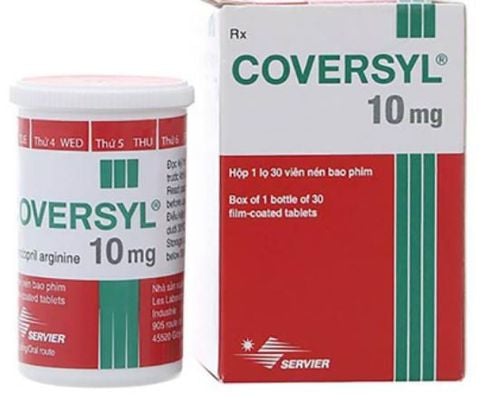
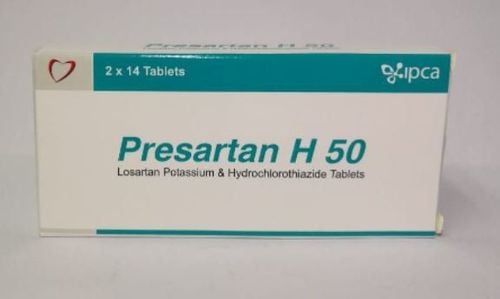
Zestril 5mg is a medication used to treat conditions such as congestive heart failure, hypertension, myocardial infarction, and kidney complications in diabetic patients. Zestril 5mg should be used according to the prescribed dosage by a doctor to avoid serious health side effects.
1. What is Zestril 5mg?
Zestril 5mg contains the active ingredient lisinopril dihydrate, an angiotensin-converting enzyme inhibitor. Originating from the UK, it is used to treat acute myocardial infarction, congestive heart failure, and hypertension. Additionally, Zestril 5mg is prescribed for treating kidney complications in diabetic patients.
Zestril 5mg is formulated as an uncoated, round, pink tablet with a scored line on one side and embossed with "♥5" on the other. It is packaged in boxes containing 2 blister packs of 14 tablets each.
2. Ingredients, uses and indications of Zestril 5mg
2.1. Ingredient information of Zestril 5mg
Each Zestril 5mg tablet contains the active ingredient lisinopril, with a dosage equivalent to 5mg.
2.2. Uses of Zestril 5mg
Pharmacodynamics:
The active ingredient in Zestril 5mg, lisinopril, inhibits the angiotensin-converting enzyme (ACE). This endogenous enzyme has the ability to convert angiotensin I into angiotensin II (a vasoconstrictor peptide). Angiotensin I levels increase in response to elevated renin levels in certain conditions, such as kidney disease or heart failure. The vasoconstrictor peptide stimulates the adrenal cortex to secrete aldosterone, promoting heart muscle growth, leading to vasoconstriction, myocardial hypertrophy, and increased blood pressure.
Lisinopril’s inhibition of the angiotensin-converting enzyme helps reduce aldosterone and angiotensin II levels. This results in peripheral vasodilation, reduced water and sodium retention, and decreased peripheral resistance.
Many people believe that the blood pressure-lowering effects of lisinopril are primarily due to its ability to inhibit the renin-angiotensin-aldosterone system. However, this component of Zestril 5mg is still effective in treating hypertension in individuals with low renin levels. ACE inhibitors also resemble kininase II, which degrades bradykinin. The role of increased bradykinin levels in the therapeutic effectiveness of lisinopril remains a significant question that needs further clarification.
Pharmacokinetics:
Absorption
After oral administration, Zestril 5mg is absorbed slowly and incompletely through the gastrointestinal tract. The absorption rate of lisinopril varies among individuals, typically ranging from 6% to 60% for doses of 5-80 mg according to studies. On average, the absorption rate of lisinopril is approximately 25%, based on the amount of the drug excreted in the urine.
In patients with heart failure, the absolute bioavailability of lisinopril decreases by about 18%. Lisinopril is active as it is, so it does not require metabolic activation like some other ACE inhibitors. Zestril 5mg reaches peak serum concentrations approximately 7 hours after administration and maintains its effect for 24 hours. However, peak blood levels are usually slower in patients with acute myocardial infarction. Additionally, food intake does not significantly impact the absorption of lisinopril through the gastrointestinal tract.
Distribution
Lisinopril in Zestril 5mg does not bind to plasma proteins other than ACE.
Elimination
Zestril 5mg is excreted entirely through the urine in its unchanged form, as it is not metabolized. For repeated doses, the effective half-life due to lisinopril accumulation is 12.6 hours. In healthy individuals, the drug's clearance rate is about 50 ml/min. Serum lisinopril levels tend to decrease gradually, indicating a prolonged terminal phase and reflecting the saturable binding to the angiotensin-converting enzyme, not proportional to the dose.
In patients with renal impairment, drug elimination decreases, while those with liver cirrhosis show reduced absorption of lisinopril but increased duration and extent of drug exposure. Patients with heart failure also exhibit greater drug exposure and duration but decreased absorption compared to healthy individuals.
2.3. Indications for Zestril 5mg
Zestril 5mg is commonly indicated for the following conditions:
• Treatment of hypertension: Zestril 5mg is often prescribed for patients with hypertension caused by renal vascular disease or primary hypertension. This medication can be used alone or in combination with other antihypertensive drugs as directed by a doctor.
• Treatment of congestive heart failure: Zestril 5mg is indicated for symptomatic congestive heart failure. Additionally, it may support the effects of digitalis or diuretic medications in certain cases.
• Treatment of acute myocardial infarction: Patients with acute myocardial infarction who are hemodynamically stable within the first 24 hours are prescribed short-term treatment with Zestril 5mg for 6 weeks. This helps prevent complications from heart failure and left ventricular dysfunction and improves survival rates. Zestril 5mg can be used in combination with beta-blockers or aspirin thrombolytic agents.
• Treatment of diabetic kidney complications: Zestril is indicated for the treatment of kidney complications in diabetic patients who are insulin-dependent (with normal blood pressure) or non-insulin-dependent (with newly onset hypertension and mild kidney disease). Using Zestril can reduce the rate of albuminuria production in the body.
3. Contraindications for Zestril 5mg
Children aged 6 years and older, as well as adults, can use Zestril 5mg. However, this medication should not be used in the following cases:
• Individuals allergic to lisinopril or hypersensitive to any component of the medication.
• Individuals with a history of angioedema caused by previous treatment with ACE inhibitors.
• Individuals with idiopathic or hereditary angioedema.
• Individuals with obstructive cardiomyopathy or renal artery stenosis in a single kidney or both kidneys.
• Individuals with aortic valve stenosis.
• Pregnant women.
• Women who are breastfeeding.
• Individuals taking aliskiren-containing medication for the treatment of type 1 or type 2 diabetes or renal impairment.
In cases of patients preparing for surgery with general anesthesia, those with kidney or blood issues (leukopenia), or those who have recently experienced severe vomiting and diarrhea, caution should be exercised when using Zestril 5mg.
4. Dosage and usage of Zestril 5mg
4.1. Dosage of Zestril 5mg for different individuals
Due to the prolonged effect of lisinopril (an ACE inhibitor) in Zestril 5mg, it is administered orally once daily. Specifically:
Dosage for primary hypertension:
• Initial dose: 10mg once daily.
• Maintenance dose: 20mg once daily.
Depending on blood pressure response, the dose can be adjusted. If the desired effect is not achieved after 2-4 weeks, the dose can be increased to a maximum of 80mg per day.
Patients currently on diuretics should discontinue them 2-3 days before starting Zestril. If discontinuation is not possible, the initial dose of Zestril for hypertension should be 5mg.
For patients with renal impairment, the initial dose will be based on creatinine clearance (ml/min), including:
• Initial dose of 2.5mg for creatinine clearance less than 10 ml/min.
• Initial dose of 2.5-5mg for creatinine clearance from 10-30 ml/min.
• Initial dose of 5-10mg for creatinine clearance from 31-70 ml/min.
Dosage and frequency of Zestril 5mg will be adjusted based on blood pressure response. The dose may be gradually increased until blood pressure is controlled or to a maximum of 40mg per day.
Dosage for patients with hypertension due to renovascular disease:
Initial dose: typically lower at 2.5-5 mg. Dosage adjustment based on blood pressure response
Dosage for treating congestive heart failure:
• Initial dose: 2.5 mg daily.
• Effective usual dose: 5-20 mg daily.
For patients with congestive heart failure requiring a higher therapeutic effect, the dosage can be adjusted every 4 weeks based on clinical response. Patients at risk of hypotension, reduced blood volume, or those who have been actively treated with diuretics can correct these disorders before starting Zestril 5mg.
Dosage for patients with acute myocardiac infarction:
Patients with acute myocardial infarction may be prescribed an initial dose of Zestril 5mg within 24 hours from the onset of symptoms. The medication should be continued for 6 weeks to achieve the best results. Specifically:
• Initial dose: 5mg.
• After 24 hours: 5mg.
• After 48 hours: 10mg.
• Following days: 10mg daily.
Patients with a systolic blood pressure of 120 mmHg should start with a lower dose of 2.5mg either at the initial treatment or within the first 3 days of symptom onset. If systolic blood pressure falls below 100 mmHg, the daily maintenance dose should temporarily be reduced to 2.5mg. If systolic blood pressure remains below 90 mmHg for over an hour, the patient should discontinue the medication.
Dosage for diabetic patients with kidney complications:
The typical daily dose of Zestril for insulin-dependent diabetic patients with normal blood pressure is 10 mg/day. However, if necessary, the dose can be increased to 20 mg/day to achieve a sitting diastolic blood pressure below 75 mmHg. For non-insulin-dependent diabetic patients with hypertension, the same dosage regimen can be applied to achieve a sitting diastolic blood pressure below 90 mmHg.
Dosage of Zestril 5mg for children aged 6-16 with hypertension:
• Initial dose (children weighing 20-<50 kg): 2.5 mg once daily.
• Initial dose (children weighing ≥50 kg): 5 mg once daily.
The dosage can be adjusted based on the individual response, up to a maximum of 20 mg per day for children weighing 20-<50 kg, and up to 40 mg per day for children weighing over 50 kg. Children with renal impairment should start with a lower initial dose or increase the dose gradually as directed by a doctor.
4.2. How to use Zestril 5mg?
Zestril 5mg can be taken with or without food as directed by your doctor. The dosage will be based on the patient's health condition and treatment response. The medication is usually taken once daily, and it is recommended to start with a low dose, gradually increasing it as directed by the doctor to minimize the risk of side effects.
During the course of treatment, patients should strictly follow the doctor's recommendations and take the medication regularly to achieve the best results. To avoid missing doses, take it at the same time every day and continue even if you feel well.
For patients with hypertension, it may take 2-4 weeks of using Zestril 5mg to notice significant effects. For patients treating heart failure, it may take several weeks to months to receive the full benefits of the medication. Additionally, patients should report their results to their doctor if their health condition does not show positive signs, such as blood pressure remaining elevated or higher than normal.
5. What to do if you overdose or miss a dose of Zestril 5mg?
5.1. How to manage an overdose of Zestril 5mg?
Overdosing on Zestril 5mg can lead to dangerous symptoms such as circulatory shock, hypotension, rapid breathing, electrolyte disturbances, rapid heart rate, slow heart rate, palpitations, kidney failure, cough, anxiety, or dizziness. If an overdose occurs and these symptoms present, the patient should quickly contact the nearest local medical center for early intervention.
Currently, the recommended treatment for an overdose of Zestril 5mg is intravenous administration of a 9% NaCl solution. In cases of hypotension, position the patient in the anti-shock position and treat with intravenous catecholamines or angiotensin II if necessary.
If the patient has overdosed and has eaten prior to the incident, the doctor may proceed with removing Zestril from the patient's body by gastric lavage, inducing vomiting, or administering an absorbent such as sodium sulfate. Electrolyte levels, vital signs, and serum creatinine should also be monitored regularly.
5.2. How to manage a missed dose of Zestril 5mg?
If you accidentally miss a dose of Zestril 5mg, take it as soon as you remember. However, if it is almost time for your next dose, skip the missed dose and take the next dose on the regular schedule as directed by your doctor. Avoid taking a double dose to make up for the missed dose, as it may lead to an overdose.
6. Some side effects when using Zestril 5mg
In fact, not everyone who takes Zestril 5mg will experience unwanted side effects. However, being aware of potential side effects can help patients manage them promptly if they occur.
Common side effects of Zestril 5mg:
According to research, the following side effects occur in about 1% of patients using Zestril 5mg, including:
• Headache, blurred vision, dry cough.
• Lightheadedness, dizziness, especially when getting up or standing up too quickly during the initial use or dose increases.
• Nausea, vomiting, diarrhea.
• Mild skin rash or itching.
If these side effects do not subside after a few days or become more severe, patients should inform their doctor immediately for timely intervention.
Serious but rare side effects of Zestril 5mg:
These are rare symptoms that require immediate medical attention if experienced after taking Zestril 5mg, including:
• Yellowing of the eyes or skin.
• Pallor, fatigue, dizziness, bleeding, fainting, persistent high fever, or sore throat.
• Severe abdominal pain.
• Chest pain, wheezing, difficulty breathing, rapid heartbeat.
• Blood in the urine, inability to urinate, swollen ankles.
• Difficulty speaking, weakness in the limbs.
• Itching, swelling, or peeling skin; swelling of the face/lips/tongue/mouth/throat.
7. Interactions of Zestril 5mg with other medications
Certain medications can interact with Zestril 5mg, reducing its effectiveness or increasing the risk of side effects, including:
• Anti-inflammatory drugs such as high-dose aspirin (>75 mg/day), ibuprofen, or indomethacin.
• Medications for heart failure, low blood pressure, asthma, or allergies such as adrenaline, noradrenaline, or ephedrine.
• Blood pressure-lowering drugs (like aliskiren), anti-anginal drugs, antidepressants, muscle relaxants (baclofen), medications for prostate enlargement, or anesthetics.
• Diuretics (furosemide).
• Immunosuppressants like tacrolimus or cyclosporin.
• Potassium-increasing drugs such as triamterene, spironolactone, or amiloride.
• Anticoagulants or potassium supplements.
• Medications for diabetes, anti-diarrheal drugs (racecadotril), antipsychotics (lithium), and allopurinol.
Additionally, Zestril may interact with certain foods, tobacco, and alcohol. Therefore, you should consult your doctor before taking the medication alongside these factors.
8. Storage of Zestril 5mg
Here are some measures for storing Zestril 5mg that should be taken into consideration:
• Store the medication at room temperature, away from direct sunlight and high humidity areas, such as the bathroom.
• Do not store the medication in the freezer.
• Keep the medication out of the reach of children and pets.
• Avoid disposing of the medication down the drain or toilet unless instructed to do so.
To arrange an appointment, please call HOTLINE or make your reservation directly HERE. You may also download the MyVinmec app to schedule appointments faster and manage your reservations more conveniently.