
Anterior Cruciate Ligament Tear (ACL tear) is a common ligament injury, especially in work-related accidents and sports activities. Many people experience an ACL tear without realizing it at first, leading to delayed treatment and an increased risk of serious complications. This injury occurs when the anterior cruciate ligament, one of the key ligaments that stabilizes the knee joint, is partially or completely torn, causing pain, swelling, knee instability, and difficulty with movement or physical activity.
This article is medically reviewed by an Orthopedic and Trauma Surgeon – Department of General Surgery & Anesthesia – Vinmec Hai Phong International General Hospital.
1. Anatomy of the Knee Joint
The knee is one of the most vulnerable joints in the body. It functions as a hinge joint and consists of three articulations: the tibiofemoral joint, the patellofemoral joint, and the tibiofibular joint. Stability is maintained through muscles, ligaments, and the joint capsule.
The knee joint includes four main ligaments: Anterior cruciate ligament (ACL), Posterior cruciate ligament (PCL), Medial collateral ligament (MCL), Lateral collateral ligament (LCL). Due to its structural looseness, the knee is prone to injuries such as dislocations, ligament tears, and fractures — with ACL tears being the most common.
The knee is formed by the lower end of the femur and the upper end of the tibia. Two menisci (medial and lateral) help reduce load and cushion the joint. The knee bears significant body weight during walking, standing, and movement.
Ligaments and the joint capsule maintain joint stability. When injured, bones may fracture, and one or more ligaments can tear or stretch, leading to joint instability.
2. Consequences of anterior cruciate ligament tear rupture of the knee
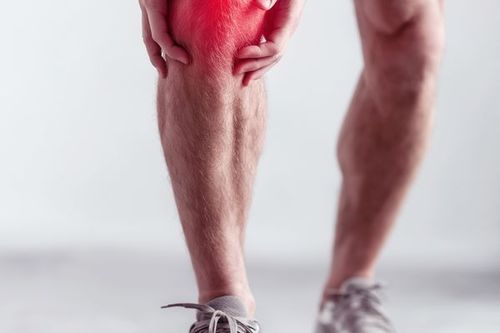
If a knee ligament rupture is left untreated for a long time, the patient cannot perform complex movements in daily activities as well as in sports activities. In addition, if this condition persists, it causes secondary damage to other components of the knee joint such as meniscal tears, stretching of the remaining ligaments, peeling of the articular cartilage surface, and joint degeneration.
When the patient has a prolonged knee ligament rupture, restricted knee movement leads to thigh muscle atrophy.
The tibial plateau will shift forward relative to the femur, causing knee instability, and the patient will have difficulty walking if the anterior cruciate ligament tear is torn.
Knee instability causes the tibial plateau to slide forward relative to the femoral condyles, trapping the meniscus between the two bones and causing it to tear. The meniscus will tear even more extensively if this phenomenon continues to repeat.
Anterior cruciate ligament rupture alters the knee joint’s kinematics, leading to abnormal force distribution from the femoral condyles onto the tibial plateau, which results in articular cartilage damage. The consequence is knee osteoarthritis.
3. Symptoms of anterior cruciate ligament rupture of the knee
Some symptoms that may appear when the anterior cruciate ligament of the knee is torn include:
- Hearing a cracking sound after the injury, knee swelling, and difficulty with movement. These symptoms will resolve on their own after a few weeks.
- Knee looseness: The patient feels difficulty walking, weak legs; the leg with the loose knee has difficulty bearing weight; easily stumbles when running fast; when climbing stairs, the leg feels unstable and stepping up or down becomes difficult.
- Muscle atrophy: Due to muscle atrophy, the injured thigh becomes smaller than the healthy side. Because the patient moves less due to pain caused by knee looseness, this symptom often appears later. People who are less physically active, such as office workers or students, are more likely to develop muscle atrophy.
Doctors diagnose anterior cruciate ligament injury through X-ray imaging and MRI.
4. Causes of anterior cruciate ligament rupture of the knee
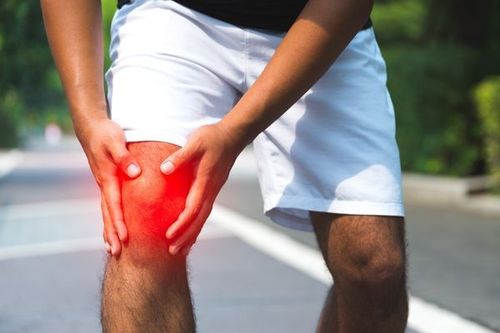
Anterior cruciate ligament rupture occurs due to direct trauma and indirect trauma. Direct trauma accounts for about 30%, such as direct impact to the knee region or when playing sports like football, volleyball… or traffic accidents involving knee impact.
Indirect trauma is the most common cause of anterior cruciate ligament rupture. For example, you are running and suddenly stop or change direction while your foot remains fixed.
Direct trauma accounts for about 30% when directly impacting the knee region or playing sports.
5. Treatment of anterior cruciate ligament rupture of the knee
When you have an anterior cruciate ligament rupture of the knee, the method of treatment is to undergo surgery to reconstruct the torn ligament; the appropriate time is from 1 week to 2 months after the ligament is torn.
For cases of complete anterior cruciate ligament rupture, anterior cruciate ligament reconstruction surgery is performed to improve knee joint function and prevent secondary damage caused by the rupture.
In cases of partial anterior cruciate ligament rupture where the remaining fibers are no longer sufficient to stabilize the knee joint, anterior cruciate ligament reconstruction may also be indicated.
Especially after surgery, you must undergo rehabilitation exercises to ensure that the new ligament receives adequate blood supply, becomes strong, and is able to stabilize the knee joint. If rehabilitation is not performed correctly, the new ligament will fail.
With continuous scientific advances, patients can be treated for anterior cruciate ligament tear rupture using arthroscopic ACL reconstruction with the ALL INSIDE technique.
ALL INSIDE is a minimally invasive technique used to treat anterior cruciate ligament rupture, employing a titanium cross-pin and ultra-durable sutures to securely fix the graft to the bone, helping it to heal quickly, minimizing the risk of infection, and reducing pain during and after surgery. As a result, the success rate of the surgery continues to improve, and the patient’s recovery time is significantly shortened. Patients can begin stable walking as early as the second day after surgery, facilitating early rehabilitation and quick return to normal activities.
The Vinmec Orthopedic Trauma and Sports Medicine Center is one of the few FIFA-standard centers in the world and the first in Vietnam. The center has received major technological investment, such as the 3D Technology in Medicine Center and the first Motion Analysis Lab in Vietnam, on par with regional and global standards.
In terms of expertise, Vinmec has mastered techniques and achieved breakthroughs in treatment, with advanced, individualized techniques such as anatomical mapping, precision surgery using robotic assistance, specialized rehabilitation, and advanced nutrition programs. It also maintains a network of collaborations with many international sports medicine experts. Therefore, on March 23, 2022, the Vietnam Football Federation (VFF) officially signed a partnership with Vinmec to improve medical care for national team players. In addition to injury treatment for competition, the collaboration between VFF and Vinmec also includes structured and professional sports medicine training and research to enhance technical quality.
To arrange an appointment, please call HOTLINE or make your reservation directly HERE. You may also download the MyVinmec app to schedule appointments faster and manage your reservations more conveniently.


