
This article is professionally reviewed by MSc, MD Võ Thiện Ngôn – Department of General Surgery, Vinmec Da Nang International Hospital.
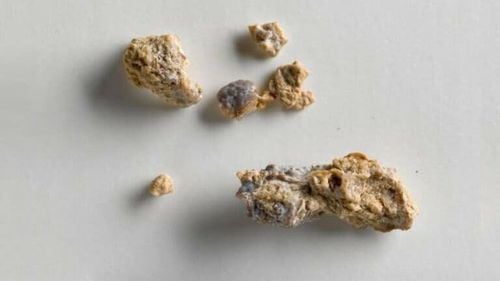
Kidney stones are the most common type of urinary tract stones. They vary in size, and the choice of treatment depends on several factors, including stone size.
1. What is considered a large kidney stone?
Treatment for kidney stones primarily depends on their size, making it essential for doctors to determine the stone’s dimensions to select an appropriate treatment method.
- For small stones (<5mm): These usually do not require invasive intervention. Treatment mainly involves conservative medical management, including medication and lifestyle modifications.
- For larger stones (>5mm): Stones of this size often require surgical or minimally invasive interventions.
2. Treatment options for kidney stones
- For small kidney stones (<7mm) that have not caused complications, medical management includes medications, dietary adjustments, increased fluid intake, and physical activity.
- For larger stones (>7mm), open surgery is rarely performed in developed countries due to postoperative complications. However, in Vietnam, it is still widely used due to late diagnosis and associated complications.
The most effective treatment methods for kidney stones larger than 7mm, which minimize complications, reduce pain, and allow for quick recovery, include:
2.1 Extracorporeal shock wave lithotripsy (ESWL)
This is one of the least invasive and most painless treatments, with a quick recovery time. Hospitalization is minimal, often requiring only half a day.
ESWL is suitable for stones smaller than 15mm (around 2cm). It uses shock waves to break large stones into smaller fragments, which are then passed out naturally through urine. The success rate of this method ranges from 55% to 85%.
2.2 Ureteroscopic lithotripsy
This is a scar-free procedure with a fast recovery time, usually requiring a 1-day hospital stay.
Procedure: A thin ureteroscope is inserted through the urethra and into the ureter to access the stone. A laser is then used to fragment the stone, and the debris is removed through the ureteroscope. A JJ stent (a soft double-J catheter) is placed in the urinary tract, coiling at both ends in the renal pelvis and bladder, and is removed after about one month.
2.3 Standard percutaneous nephrolithotomy (PCNL)

This advanced technique can completely replace open surgery, making it ideal for stones larger than 25mm, especially staghorn stones. It causes minimal kidney damage, results in a small surgical scar (<1cm), and requires only 3–5 days of hospitalization.
Patients undergoing this procedure receive general anesthesia.
2.4 Mini-percutaneous nephrolithotomy (mini-PCNL)
This technique is based on standard PCNL but uses a smaller ureteroscope, reducing hospital stay to 1–2 days. It results in less bleeding, less pain, minimal kidney damage, and an almost invisible surgical scar.
This method is highly effective for stones ranging from 15–25mm, especially for patients who have failed multiple ureteroscopic lithotripsy or ESWL treatments.
To arrange an appointment, please call HOTLINE or make your reservation directly HERE. You may also download the MyVinmec app to schedule appointments faster and manage your reservations more conveniently.