

Caring for a child with Autism Spectrum Disorder (ASD) at home is a major concern for many families immediately after receiving the diagnosis. Alongside professional interventions, the daily living environment plays a foundational role, directly influencing a child’s sense of safety, ability to rest, and level of connection with caregivers. This article focuses on core principles to help parents care for a child with ASD at home in a practical, realistic, and sustainable way.
Written by: MSc. Phan Thi Phuong - Healthcare Professional Integrated Mental Health Care Center - Vinmec Times City International Hospital
When parents first receive the diagnosis that their child is on the autism spectrum, many describe the moment as one of “standing still.” It is not only shock, but a complex mix of emotions: worry, confusion, sadness, sometimes guilt, and countless unanswered questions.
Will my child be able to integrate? Can my child go to school like other children? Did I do something wrong? And from tomorrow on, how will our family live?
In reality, ASD is not an acute illness that requires immediate treatment. It is a lifelong neurodevelopmental characteristic that affects how a child communicates, interacts socially, perceives the world around them, and adapts to their environment. Because of this nature, supporting a child with ASD not only impacts the child individually but also profoundly influences the daily rhythm, emotional well-being, and overall structure of the entire family.
Understanding How to Care for a Child with ASD at Home
Children with Autism Spectrum Disorder (ASD) and Subtle Changes in Family Life
When a family has a child with ASD, changes often do not arrive loudly or suddenly; instead, they quietly weave their way into everyday routines: a meal may take longer because the child is selective about food; a stressful morning because the child refuses to change clothes; or an exhausting evening because the child has difficulty falling asleep or wakes up repeatedly.
Although these challenges may seem small, over time they can make the entire family feel that life has been disrupted. However, a proper understanding of ASD helps parents gradually realize that these disruptions are simply part of the process of the whole family learning to establish a new daily rhythm that better suits all its members.
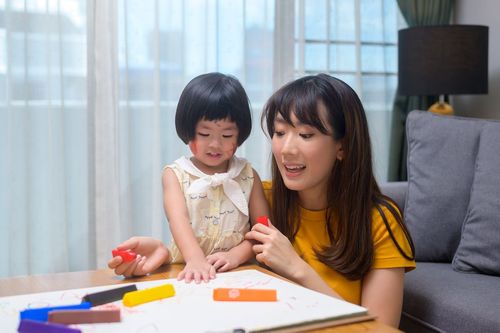
Home Care Is Not Intervention - It Is the Foundation for Development
The invisible pressures of caring for a child with ASD often lead parents to feel the need to constantly “teach”, “intervene,” or apply specialized therapeutic exercises. In reality, through parents’ daily love and companionship, a living environment can be created in which the child feels safe, understood, and supported each day.
What happens within the family - the way adults respond, daily routines, and the emotional atmosphere - forms the foundation upon which professional interventions can be effective. When the home environment is stable and supportive, children have more opportunities to learn and develop in a natural way.
How to Care for a Child with ASD at Home
Building a Stable Daily Routine for Children with ASD at Home
Many children with ASD struggle to adapt to change. Even small changes, such as a different mealtime, a different caregiver, or rearranged furniture, can cause distress, confusion, or strong reactions.
Creating routines that are relatively stable and predictable, such as consistent mealtimes, sleep schedules, and daily activities, helps children perceive the world as more predictable. When children know what will happen next, their sense of anxiety is significantly reduced.

Daily Communication with Children with ASD: Slowing Down to Better Understand Your Child
Children with ASD communicate in their own way
Communicating with a child with ASD can be challenging for parents, but it is also an opportunity to better understand the child. Although some children experience language difficulties or limited social interaction, they still have a desire to connect with the world in their own unique way.
Walking Alongside Your Child with Patience
In daily life, the goal is not to force children to speak “correctly,” but to help them feel understood and appropriately responded to. Short, clear, concrete sentences, combined with gestures or visual supports, often help children process information more easily.
Giving children enough time to respond is also essential. When adults slow down, children have space to process information and express themselves in their own way, rather than feeling pressured to respond immediately.
Supporting Daily Living Skills: Helping Children Learn Through Everyday Life
Supporting step by step rather than forcing
Basic daily living skills such as eating, personal hygiene, and dressing are often major sources of stress in families with children with ASD. However, these skills do not need to be “taught” in a classroom-like manner at home.
Instead, providing step-by-step support, modeling actions, and gradually encouraging participation helps children build confidence. When children struggle, timely support is far more helpful than scolding or rushing them.
Respecting each child’s individual pace
It is important to note that each child develops at their own pace. Comparing a child with siblings or peers often increases pressure on both the child and the parents. When parents respect the child’s individual pace, the child feels safer and more understood.

Adjusting the Sensory Environment
Many children with ASD are sensitive to sound, light, smells, or tactile sensations. A space that is too noisy, too bright, or too cluttered can quickly overwhelm them. They may become irritable, withdrawn, uncooperative, or display behaviors that families find difficult to understand.
When parents observe and modify factors that cause discomfort, such as reducing noise, softening lighting, or keeping spaces organized, children often become calmer and more cooperative. This is the way to allow the child’s nervous system to rest and recover.
Emotional Care: For the Child - and for the Whole Family
Acknowledging the child’s emotions
Children with ASD experience a full range of emotions; they may simply express them differently. Acknowledging and validating their emotions, rather than dismissing or minimizing them, helps children feel respected and safe, and strengthens the emotional connection between parents and child.
Parents’ emotions matter too
Parents’ emotions are equally important. Feelings of exhaustion, anxiety, or helplessness are entirely understandable on this journey. When caregivers take care of their own well-being and seek support when needed, they are better able to accompany their child in a sustainable way.
When Should Families Seek Professional Support?
Signs that additional support is needed
Home-based care is an important foundation, but timely professional support for both the child and the family is the best way to build a comprehensive developmental pathway.
When a child experiences ongoing difficulties, displays behaviors that affect safety, or when the family feels overwhelmed, seeking support from mental health professionals is essential.
The role of professionals
Professional support is not meant to replace the family’s role, but to help families better understand the child’s developmental needs and establish appropriate directions. Through assessment and ongoing guidance, professionals can help parents identify the child’s strengths and specific challenges, allowing them to adjust daily care and interactions more effectively.
Conclusion
Caring for a child with ASD at home is a long journey that requires patience, understanding, and a great deal of love. There is no need to do everything perfectly; by listening and accompanying the child with compassion, families already provide a precious foundation for the child’s development.
If you are raising a child with ASD, remember that you are not alone. When needed, seeking professional support is a positive step that helps the entire family move forward with greater confidence and resilience.
References
- Exceptional Lives – How to Support Your Autistic Child at Home
- Jigsaw Diagnostics – In-Home Care for Children with Autism
- Expert Minds – Supporting a Child with ASD
- iCare Home Health – How Home Care Services for Autism Can Help Your Child
To arrange an appointment, please call HOTLINE or make your reservation directly HERE. You may also download the MyVinmec app to schedule appointments faster and manage your reservations more conveniently.