
The article is professionally consulted by Associate Professor, MD Huynh Thoai Loan - Head of the Pediatrics - Neonatology Department at Vinmec Central Park International General Hospital. She is one of the experts in Pediatrics - Neonatology in Ho Chi Minh City, with nearly 30 years of experience in examining and treating pediatric endocrine disorders, pediatric nephrology, and other pediatric and neonatal issues.
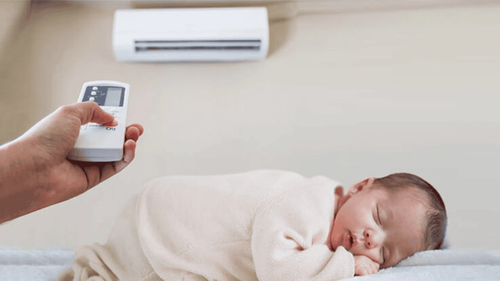
When the weather is hot, air conditioning will be a solution for ensuring a good night's sleep for children. However, it is important to know how to use the air conditioning appropriately and safely for children.
1. Should air conditioning be used for infants?
Most parents believe that infants have delicate bodies, with poor tolerance and adaptability, so they try every way to keep their babies warm, such as dressing them in thick clothes, wrapping them in diapers, or covering them with multiple layers of blankets to prevent them from getting cold. As a result, they are hesitant to use air conditioning for infants in the summer.
However, this is a misconception, as healthy, full-term infants weighing 3.5 kg or more have enough fat layers to maintain their body temperature. The thermoregulation mechanism in infants is also functioning, allowing them to sleep well and safely at the same room temperature as adults. Conversely, if parents keep the baby too warm by covering them with too many blankets, it can be detrimental and even pose a greater risk to the baby.
However, if the infant is premature or weighs less than 3.5 kg, it is best for parents to wait until the child is 1 to 2 months old, depending on the baby's development, before using air conditioning.
Note: When using air conditioning, the doors must be closed, and the air is trapped inside. However, for young children, air circulation is very important. Therefore, when using air conditioning, parents should turn on a ventilation fan to ensure good airflow in the room.
=>> See more information from pediatric specialists at Vinmec Central Park International General Hospital: What temperature should infants sleep in an air-conditioned room?
2. How to properly use air conditioning for infants
In addition to providing comfort for infants and preventing sudden infant death syndrome during hot weather, air conditioning can also dry out the respiratory system, leading to respiratory issues such as respiratory infections, bronchitis, and bronchiolitis.
Especially when using air conditioning, if infants are not monitored and cared for properly, they may face dangerous complications. To use air conditioning for infants correctly without affecting their health, parents should pay attention to the following:
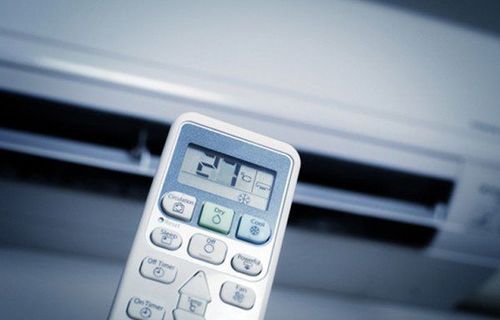
2.1. Set the air conditioning temperature between 26-28 degrees Celsius
Infants are defined as those from birth to 30 days old. Infants do not have the ability to regulate their body temperature like older children or adults, especially premature infants. For full-term infants who are properly cared for, their normal body temperature will be around 36.5 – 37.5 degrees Celsius. If the infant is dressed in clothes, wearing mittens, socks, a hat, and covered with a blanket, the ideal temperature in the air-conditioned room should be between 26 – 28 degrees Celsius.
If the room temperature is set above 28 degrees Celsius, it can cause the infant to sweat and develop heat rash, as well as increase the risk of sudden infant death syndrome, which is the sudden unexplained death of infants aged 1-12 months. Therefore, parents should gradually lower the room temperature until the infant is no longer sweating and is comfortable.
To accurately know the room temperature, families should have a thermometer to measure the room temperature instead of relying solely on the air conditioning unit's display.
2.2. Do not directly blow air conditioning on the baby
The respiratory system of young children is very sensitive. If the air conditioning blows directly onto the baby's face or head, infants with weaker constitutions are at a higher risk of respiratory illnesses such as respiratory allergies, rhinitis, bronchiolitis, and pneumonia.
The air conditioning unit should be installed high up, and the air vents should not be directed straight at the area where the baby is lying. It is advisable to set the fan speed to the lowest setting and to use the oscillation mode.
2.3. Limit air conditioning use to no more than 2-3 hours at a time
Parents should only allow the baby to stay in the air-conditioned room for a maximum of 2-3 hours at a time. This means that every 2-3 hours, parents should take the baby outside to normal temperatures for 10-15 minutes. This is also the time to refresh the air in the room while allowing sunlight to enter.
2.4. Do not suddenly take the baby outside
When the baby is in an air-conditioned room, do not suddenly take them outside. The temperature difference can cause the baby to experience thermal shock, leading to fever, colds, or coughs, etc,...
If you want to take the baby outside, turn off the air conditioning and let the baby continue sitting in that room. Gradually increasing the room temperature will help the baby adapt better. Only take the baby outside when the room temperature is close to the outdoor temperature.
On the other hand, when the baby comes back inside after being outside and is sweating, parents should wipe the sweat off and let the baby rest for at least 3 minutes at normal room temperature to avoid immediately entering a cold air-conditioned room with a sudden drop in temperature.
2.5. Regularly clean the house and air conditioning unit
Pay attention to maintenance schedules to ensure the air conditioning unit is always clean and operating at the correct capacity. Regularly clean the room to prevent bacteria from entering.
Additionally, if the air conditioning has been turned off for a long time, it needs to be thoroughly cleaned, recharged with refrigerant, and the filter should be dusted off to avoid mold, bacteria, or pathogens lingering in the unit, which can affect the baby's respiratory system.
2.6. Maintain humidity for the baby's body
In addition to being mindful of how to use the air conditioning, parents should also pay attention to the baby's health. While air conditioning provides a cool feeling, it can also easily cause dry skin and dry nasal passages. Parents should regularly use saline drops for the baby and ensure the baby is fed frequently, especially for breastfed infants, to prevent dehydration.
When the baby sleeps, parents should cover them with a thin blanket, especially over the abdomen, to avoid dilated pores that can lead to colds. Change wet diapers frequently and promptly to keep the baby warm.
Use a moisturizer suitable for infants at appropriate intervals to keep the baby's skin smooth. Place a small bowl of water in the room, near the air conditioning unit, to help balance the dry air.
If the weather is not too hot, it is not necessary to use air conditioning for the baby. Natural air and breeze are still the best for the baby's body.
In addition to using air conditioning properly to help infants avoid upper respiratory illnesses, parents should also pay attention to a nutrition regimen that boosts the baby's immune system. Additionally, supplementing with foods containing lysine, essential trace minerals, and vitamins such as zinc, chromium, selenium, and B vitamins, etc,... can help support the immune system, enhance resistance, and reduce the frequency of minor illnesses and digestive issues.
Parents can learn more about:
Why is it necessary to supplement lysine for babies?
The role of zinc - A guide to proper zinc supplementation
Be sure to regularly visit Vinmec.com for useful information to care for your baby and your family.
To arrange an appointment, please call HOTLINE or make your reservation directly HERE. You may also download the MyVinmec app to schedule appointments faster and manage your reservations more conveniently.