This article was professionally reviewed by Master, Doctor Nguyễn Minh Sơn – Interventional Cardiologist, Department of General Examination & Internal Medicine, Vinmec Nha Trang International General Hospital.
Atrial premature beats (APBs) are a type of arrhythmia caused by the atria generating abnormal early beats before the normal heartbeat. These premature beats are often weak and inefficient in pumping blood, leading to sensations of skipped beats and palpitations that you may be experiencing.
1. What is atrial premature beat (APB)?
Atrial premature beat (APB) is a common type of arrhythmia characterized by an early heartbeat caused by an abnormal electrical signal originating from the atria, the upper chambers of the heart.
Normally, the sinoatrial (SA) node generates electrical impulses that regulate the heartbeat. However, when an abnormal electrical signal from the atria fires instead of the SA node, it triggers a premature beat. This beat is often weak, causing the heart to “pause” briefly before resuming with a stronger beat to pump out the accumulated blood. This process creates a sensation of skipped or irregular heartbeats.
Atrial premature beats are relatively common and can occur even in healthy individuals. They rarely cause symptoms and are mostly harmless. However, if these premature beats occur too early, they may encounter a refractory atrioventricular (AV) conduction pathway, preventing the impulse from reaching the ventricles. When APBs occur in clusters, they can lead to a slow heart rate, a condition known as blocked atrial premature beats (where "block" refers to the impulse being stopped).
2. Symptoms of atrial premature beats (APBs)

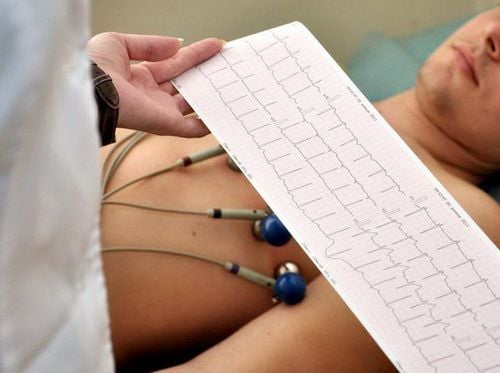
One of the most common symptoms of atrial premature beats (APBs) is an irregular heartbeat, extra beats, skipped beats, stronger heartbeats, a fluttering sensation in the chest, and brief pauses. Simple tests such as an electrocardiogram (ECG) can help detect episodes of APBs.
In addition to these common symptoms, individuals with APBs may also experience signs similar to other cardiovascular conditions, such as:
- Fainting or lightheadedness.
- Increased awareness of heartbeats.
- Sweating and pale complexion during irregular heartbeats.
- Chest pain, shortness of breath, and dizziness.
- Fatigue after exercise.
Sometimes, people newly experiencing APBs may not show clear symptoms, making early detection of the condition more challenging.
3. Are atrial premature beats (APBs) dangerous?
Atrial premature beats (APBs) are generally benign and not dangerous in the early stages. In many cases, APBs cause no symptoms or may be felt as a brief skipped beat, an extra beat, palpitations, or rapid heartbeats. If APBs occur in clusters of 5–10 beats, they can lead to dizziness, chest discomfort, or a sensation of heart pounding.
Prolonged episodes of APBs can cause fatigue, headaches, stress, and mental exhaustion, negatively impacting concentration, work efficiency, and overall quality of life.
If APBs occur infrequently, there is no need for excessive concern. However, the condition may gradually worsen, especially in individuals with underlying heart diseases such as coronary artery disease or cardiomyopathy. In such cases, APBs can be an early warning sign of more serious arrhythmias like atrial fibrillation (AF) or supraventricular tachycardia (SVT). If this happens, immediate cardiology consultation is necessary to assess the need for antiarrhythmic treatment.
4. Treatment for atrial premature beats (APBs).

The primary goal in treating atrial premature beats (APBs) is to stabilize the heart rhythm, reduce the frequency of premature beats, and improve quality of life.
3.1. Medications for Treating Atrial Premature Beats (APBs)
- Treating the underlying cause: APBs caused by other conditions, such as hypertension or hyperthyroidism, may improve with treatment of the primary disease.
- Symptomatic treatment: Antiarrhythmic medications can help reduce irregular heartbeat symptoms. Commonly used drugs include beta-blockers and calcium channel blockers.
3.2. Catheter Ablation
Radiofrequency catheter ablation is an effective procedure for treating APBs. A doctor inserts a catheter into the heart through a vein in the groin, locates the abnormal electrical signals, and ablates them. However, if APBs occur infrequently or do not appear during the procedure, they may be missed.
Who Should Consider Catheter Ablation?
- Patients experiencing palpitations due to APBs.
- Those who do not respond to medication or experience severe side effects. In these cases, ablation can be highly effective.
- Patients who prefer not to take long-term medication.
- Individuals whose heart function is declining due to progressive APBs.
Although APBs may not be dangerous initially, they can lead to severe complications over time. Therefore, it is essential for patients to monitor symptoms and follow medical guidance to prevent disease progression.
To arrange an appointment, please call HOTLINE or make your reservation directly HERE. You may also download the MyVinmec app to schedule appointments faster and manage your reservations more conveniently.