

Have you ever spent hours lying in bed but still could not fall asleep, with your mind constantly racing with thoughts? Or do you often wake up during the night, sleep lightly, and still feel exhausted in the morning? These are common signs when stress persists over time.
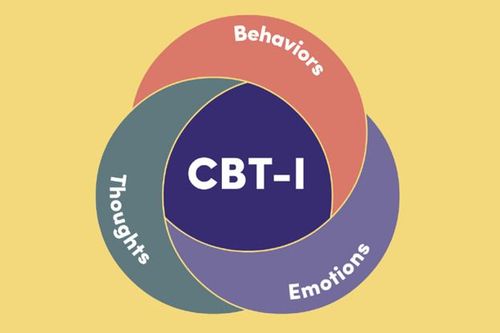
One of the most widely recommended treatments for insomnia today is Cognitive Behavioral Therapy for Insomnia (CBT-I) - the gold-standard treatment supported by decades of scientific research. CBT-I focuses on adjusting thoughts, behaviors, and habits that maintain insomnia, helping about 70–80% of individuals achieve sustainable sleep improvement without medication.
Below are several practical tips based on the core principles of CBT-I, compiled by the expert team at the Integrated Mental Health Center Vinmec (IMHC) to help you gradually rebuild a healthy and natural sleep rhythm.
Content written by: MSc Pham Hoai Thu - Clinical Psychologist - Integrated Mental Health Care Center (IMHC) - Vinmec Times City International General Hospital.
Don’t “Force” Sleep: Stimulus Control to Retrain the Brain
Your bed should signal relaxation - not frustration.

If you often:
- Work while lying in bed
- Scroll on your phone for hours
- Lie awake worrying or blaming yourself for not sleeping
your brain may gradually associate the bed with wakefulness instead of sleep.
How to adjust this habit:
- Use the bed only for two purposes: Sleep and Sex.
- If you cannot fall asleep after 20 minutes, then you get out of bed.
- Do a calm and low-stimulating activity such as reading a paper book or listening to soft music under dim lighting.
- Return to bed when you feel sleepy.
At first, this approach may feel inconvenient. However, after 1–2 weeks of consistent practice, your brain will gradually relearn that the bed is a place for sleep, not for worry or frustration.
Reduce Time in Bed to Improve Sleep Depth
Many people believe that staying in bed longer will help them sleep more. In reality, when time spent in bed is much longer than actual sleep time, sleep tends to become fragmented and less restorative.
In Cognitive Behavioral Therapy for Insomnia (CBT-I), a technique called sleep restriction is used to help you sleep deeper and more efficient.
How to try this technique
- Track your actual sleep time for a week.
- Limit your time in bed to your average sleep duration plus about 30 minutes.
- Maintain consistent sleep and wake times every day.
For example, if you find that you sleep for around 5 hours per night, you may initially limit your time in bed to about 5.5 hours. When sleep efficiency reaches 85-90% (meaning you are asleep most of the time you are in bed), you can gradually increase your sleep window by about 15 minutes per week.
During the first few days, you may feel slightly more tired due to reduced time in bed. However, after 2-4 weeks, many people notice deeper sleep and fewer nighttime awakenings.
Adjust Habits That May Worsen Sleep Without You Realizing
Small daily habits can significantly influence sleep quality. Some simple adjustments may help your body transition more easily into a restful state:
- Limit caffeine in the afternoon, ideally avoiding it after 1-2 PM.
- Avoid heavy meals or alcohol close to bedtime. Although alcohol may make you feel sleepy initially, it can disrupt sleep later in the night.
- Maintain regular physical activity, but finish with exercise at least 3 hours before bedtime.
- Keep the bedroom cool, dark, and quiet, with an ideal temperature of 18-20°C.
- Reduce the use of phones, computers, or electronic devices at least 60 minutes before bedtime.
These adjustments are not strict rules. However, they help create favorable physiological conditions for the body and the nervous system to gradually shift into a relaxed state that supports sleep.
Calming Anxious Thoughts Before Bedtime
Many people experience insomnia due to thoughts such as:
- “If I cannot sleep tonight, tomorrow will be terrible.”
- “I must get eight hours of sleep to function well.”
These thoughts can increase pressure and make falling asleep even harder.
In reality, most adults maintain good health with about 7 ± 1 hours of sleep per night. Occasional nights of poor sleep usually do not cause serious health consequences.
To reduce sleep-related worry, you may try:
- Writing down your concerns before bedtime.
- Asking yourself: “Is there evidence that what I fear will definitely happen?”
- Reframing the thought in a more balanced way, such as: “Even when I sleep less, I have still managed to complete my work the next day.”
Adjusting your thinking patterns can significantly reduce the time spent lying awake before sleep.
Relaxation Techniques to Help the Body Shift Into Rest Mode
When stress is high, the body remains in a state of alertness. Relaxation techniques can activate the parasympathetic nervous system, which supports rest and recovery.
Progressive Muscle Relaxation (PMR)
Progressive Muscle Relaxation (PMR) was developed by Edmund Jacobson. This technique helps release physical tension by systematically tensing and relaxing muscle groups, reducing bodily tension that often contributes to anxiety and insomnia.
How to practice (10-15 minutes):
- Lie down or sit comfortably in a quiet place. Close your eyes and begin deep breathing: inhale for 4 counts - hold for 4 - exhale for 6.
- Start with the feet: curl your toes and tense the muscles for about 5 seconds, then release for 20-30 seconds, noticing the feeling of relaxation.
- Continue moving sequentially through other muscle groups: calves (point/flex), thighs (tighten), buttocks (contract), abdomen (tighten), chest (take a deep breath and hold), shoulders (shrug upward), hands (clench fists), neck (gently tilt), face (scrunch), and scalp (raise the forehead). For each muscle group, gently tense the muscles for a few seconds and then fully release them.
Finish by bringing awareness to the whole body, breathing slowly and relaxing any remaining tension.
You may repeat a calming phrase such as:
“My body is becoming relaxed and at ease.”
A meta-analysis published in Sleep Medicine Reviews suggests that PMR may improve sleep efficiency by about 10-15%, particularly for individuals who feel tense before bedtime.
Mindfulness
Mindfulness can improve sleep by reducing pre-sleep stress and helping individuals observe their thoughts calmly without judgment. This may interrupt the cycle of worry → difficulty sleeping → increased worry.

Some therapeutic programs incorporate mindfulness practices to help people with insomnia notice thoughts without becoming attached to them, allowing the nervous system to relax.
How to practice (10–20 minutes before bedtime):
- Sit or lie comfortably and focus on your natural breathing.
- When a thought arises (for example, “I will not be able to sleep again tonight”), simply acknowledge it as a thought, then gently turn attention back to your breathing.
- End by slowly bringing awareness from head to toe, allowing the body to soften and relax.
Research shows that when mindfulness is combined with CBT-I, improvements in sleep quality can be sustained over time while reducing daytime fatigue.
Diaphragmatic Breathing (4-7-8 Technique)
This breathing technique helps slow the heart rate and activate the body’s relaxation response, supporting the transition toward sleep.
How to practice (5-10 minutes):
- Inhale gently through the nose for 4 seconds, allowing the abdomen to expand.
- Hold the breath for 7 seconds.
- Exhale slowly through the mouth for 8 seconds, with lips slightly pursed as if blowing out a candle.
- Repeat 4-8 cycles.
While exhaling, you may imagine tension leaving the body.
For many people, regular practice of this technique may reduce the time needed to fall asleep by 10-20 minutes.
Cognitive Shuffling
This technique was developed by Dr. Luc Beaudoin to reduce repetitive thoughts before sleep. It works by introducing neutral and disconnected mental images, similar to the way the brain transitions into dream-like states before sleep.
How to practice (5-10 minutes):
- Prepare 5-10 simple images, such as a kitten, a pebble, socks, a banana, or the Eiffel Tower.
- While lying in bed, imagine each image for 10–30 seconds, then switch randomly to another image, similar to changing TV channels.
- Avoid creating a story - simply observe the image in your mind.
- If worries appear, gently return to the chosen images.
Repeat the process until you feel sleepy. Some studies suggest this technique help people fall asleep faster than traditional methods such as counting sheep.
When Should You Seek Professional Support?
You may consider consulting a psychologist or medical specialist if insomnia:
- Lasts more than 4 weeks
- Clearly affects work performance or emotional well-being
- Occurs together with anxiety, low mood, or persistent fatigue
Seeking support early does not mean the problem is “serious.” Instead, it reflects a proactive approach to caring for your mental health before sleep difficulties become chronic.
Stress-related insomnia is a common experience, and it does not mean you are weak or unable to relax. Sleep is a physiological process that can often be restored when thoughts and behaviors are adjusted appropriately.
You may start by trying one or two techniques tonight and observe the changes over the next 1-2 weeks.
If you need further guidance, the expert team at IMHC is always ready to listen, provide support, and walk alongside you on your journey toward better mental health and restorative sleep.
To arrange an appointment, please call HOTLINE or make your reservation directly HERE. You may also download the MyVinmec app to schedule appointments faster and manage your reservations more conveniently.


