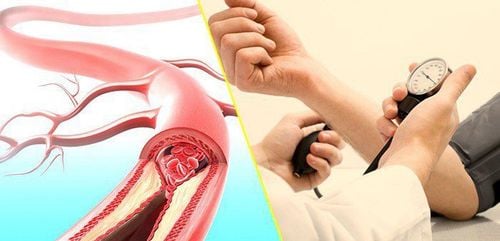
Hyperium 1mg contains the active ingredient Rilmenidine. This medication is used to treat mild to moderate hypertension. However, its use may cause some unwanted side effects. Therefore, patients must strictly follow the doctor’s or pharmacist’s instructions.
1. What is Hyperium? What is Hyperium used for?
1.1. Pharmacodynamics of Hyperium
The active ingredient Rilmenidine is an oxazoline with antihypertensive properties, acting both on the vasomotor center in the medulla oblongata and peripherally. Rilmenidine has higher selectivity for imidazoline receptors than α2-adrenergic receptors in the brain, distinguishing it from α2-agonists.
- At a therapeutic dose of 1mg/day (once daily) or 2mg/day (divided into two doses), placebo-controlled studies have demonstrated its effectiveness in treating mild to moderate hypertension. The antihypertensive effect of Hyperium is maintained overnight and during exertion. These results have been confirmed in long-term studies, showing consistent treatment efficacy.
- At a 1mg/day dose, placebo-controlled studies have shown that Hyperium does not affect concentration ability. Some occasional side effects, such as drowsiness, dry mouth, and constipation, occur at similar frequencies to those in the placebo group.
- At a 2mg/day dose, studies comparing it with α2-agonists at equivalent antihypertensive doses have shown that Hyperium causes significantly fewer and less severe adverse effects than α2-agonists.
At therapeutic doses, Hyperium does not affect heart function, does not cause fluid retention, and does not disrupt metabolic balance:
- Hyperium maintains its antihypertensive effect for 24 hours by reducing total peripheral resistance without affecting cardiac output. It does not alter cardiac electrophysiology or contractility.
- Hyperium does not impair postural adaptation, particularly in elderly patients, and does not affect the physiological heart rate response to exertion.
- Hyperium does not alter renal blood flow, glomerular filtration, or kidney function.
- Hyperium does not affect glucose regulation, even in patients with insulin-dependent or non-insulin-dependent diabetes, and does not alter lipid metabolism parameters.
1.2. Pharmacokinetics of Hyperium
Absorption
- Rapid: After a single oral dose, the maximum plasma concentration (3.5 ng/mL) is reached within 1.5 to 2 hours.
- Complete: Absolute bioavailability is 100%, with no reduction due to first-pass hepatic metabolism.
- Consistent: Minimal interindividual variability in metabolism; food intake does not affect bioavailability. Absorption remains stable at the recommended therapeutic dose.
Distribution
- Plasma protein binding is less than 10%.
- Volume of distribution: 5 L/kg.
Metabolism
- Rilmenidine undergoes minimal metabolism.
- Metabolites appear in urine in trace amounts, primarily due to oxazoline ring hydrolysis or oxidation processes.
Elimination
- Rilmenidine is primarily eliminated via the kidneys and excreted in urine.
- Mean elimination half-life: 8 hours, unchanged by dose or repeated administration.
- Hyperium has a prolonged duration of action, maintaining significant efficacy for 24 hours after the last dose in hypertensive patients treated with 1mg daily.
2. How to use and dosage of Hyperium
2.1. How to take Hyperium
Hyperium 1mg is an oral medication. It is only recommended for adults and should not be used in children.
2.2. Dosage of Hyperium
- The recommended dose is 1 tablet (1mg) once daily in the morning, before meals.
- If no response is observed after one month of treatment, the dose may be increased to 2 tablets (1mg each) per day, divided into two doses (one in the morning and one in the evening).
- For patients with renal impairment (creatinine clearance >15 mL/min): Dose adjustments are generally not required.
- In all cases, patients must strictly follow the prescribed dosage by their doctor.
Dosage notes: The above dosage is for reference only. The specific dose depends on the patient’s condition and disease progression. Always consult a doctor or healthcare professional for an individualized treatment plan.
2.3. Overdose and missed dose management
- Overdose: Symptoms of Hyperium overdose may include significant hypotension and decreased alertness. Treatment may involve gastric lavage and symptomatic therapy. Only a small portion of Hyperium is dialyzable.
- Missed dose: If a dose is missed, take it as soon as possible. However, if it is close to the next scheduled dose, skip the missed dose and continue with the regular schedule. Do not double the dose to compensate for a missed one.
3. Side effects of Hyperium
- Adverse effects of Hyperium are rare, mild, and transient at therapeutic doses. These may include: Fatigue, palpitations, insomnia, drowsiness, exhaustion with exertion, stomach pain, dry mouth, diarrhea, skin rash, itching
- Less common side effects: Cold extremities, orthostatic hypotension, sexual dysfunction, anxiety disorders, depression, itching, swelling, muscle cramps, vomiting, hot flashes
4. Drug interactions with Hyperium
To minimize potential drug interactions, avoid combining Hyperium with: Sultopride, Alcohol, Beta-blockers used for heart failure (e.g., bisoprolol, metoprolol, carvedilol). Patients should inform their doctor about any medications or supplements they are taking to assess possible interactions and adjust treatment accordingly.
5. Precautions when using Hyperium
5.1. Contraindications
Hyperium 1mg is contraindicated in:
- Hypersensitivity to Rilmenidine or any excipients
- Severe psychiatric disorders, major depression
- Severe renal impairment
- Concurrent use with Sultopride
- Avoid combining with alcohol and beta-blockers used for heart failure
5.2. Warnings and precautions
- Do not abruptly discontinue Hyperium 1mg; the dose must be gradually reduced.
- Patients should be regularly monitored by their doctor during treatment.
- Avoid alcohol consumption during treatment.
- Report immediately to a doctor if experiencing severe renal impairment or newly diagnosed cardiovascular conditions.
- Consult a doctor or pharmacist if unsure about usage.
5.3. Additional precautions
- Driving and operating machinery: Hyperium 1mg may cause drowsiness, especially if overdosed or combined with other sedative medications.
- Pregnancy: Avoid using Rilmenidine during pregnancy. Inform your doctor if you become pregnant while taking the medication.
- Breastfeeding: Not recommended for lactating women.
Hyperium 1mg, containing Rilmenidine, is used for the treatment of mild to moderate hypertension. To ensure treatment effectiveness and minimize side effects, patients should use the medication as prescribed and seek guidance from a doctor or pharmacist.
To arrange an appointment, please call HOTLINE or make your reservation directly HERE. You may also download the MyVinmec app to schedule appointments faster and manage your reservations more conveniently.