Norfloxacin is an antibiotic that works by eradicating bacteria through the inhibition of enzymes necessary for bacterial DNA replication. The medication is available in the form of film-coated tablets (200mg, 400mg) or an eye drop solution (0.3%).
1. What is Norfloxacin?
Norfloxacin is an antibiotic belonging to the quinolone class (fluoroquinolone subgroup), similar to ciprofloxacin.
Norfloxacin is indicated for:
- For adults, it is used to treat urinary tract infections (with or without complications) and prostatitis caused by susceptible bacteria.
- Norfloxacin eye drop solution is used to treat blepharitis, chondritis, conjunctivitis caused by susceptible bacterial strains.
Norfloxacin is contraindicated in the following cases:
- Individuals with hypersensitivity to Norfloxacin, quinolones, or any component of the formulation;
- Patients with a history of tendonitis or tendon rupture associated with the use of quinolone antibiotics;
- Children under 18 years of age (at the end of the developmental phase).
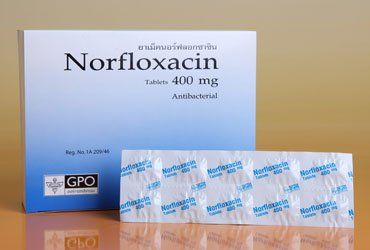
2. Administration and dosage of Norfloxacin
Administration: For the 400 mg Norfloxacin tablet form, it should be taken orally. For the Norfloxacin eye drop solution, it should be administered as eye drops. When taking the medication orally, Norfloxacin should be taken at least 1 hour before meals or 2 hours after meals/milk, and should be taken with a full glass of water. Throughout the day, patients should drink plenty of water to ensure urine output of at least 1200-1500 ml/day for adults.
Dosage: To minimize the risk of crystal formation in urine, the dose should not exceed 400 mg per dose, and it should be taken twice daily for healthy adults with normal kidney function. The specific dosage for individuals aged 18 and above is as follows:
- Acute prostatitis and acute cystitis: Take 400mg per dose, twice daily, for 7-10 days (3 days for uncomplicated urinary tract infections in females) or use this dose for treating uncomplicated urinary tract infections caused by E. coli, Proteus mirabilis, or Klebsiella pneumoniae;
- Chronic recurrent lower urinary tract infections: Take 400mg per dose, twice daily for 12 weeks. The dose may be reduced to 400 mg per dose once daily if a good response is achieved during the first 4 weeks of treatment;
- Chronic prostatitis: Take 400mg per dose, twice daily for 28 days;
- Eye infections: Instill Norfloxacin eye drop solution 0.3%.
Dosage for patients with renal impairment (ClCr ≤ 30 mL/min/1.73 m²): 400mg per dose once daily for patients with urinary tract infections.
Dosage for patients with hepatic impairment: No dose adjustment is necessary.
Overdose: Symptoms of overdose include diarrhea, nausea, dizziness, headache, pseudomembranous colitis, pain and inflammation of tendons. Since there is no specific antidote for an overdose of Norfloxacin, the usual management involves symptomatic treatment such as inducing vomiting, gastric lavage, and rehydration with electrolytes.
Missed dose: If a dose of Norfloxacin is missed, the patient should take the medication as soon as remembered. If it is almost time for the next dose, the missed dose should be skipped, and the next dose should be taken at the regular scheduled time.
3. Side effects of using Norfloxacin
Some potential side effects that patients may experience when using Norfloxacin 400mg:
- Common: Nausea, diarrhea, headache, abdominal muscle cramps, dizziness, eosinophilia, elevated liver enzymes;
- Uncommon: Fever, rash, itching, confusion, photosensitivity, vomiting, diarrhea, abdominal pain, loss of appetite, constipation,...;
- Rare: Loss of appetite, depression, poor sleep, anxiety, agitation, euphoria, hallucinations, disorientation, stomatitis, joint pain, pseudomembranous colitis,...

4. Precautions when using Norfloxacin
Some precautions to remember before using Norfloxacin:
- The risk of tendonitis and tendon rupture may occur when using quinolone antibiotics. This risk is increased when used with corticosteroids, in patients over 60 years old, or in organ transplant recipients. Therefore, treatment with Norfloxacin should be discontinued if tendonitis or tendon rupture occurs. Then, Fluoroquinolones should be contraindicated in such cases;
- Caution should be exercised when prescribing Norfloxacin to elderly patients with impaired renal function. A dose reduction to half of the usual dosage for normal individuals is recommended;
- Norfloxacin should be used cautiously in patients with epilepsy or a history of central nervous system disorders;
- Norfloxacin should be used cautiously in patients with liver or kidney impairment. If the ClCr < 10 ml/min, dosage reduction is necessary, and ClCr should be monitored;
- Fluoroquinolones should not be used in children and adolescents;
- Fluoroquinolones and other quinolones may cause joint disease in animals. Therefore, Norfloxacin should be used with caution in patients with joint disease, as it increases the risk of tendon rupture;
- Avoid concurrent use of Norfloxacin with antiarrhythmic drugs,...;
- The drug may cause photosensitivity reactions, so patients should avoid excessive sun exposure;
- Norfloxacin should not be used in pregnant or breastfeeding women. If the use of Norfloxacin is necessary, breastfeeding should be discontinued during treatment;
- Norfloxacin may cause side effects such as headaches and dizziness. Caution is advised in individuals who drive vehicles or operate machinery.
5. Drug interactions of Norfloxacin
Some drug interactions of Norfloxacin include:
- Some studies show that antacids containing aluminum or magnesium hydroxide reduce the absorption of Norfloxacin by 50 - 98%
- Taking Maalox 2 hours after Norfloxacin decreases the absorption of Norfloxacin by up to one-third;
- Calcium carbonate decreases the absorption of Norfloxacin by 50 - 60%;
- Norfloxacin is not affected by bismuth subsalicylate;
- Co-administration of Norfloxacin with probenecid does not affect the serum concentration of Norfloxacin but reduces its renal excretion;
- Co-administration of Norfloxacin with theophylline and cyclosporine increases the serum concentrations of these two drugs;
- Norfloxacin (like other quinolones) increases the effect of anticoagulants (such as warfarin or its derivatives). Therefore, when using these medications, it is necessary to monitor clotting time through appropriate tests;
- Do not use products containing trace elements such as zinc and iron with Norfloxacin or within 2 hours of taking Norfloxacin as they may decrease the serum concentration of Norfloxacin in the bloodstream and urine;
- Norfloxacin (like other quinolones) can affect the metabolism of caffeine, reducing its clearance and prolonging its half-life in the plasma;
- Norfloxacin may reduce the efficacy of mycophenolate, BCG, sulfonylureas, the typhoid vaccine;
- Avoid concurrent use of Norfloxacin with the following drugs: BCG, Artemether, nilotinib, nitrofurantoin, quinine, dronedarone, pimozide, lumefantrine, tetrabenazine, vandetanib, vemurafenib, thioridazine, tolvaptan, toremifene, ziprasidone,...

Additionally, the average peak concentration of Norfloxacin in the serum may be reduced when taken with food or dairy products.
Norfloxacin is an antibiotic used to treat various bacterial infections. To avoid the risk of drug interactions causing adverse reactions, patients should inform their doctor about any drugs they are currently taking.
Read more:
To arrange an appointment, please call HOTLINE or make your reservation directly HERE. You may also download the MyVinmec app to schedule appointments faster and manage your reservations more conveniently.