1. Why do children often get bitten by mosquitoes?
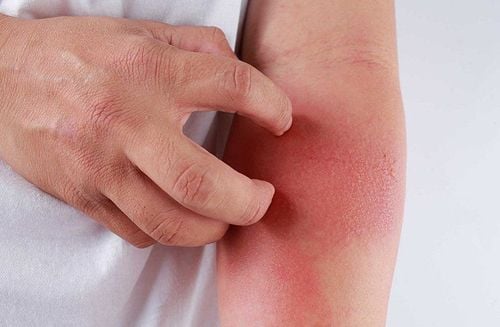
Mosquitoes feed on human blood, and children are frequent victims of these insects. When a child is bitten by a mosquito, the bite mark may not appear immediately but usually becomes visible after some time, often accompanied by itching and swelling.
Children are more prone to mosquito bites due to several factors:
- Children have a faster metabolism than adults, are more active, and sweat more. This makes them more noticeable and attractive to mosquitoes, increasing their chances of being bitten.
- Children with blood type O are more likely to get bitten by mosquitoes.
- Dark-colored clothing attracts mosquitoes.
- The skin of children harbors more natural bacteria.
- Children like to play in shaded areas where mosquitoes tend to hide.
- Children with Skeeter syndrome are more likely to attract mosquitoes.
2. Risks of mosquito bites in children
Children bitten by mosquitoes face several risks, including:
2.1 Skin infections and scarring
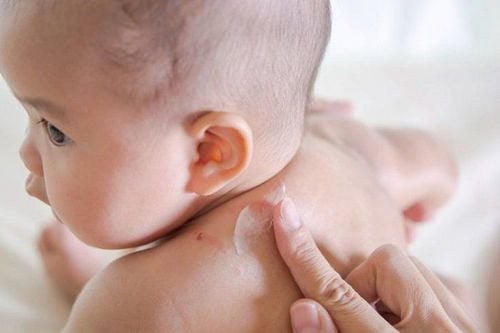
The reaction to a mosquito bite varies depending on the child's immune system and the type of mosquito. Some bites may disappear quickly, while others can cause intense itching. If a child scratches the bite excessively, the skin may become abraded, allowing bacteria and viruses to enter, potentially leading to skin infections and scarring.
2.2 Risk of dengue fever
Mosquitoes are dangerous carriers of infectious diseases, including dengue fever.
Dengue fever is an acute infectious disease caused by the Dengue virus and can lead to outbreaks. The disease spreads when an Aedes mosquito bites an infected person and then transmits the virus to a healthy individual. Dengue fever outbreaks commonly occur during the rainy season, particularly from July to October.
Children are more susceptible to dengue fever than adults because they spend more time playing in shaded areas with dense vegetation, where mosquitoes thrive. Additionally, their active play and sweating make them easier targets for mosquitoes. Furthermore, children have weaker immune systems than adults, making them more vulnerable to infections.
Dengue fever progresses rapidly from mild to severe. If not detected early and treated promptly, it can be fatal.
2.3 Risk of Skeeter syndrome
Skeeter syndrome is an allergic reaction to proteins found in mosquito saliva. Symptoms of Skeeter syndrome include inflammation at the bite site (swelling, heat, redness, itching, or pain). In severe cases, symptoms may include facial, eye, leg, or hand swelling, bruising, vomiting, fever, or difficulty breathing.
People with Skeeter syndrome have a higher risk of skin infections due to excessive scratching of mosquito bites, allowing bacteria and viruses to enter. If a child develops a fever after a mosquito bite or if the bite remains swollen and red for several days, parents should seek medical attention to rule out infection.
Additionally, mosquitoes can transmit other serious diseases, such as malaria, Japanese encephalitis, Zika virus infection, and yellow fever.
3. What to do if a child frequently gets bitten by mosquitoes?
For children who are frequently bitten by mosquitoes, parents should take the following precautions:
- Regularly trim the child's nails and dress them in long-sleeved clothing to prevent excessive scratching and skin abrasions.
- Avoid applying medicated oils directly to mosquito bites, as they can cause further irritation and blistering.
- If the bite causes discomfort, parents can apply a cold compress (wrapped in a cloth to avoid direct contact with ice) to reduce itching and swelling.
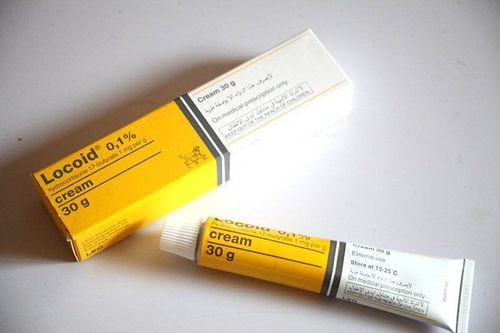
- Do not apply any medication to the child's skin without medical advice. Some topical creams contain high doses of corticosteroids, which are not suitable for children. Certain creams may also trigger allergic reactions, worsening the condition.
- If a mosquito bite becomes abraded, parents should consult a doctor before applying any medication to prevent skin infections.
If a child shows signs of Skeeter syndrome, dengue fever, or other mosquito-borne diseases, parents should take the child to a doctor for an accurate diagnosis and appropriate treatment.
4. How to prevent mosquito bites in children
Eliminating mosquitoes, larvae, and pupae is an effective way to prevent mosquito bites. Some important preventive measures include:
- Removing mosquito breeding sites by covering water containers to prevent mosquitoes from laying eggs. Families can also release fish into water storage containers, such as jars, tanks, and wells, to eat mosquito larvae. Regularly clean and scrub water containers like jars and tanks weekly.
- Collecting and disposing of household waste, such as discarded bottles, coconut shells, tin cans, bamboo stumps, and leaves, which can collect water and serve as mosquito breeding grounds.
- Frequently changing the water in flower vases.
- Dressing children in long-sleeved clothing when they play outside. Use mosquito nets while sleeping and consider using mosquito repellents, insecticides, and electric mosquito swatters to reduce mosquito populations.
- If a family member has dengue fever, they should sleep under a mosquito net to prevent further mosquito bites and disease transmission to others.
Children are more susceptible to mosquito bites than adults. Therefore, parents should take preventive measures to protect children from mosquito bites and reduce the risk of dengue fever and other mosquito-borne diseases.
To arrange an appointment, please call HOTLINE or make your reservation directly HERE. You may also download the MyVinmec app to schedule appointments faster and manage your reservations more conveniently.