Bone cancer is a rare type of cancer that tends to occur more frequently in men than in women. The disease usually develops slowly and lacks clear symptoms, which often leads to late-stage diagnosis. This article provides detailed information about this condition and highlights important points for early detection.
This article was written under the professional guidance of MD, Specialist Level II - Nguyen Tran Quang Sang – Head of the Bone and Soft Tissue Tumor Surgery Department at the Orthopedic Trauma and Sports Medicine Center, Vinmec International General Hospital Times City.
1. Overview of Bone Cancer
Primary bone cancer originates from bone components such as osteogenic cells, chondrocytes, and connective tissue cells within the bone matrix. It is a highly malignant disease with a tendency to metastasize early. Bone cancer can arise directly from the bone (primary) or result from metastasis of cancers from other parts of the body, such as the breast or lungs. The exact cause remains unclear.
2. Types of Bone Cancer
Bone cancer is classified into two main types:
- Primary bone cancer: This is the most severe but rare form, commonly found in adolescents and young adults under 30. Tumors form directly within bones, often affecting areas such as the arms, legs, or pelvis.
- Secondary bone cancer (metastatic): These tumors metastasize to bones from other organs. This type is more common than primary bone cancer. Common forms include multiple myeloma, osteosarcoma, chondrosarcoma, and Ewing’s sarcoma (ESFTs).
3. Symptoms of Bone Cancer
Symptoms vary depending on the stage of the disease:
During early stages, symptoms can be vague and easily overlooked, including:
- Bone pain, often worsening at night or during physical activity.
- A palpable mass growing at the painful site.
- Skin around the affected area may feel warmer, with visible bluish veins.
Signs that indicate advanced cancer
- Fatigue and unexplained weight loss, sometimes accompanied by low-grade fever.
- Increasing and persistent bone pain, unrelieved by painkillers.
- Swelling of the affected bone.
- Pathological fractures without trauma.
Common Locations of Bone Cancer
- Bone cancer often occurs in areas "near the knee and far from the elbow," including the proximal tibia, distal femur, and proximal humerus.
- It primarily affects long bones but can also appear in flat bones like the pelvis and scapula.

4. Risk Factors for Bone Cancer
Bone cancer mainly affects adolescents aged 10 to 14, accounting for approximately 80% of cases. Another risk group includes people aged 50 to 60, a period with significant musculoskeletal changes.
Risk factors for primary bone cancer include:
- Genetics: Individuals with family histories of genetic syndromes such as Li-Fraumeni, Rothmund-Thomson, or retinoblastoma.
- Paget’s disease of bone: A disorder characterized by abnormal bone remodeling, leading to structurally abnormal new bone.
- History of radiation exposure.

5. Diagnostic Methods for Bone Cancer
Diagnosis is based on various clinical investigations:
- X-rays: Identify the number, location, and borders of lesions and assess soft tissue invasion.
- CT scans: Evaluate the extent of bone, marrow, and surrounding tissue involvement.
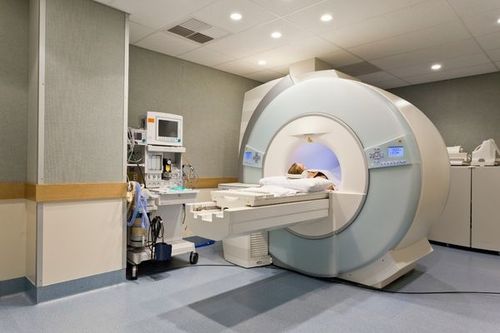
- MRI: Assess lesion spread within bone, marrow, soft tissues, nerves, and blood vessels.
- Bone scintigraphy: Determine lesion extent, monitor disease progression, and treatment response.
- PET/CT: Detect and follow soft tissue sarcomas, recurrent bone sarcomas, and distant metastases. It also helps distinguish malignant from benign lesions.
- Biopsy: Performed via open or core needle biopsy to diagnose, classify, and determine malignancy grade.
- Additional tests: Abdominal ultrasound and chest X-rays to check for metastasis.
6. Treatment of Bone Cancer
Treatment requires a multidisciplinary approach involving orthopedic surgery, radiology, pathology, chemotherapy, and radiotherapy. Modern treatment outcomes have improved significantly, with a 5-year survival rate reaching up to 70%. At Vinmec Hospital, limb-salvage surgery accounts for 80-90% of cases.
Main treatment methods include surgery, chemotherapy, radiotherapy, and cryosurgery.
6.1 Surgery
Surgical removal of the tumor is the primary treatment aimed at complete excision. The principle involves removing the tumor along with a wide margin of surrounding tissues to ensure no malignant cells remain at the resection edge. This may result in partial or total bone loss depending on tumor size and location.
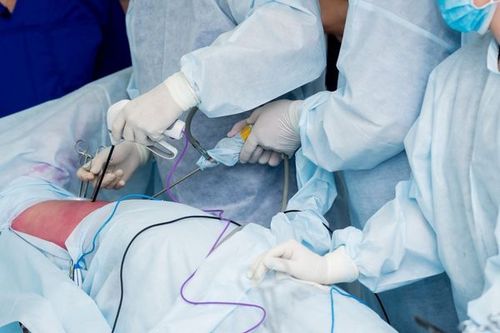
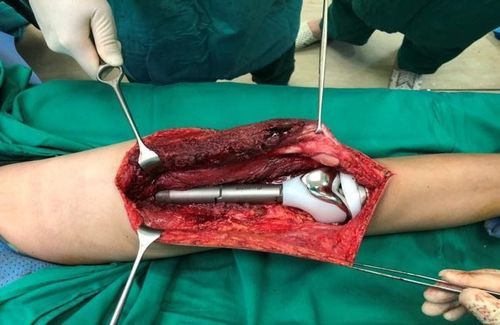
For patients with Bone Cancer, limb-salvage surgery is now preferred over amputation and may involve reconstruction with:
- Allografts (donor bone grafts), using bones from deceased donors.
- Synthetic materials such as titanium and other biomedical materials.
- Autografts treated with liquid nitrogen.
To arrange an appointment, please call HOTLINE or make your reservation directly HERE. You may also download the MyVinmec app to schedule appointments faster and manage your reservations more conveniently.