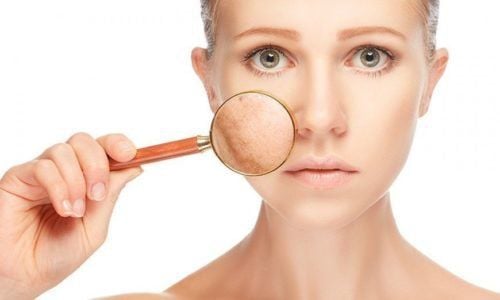
Freckles are brown or light brown spots on the skin, resulting from clusters of skin cells containing the pigment melanin. Exposure to sunlight activates melanin-producing cells, leading to increased melanin production. Some methods to remove freckles include the use of sunscreen, laser treatment, and surgery.
1. How do freckles appear?
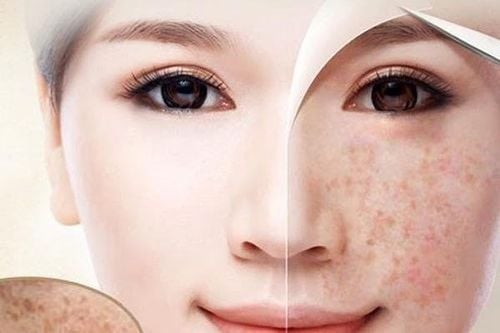
Freckles are brown or light brown spots on the skin, formed from clusters of skin cells that contain the pigment melanin. Unlike raised moles, freckles are flat and do not cause pain or harm. They are, in fact, an accumulation of pigment on the outer skin layer and may be hereditary.
The skin contains cells known as melanocytes that produce the pigment melanin. Melanin helps protect the skin from harmful ultraviolet rays. When exposed to sunlight, these pigment-producing cells become activated and produce more melanin. Most individuals with numerous freckles tend to have fair skin, although anyone can develop them. People with fair skin often produce less melanin than those with darker skin; however, upon sun exposure, the melanocytes in these individuals will produce more melanin.
2. How to eliminate freckles
Freckles often become more pronounced in the summer due to sun exposure and may fade during winter. Freckles caused by sun damage generally increase with age. To diminish freckles, remedial measures must be undertaken, including:
2.1 Sunscreen
Sunscreen will not eliminate existing freckles on the skin, but it helps prevent new freckles from forming. Therefore, it is advisable to apply sunscreen year-round, even on cloudy days. Experts recommend the following guidelines for sunscreen use:
- Use sunscreen with an SPF of 30 or higher.
- Apply sunscreen at least 15 minutes before sun exposure.
- Reapply sunscreen every two hours and immediately after swimming or excessive sweating.
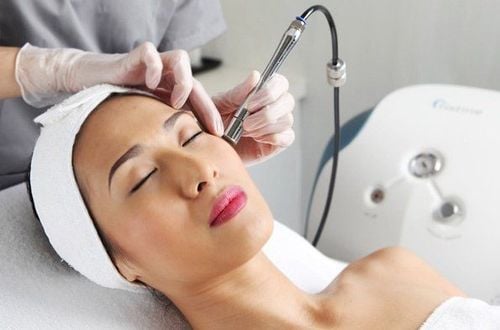
2.2 Laser treatment
Laser treatment utilizes concentrated, high-intensity light pulses targeting damaged skin areas. Various types of lasers exist, and a study from 2015 indicated that the 1064 Q-Switched Nd YAG laser is effective in treating freckles. The results demonstrated that this laser treatment lightened more than 50% of freckles in 62% of participants.
Laser treatment is generally safe, with a low risk of scarring. However, other adverse effects may occur, such as:
- Itching
- Swelling, redness
- Infection
- Skin color changes
If there is a history of herpes simplex, the physician may prescribe antiviral medication prior to laser treatment due to the potential for stimulating herpes outbreaks around the mouth. Additionally, certain medications or products should be avoided before the procedure, so informing the physician of any medications or topical creams in use is essential. Recovery may take up to two weeks following laser treatment, and multiple sessions are typically needed to achieve desired results.
2.3 Cryosurgery
Cryosurgery utilizes extreme cold in the form of liquid nitrogen to eradicate and destroy abnormal skin cells. Cryosurgery is generally safe, does not require anesthesia, and has a quick recovery time. Potential side effects include pigment loss, bleeding, and blistering. This method rarely results in scarring.
2.4 Topical bleaching creams
Bleaching creams, also referred to as depigmenting agents, are available over-the-counter and by prescription. Many topical lightening creams contain hydroquinone, an agent purported to inhibit melanin production and lighten dark skin areas. Topical hydroquinone can induce unwanted side effects such as:
- Dermatitis
- Skin dryness
- Blistering, burning
- Skin color changes
In 1982, the U.S. Food and Drug Administration (FDA) deemed products containing up to 2% hydroquinone generally safe and effective. In 2006, hydroquinone was suspected of causing cancer in rodents, which led to skin discoloration and deformation. Consequently, this prompted the FDA to recommend hydroquinone for further investigation under the National Toxicology Program. Nonetheless, the FDA advises that hydroquinone products remain available in the market until the NTP study is completed.
2.5 Topical Retinoid
Topical retinoids are compounds derived from vitamin A utilized to enhance skin affected by sun damage and to lighten freckles. According to a 2014 review, retinoids may protect the skin by absorbing ultraviolet B (UVB) radiation. This mechanism may help prevent the emergence of new freckles. Various retinoid creams are readily available over the counter. Nevertheless, there are certain adverse effects such as dry skin, irritation, and increased sensitivity.

2.6 Chemical Exfoliation
Chemical exfoliation involves products that utilize chemical solutions to remove dead skin cells and facilitate the peeling of necrotic skin areas. To eliminate freckles, a product containing glycolic acid or trichloroacetic acid penetrates the mid-layers of the skin, consequently removing dead skin cells to allow room for new skin regeneration.
Chemical exfoliants may provoke unwanted reactions such as:
- Erythema
- Irritation
- Crusting
- Edema
According to the American Society of Dermatologic Surgery, skin peeling may require up to two weeks for complete healing. Therefore, it is essential to maintain daily skin hygiene and apply prescribed medications. Additionally, there may be a necessity to utilize antiviral medications over a prescribed duration of up to two weeks and to limit sun exposure until the skin has sufficiently healed.
2.7 Natural Remedies
Several natural remedies for eliminating freckles are employed by many individuals, ensuring safety and feasibility for home application, including:
- Lemon Juice: Lemon juice possesses skin-lightening properties. This can be applied using a cotton pad to directly apply lemon juice to the skin, followed by rinsing.
- Honey: Combining honey with sugar or salt to create a scrub can facilitate exfoliation and fading of pigmentation spots.
- Buttermilk: Direct application of buttermilk on the skin and maintaining it for 10 minutes before rinsing with warm water can be beneficial. A mask can also be formulated by blending buttermilk with oatmeal, as buttermilk contains lactic acid, which may help to lighten freckles.
- Sour Cream: Similar to buttermilk, sour cream contains lactic acid, which can be applied directly to the skin and rinsed off with warm water after a few minutes.
- Yogurt: Direct application of yogurt to the skin for several minutes is recommended. Yogurt also contains lactic acid, which may aid in brightening freckles.
- Onion: Rubbing onion on the skin, followed by rinsing with warm water, can serve as an exfoliant and may have skin-brightening effects.
While freckles are not cancerous, they may be confused with skin cancer. Excessive sun exposure is a common risk factor for both freckles and melanoma. Melanoma is more prevalent in individuals with fair skin or those who have freckles than in individuals with darker skin. If changes in size, color, or shape of freckles are noted, it is advisable to consult a dermatologist for assessment and appropriate interventions.
Freckles represent a prevalent and benign dermatological issue; however, many individuals seek removal for aesthetic reasons. Invasive treatment modalities such as laser therapy and chemical peels are effective but necessitate extended healing times and may result in significant adverse effects. Therefore, it is crucial to discuss with a dermatologist to ascertain the optimal removal strategy. Regardless of the chosen method, it is critical to practice safe facial skincare subsequently to prevent the recurrence of new freckles.
Read more:
To arrange an appointment, please call HOTLINE or make your reservation directly HERE. You may also download the MyVinmec app to schedule appointments faster and manage your reservations more conveniently.