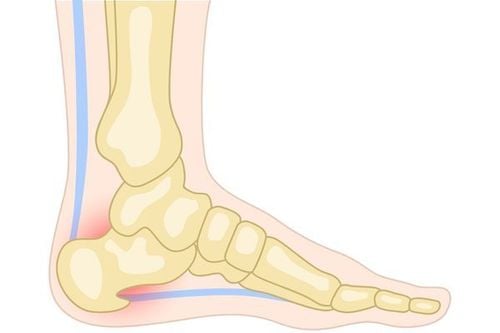

Plantar fasciitis is one of the most common causes of heel pain. It involves inflammation of a thick band of tissue running along the bottom of the foot that connects the heel bone to the toes.
This article was written by MD. Tran Thi Tuyet Nhung - Department of General Internal Medicine - Vinmec Times City International General Hospital
1. Symptoms of Plantar Fasciitis
The most common symptom of plantar fasciitis is sharp pain that usually occurs with the first steps in the morning. As you get up and move around, the pain typically decreases, but it may return after long periods of standing or after standing up from sitting.
2. Causes and Risk Factors
Plantar fasciitis is more common in runners. People who are overweight and those who wear shoes with poor support are also at risk.
- Prolonged tension of the plantar fascia.
- Age: Plantar fasciitis is most common between ages 40 and 60.
- Certain types of exercise: Activities that put stress on the heel and associated tissue, such as long-distance running, ballet dancing, and aerobic dance.

- Foot abnormalities: Flat feet, high arches, or even abnormal walking patterns can affect weight distribution while standing and add stress to the plantar fascia.
- Obesity or overweight: Adds extra stress to the plantar fascia and increases risk of inflammation.
- Occupational factors: Factory workers, teachers, and others who spend most of their working hours walking or standing on hard surfaces may develop plantar fasciitis.
3. Diagnosis of Plantar Fasciitis
- Clinical: Based on heel pain characteristics as described above.
- X-ray: May show a heel spur.
- Ultrasound or MRI: Can visualize inflammation of the plantar fascia or at its attachment point to the heel bone.
4. Treatment of Plantar Fasciitis
- Avoid activities that strain the plantar fascia: running, jumping, or prolonged walking.
- Use night splints to stretch the calf and plantar fascia during sleep.
- Physical therapy: Exercises to stretch the plantar fascia.
- Footwear: Wear cushioned shoes to distribute pressure evenly across the foot.
- Medication: Use nonsteroidal anti-inflammatory drugs (NSAIDs) for pain relief.
- Steroid or platelet-rich plasma (PRP) injections if other measures are ineffective.
5. Some Plantar Fascia Stretching Exercises
Calf stretch:
Lean forward against a wall with one knee straight and the heel on the ground. Place the other leg in front with the knee bent. To stretch the calf muscles and Achilles tendon, push your hips toward the wall in a controlled motion. Hold for 10 seconds, then relax. Repeat 20 times for each leg. A strong pull in the calf should be felt during the stretch.

Plantar fascia stretch:
This stretch is performed while sitting. Cross the affected leg over the other knee. Grasp the toes of the affected foot and gently pull them toward you in a controlled manner. If reaching the foot is difficult, loop a towel around the big toe to help pull it toward you. Place the other hand along the plantar fascia - you should feel a tight band under the foot as it stretches. Hold the stretch for 10 seconds. Repeat 20 times for each foot. This exercise is best done in the morning before standing or walking.
- Surgery: Rarely performed - only when all other measures fail.
Vinmec International General Hospital is a multi-specialty hospital providing examination and treatment for musculoskeletal conditions such as arthritis, degeneration, herniation, and joint pain. At Vinmec, diagnosis and treatment are performed using modern medical techniques that not only deliver high effectiveness but also minimize the recurrence of complications.
Its success is attributed to Vinmec’s fully equipped modern facilities and the high expertise and experience of its medical team, ensuring optimal treatment outcomes for patients.
To arrange an appointment, please call HOTLINE or make your reservation directly HERE. You may also download the MyVinmec app to schedule appointments faster and manage your reservations more conveniently.