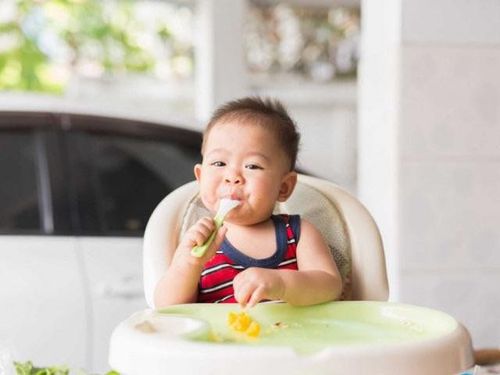
Brown rice is a whole grain. Because of retaining the germ, it contains a lot of nutrients. Feeding your baby brown rice will supplement natural nutrients that are good for health, help the body stay healthy, increase the body immune and fight against pathogens.
1. Nutritional value of brown rice
Brown rice also known as husked rice is a whole grain rice that contains many nutrients. Brown rice is a type of rice that underwent processing only once to remove the outer husk, keeping all the remaining ingredients intact. Therefore, compared to the white rice used daily (during the processing, the nutritious bran layer is removed), brown rice is richer in nutrients. Because the outer germ (bran layer) is not lost, feeding your baby brown rice will fully supplement the natural nutrients for health to help the body stay healthy, increase resistance and support against pathogens.
In terms of nutrition, brown rice is an excellent source of carbohydrates to provide the necessary energy for the body. Brown rice contains the following nutrients:
- High protein content is very good for muscle development. In addition, the amino acids in brown rice are very good for the development of joints and ligaments;
- Rich in starch, brown rice providing an abundant source of energy helps children play actively without feeling tired;
- Fat, especially fatty acids, is necessary for children's development;
- Abundant fiber helps children limit constipation;
- Brown rice is rich in B vitamins: B1, B2, B3, B5, B6, B9, which play an important role in the physical and mental development of children;
- Rich in essential minerals such as iron, calcium, manganese, magnesium, phosphorus, sodium, potassium, zinc.
With the above abundant nutritional value, it has certainly answered the question "should children eat brown rice" or "is it good for children to eat brown rice?". Nutrition experts advise that it is completely possible to feed children brown rice in meals, including older children and young children. For infants older than 6 months are in the stage of weaning, parents can also use brown rice to cook congee for children. For children's health, weaning with brown rice has many outstanding advantages as follows:
- Brown rice based weaning diet has a variety of nutritional components providing enough of 4 important nutrient groups;
- Because brown rice is easy to digest, it is completely suitable for the digestive system that is not fully mature in infants and young children. This limits the risk of digestive disorders as well as food allergies during the period of starting to eat solid foods.
- Contains many vitamins and minerals to strengthen the immune system;
With high nutritional content and suitable for the weak digestive system of young children, brown rice not only helps children gain healthy and comprehensive development but also limits obesity or excessive weight gain. For adults, brown rice is classified as a food with many health benefits such as reducing diabetes, reducing blood cholesterol and reducing the risk of cancer.

2. So should brown rice be fed to babies regularly?
Because brown rice only removes the outer husk, all the nutrients are preserved. Feeding the baby brown rice is a way to fully supplement nutrients for your baby. But that is also the reason why brown rice is not really completely good for infants. Therefore, whether or not feeding the baby brown rice regularly is always a question for many parents. The answer is should not, for the following reasons:
- All types of rice contain arsenic, a toxic metalloid and known or human carcinogen. Arsenic is found in organic rice and brown rice. In fact, brown rice tends to have higher levels of arsenic because brown rice stores arsenic in the bran layer (the outer layer that is left intact for brown rice instead of being removed during milling to create white rice).
- Children, especially newborns, are exposed to arsenic, which can have adverse effects on the development of the nervous system. Furthermore, frequent exposure to this toxic metal has been linked to an increased risk of cancer, type 2 diabetes and/or cardiovascular disease.
- To ensure that the immature digestive system of young children can best absorb nutrients, parents should not feed their children brown rice every day. Instead, they should alternate between brown rice and white rice because children's bodies cannot absorb all nutrients at once. On the contrary, consuming too many nutrients will cause children to have bloating, indigestion, constipation, ...

3. How to choose and prepare brown rice properly
To ensure that all the nutrients in brown rice are preserved, it is necessary to know how to select and process brown rice.
3.1. How to choose good brown rice
You should not buy brown rice in large quantities at once because if not stored properly, the rice will quickly spoil. Besides, you should not buy brown rice in boxes at grocery stores because you do not know how long the rice has been stored. It is best to buy small, pre-packaged bags of brown rice with the production date and expiration date printed on the packaging.
When buying brown rice, you should choose to buy plump, long grains, without too many cracked or chipped grains. Choose brown rice that still has the fragrant and no musty smell.
3.2. How to preserve brown rice
Because brown rice has a lot of nutrients, if not preserved properly, the nutrients are easily lost. To ensure that dishes made from brown rice are always delicious and nutritious, you need to pay attention to the following:
- After purchasing, you should store whole brown rice in a sealed container with a lid, because brown rice has oil around it, so it is easy to spoil if exposed to air. For brown rice which has been ground into powder needs to be stored in the refrigerator. Therefore, it is best to buy only a small amount of brown rice to avoid the situation of not preserving it well, which makes brown rice easily moldy and lose nutrients.
- Children should not eat brown rice that has been stored for more than 2-3 months because it is very harmful to health.
- The ideal condition for storing brown rice is in a tightly closed container in a dark and cool place. If stored in the refrigerator, it can be stored for 12-16 months, and if stored in the freezer, it can be kept for 2 years.
- After cooking, you should put the cooled cooked brown rice in the refrigerator because if left in the outside environment, bacteria will grow very quickly and cause the rice to spoil. However, the storage time is only a maximum of 4 days. Therefore, it is best to cook just enough to eat and throw away any leftovers to avoid spoilage. If you store cooked brown rice in the freezer, it can be kept for up to 6 months.
3.3. How to prepare brown rice
How to prepare brown rice to reduce the risk of arsenic poisoning:
- The longer washing and soaking of brown rice in filtered water and the higher the temperature of the water, the more arsenic will be removed.
- Using a ratio of 6 to 10 parts water to 1 part rice when cooking will help reduce the arsenic content (it is necessary to ensure that all excess water is removed after cooking). However, adding too much water will reduce the nutritional content of brown rice.
- For young children who are just starting the stage of weaning, parents can feed them with brown rice 2-3 times/week and then gradually increase it. During the first 6-7 months, feed children mainly brown rice congee cooked in a ratio of 1/10. In the following months, parents can combine brown rice with easy-to-digest foods such as root and green vegetables. Making delicious dishes from brown rice is also an effective way to stimulate children's taste buds. Some suggested weaning foods from brown rice are: brown rice congee with minced meat, brown rice congee with chicken eggs, brown rice cooked with green beans, brown rice cooked with pumpkin, brown rice with milk.
- For children over 1 year old, parents should gradually increase the solid texture of the dishes but still prioritize cooking soft food.
With high nutritional content and suitable for the weak digestive system of young children, brown rice not only helps children gain healthy and comprehensive development but also limits obesity or excessive weight gain. However, should not feed children brown rice regularly, instead, feeding children alternate between white rice.
To arrange an appointment, please call HOTLINE or make your reservation directly HERE. You may also download the MyVinmec app to schedule appointments faster and manage your reservations more conveniently.