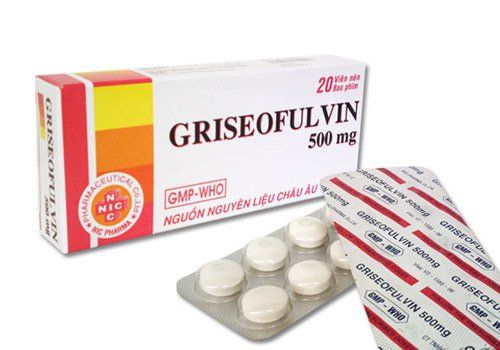
Griseofulvin is an antifungal medication derived from Penicillium griseofulvum or other Penicillium species. What are the uses and effects of Griseofulvin 500mg?
1. What is Griseofulvin 500mg used for?
Griseofulvin 500mg is a prescription medication used to treat fungal infections of the skin, hair, and nails. Specifically, it is prescribed for: Tinea corporis (ringworm), Tinea pedis (athlete’s foot), Tinea cruris (jock itch), Tinea barbae (fungal infection of the beard), Tinea capitis (scalp ringworm), Onychomycosis (fungal nail infection) caused by susceptible strains of Trichophyton, Microsporum, Epidermophyton.
2. Contraindications of griseofulvin 500mg
Do not use Griseofulvin 500mg if you are allergic to Griseofulvin, having porphyria (a metabolic disorder), having liver failure.
3. How to use Griseofulvin 500mg
The effectiveness of griseofulvin 500mg depends on the correct use of the drug. Therefore, patients should not use the drug on their own but should follow the instructions of the doctor or pharmacist.
- According to experts, the safe way to use griseofulvin 500mg is:
- Adults: 1-2 tablets/day, divided into two doses.
- Children (>2 years old): 10 mg/kg/day, divided into two doses.
- Take the medication with or after meals for better absorption.
- Treatment duration: Tinea corporis: 2–4 weeks; Tinea capitis: 4–6 weeks; Tinea pedis: 4–8 weeks; Onychomycosis: 4 months–1 year
4. Precautions when using Griseofulvin 500mg
Griseofulvin may cause side effects, including: Headache; Loss of appetite; Mild nausea; Hives (urticaria); Skin rash… Special precautions:
- Long-term use requires regular monitoring of liver, kidney, and blood function.
- Stop using immediately if you develop agranulocytosis (low white blood cells).
- Avoid sun exposure while taking Griseofulvin, as it may cause photosensitivity.
- Not recommended during pregnancy or for those planning to conceive (risk of birth defects and miscarriage).
- Use with caution in breastfeeding women.
5. Drug interactions of Griseofulvin 500mg
Griseofulvin may interact with other medications, reducing effectiveness or causing side effects.
- Alcohol → Causes flushing, rapid heartbeat, and increases alcohol effects.
- Phenobarbital → Decreases Griseofulvin levels in the blood, reducing its effectiveness.
- Warfarin (anticoagulant) → Reduces the anticoagulant effect, increasing the risk of blood clots.
- Oral contraceptives → May decrease the effectiveness of birth control pills, increasing the risk of unintended pregnancy.
If you are taking any other prescription or over-the-counter medications, including vitamins or supplements, inform your doctor before using Griseofulvin.
To arrange an appointment, please call HOTLINE or make your reservation directly HERE. You may also download the MyVinmec app to schedule appointments faster and manage your reservations more conveniently.