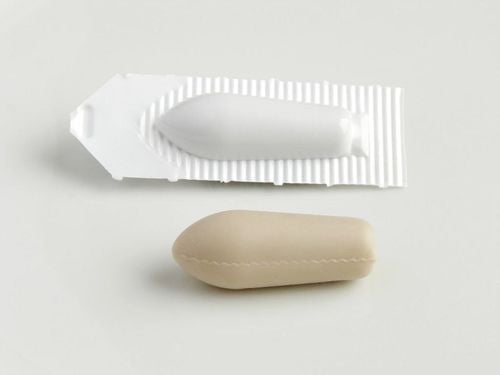
1. What is Taver?
Taver has the main active ingredient as Carbamazepine. It is formulated as 200mg tablets.
The mechanism of action of Carbamazepine in Taver medication is chemically related to tricyclic antidepressants, though it remains not fully understood. Anticonvulsant effects of Carbamazepine are linked to reducing neuronal excitability and blocking synaptic transmission, mainly by limiting the ability of neurons to sustain repetitive firing at high frequencies. Additionally, Carbamazepine acts presynaptically to inhibit neurotransmitter release, thereby decreasing synaptic transmission.
Carbamazepine is effective in reducing paroxysmal pain in patients with trigeminal neuralgia, epilepsy, and alcohol withdrawal symptoms.
It lowers the risk of muscle stiffness, increases seizure threshold, and alleviates alcohol withdrawal symptoms.
2. Indications and Contraindications
2.1 Indications
Taver is indicated for:
- Management of seizures, including partial seizures and generalized tonic-clonic seizures.
- Treatment of sudden trigeminal neuralgia.
- Prevention of manic-depressive psychosis in patients unresponsive to lithium therapy.
2.2 Contraindications
Brivaracetam is contraindicated in the following cases:
- Hypersensitivity to Carbamazepine or related compounds, including tricyclic antidepressants.
- Patients with active liver disease, severe hepatic impairment, a history of acute porphyria, or bone marrow suppression, or atrioventricular block
- Concomitant use with monoamine oxidase inhibitors (MAOIs). Taver should only be started at least 14 days after discontinuing MAOIs or longer if the clinical conditions of the patient are not allowed.
3. Dosage and Administration
3.1 Dosage
For Epilepsy
- Adults: Initial dose of 100–200 mg once or twice daily, gradually increasing until an optimal response is achieved. The typical maintenance dose is 800–1200 mg/day, but some patients may require up to 1600–2000 mg/day.
- Elderly patients: No significant pharmacokinetic differences of Carbamazepine in elderly people, therefore dosage adjustments are not required. However, due to the potential for drug interactions, caution should be exercised when determining the dosage of Carbamazepine in elderly patients.
- Children: The daily dose is divided into equal doses:
- 1–5 years: 200–400 mg/day
- 5–10 years: 400–600 mg/day
- 10–15 years: 600–1000 mg/day
For epilepsy treatment, monotherapy is preferred. However, when used in combination therapy, Taver should be introduced gradually, and adjustments to other antiepileptic drugs may be necessary.
If Taver is prescribed as an adjunct to an existing antiepileptic therapy, the dosage should be gradually increased. If necessary, the dosage of the other antiepileptic drug may also be adjusted.
For Trigeminal Neuralgia
Initial dose: 200–400 mg/day (100 mg twice daily in elderly patients). The dose is increased gradually until pain relief is achieved. Most patients experience relief at 200 mg 3–4 times daily, but some may require up to 1600 mg/day. Once effective, the dose should be reduced gradually to the lowest possible maintenance dose.
Prevention of Manic-Depressive Episodes (Unresponsive to Lithium Therapy)
The initial dose of Taver is 200 mg twice daily, increasing gradually until symptoms are controlled. Some patients may require up to 1600 mg/day. The typical maintenance dose is 400–600 mg/day.
3.2 Overdose and Missed Dose
Symptoms of overdose typically appear 1–3 hours after ingestion. The most prominent symptoms are neuromuscular disorders. Mild cardiovascular disturbances may occur, while severe cardiac complications are seen only with very high doses (>60g) of Taver. If the patient simultaneously takes tricyclic antidepressants, barbiturates, hydantoins, or consumes alcohol, the symptoms of acute Carbamazepine toxicity may be exacerbated or altered.
The prognosis of severe overdose primarily depends on the rapid elimination of Taver from the body. This can be achieved through gastric lavage, vomiting, or reducing Carbamazepine absorption using appropriate measures (e.g., administering 100g of activated charcoal, followed by 50g every 4 hours until recovery).
If these measures cannot be applied, the patient should be immediately transferred to a hospital to ensure the maintenance of vital functions. Currently, there is no specific antidote for Carbamazepine poisoning. Supportive and symptomatic treatments should be implemented, including monitoring pupil reflexes, body temperature, respiratory function, heart activity (ECG monitoring), blood pressure, and kidney function.
If you miss a dose of Taver, take it as soon as possible. However, if it is close to the time for your next scheduled dose, skip the missed dose and continue with your regular dosing schedule. Do not take a double dose to make up for a missed one.
4. Adverse Effects of Taver
Common or very common side effects of Taver include: Drowsiness, fatigue, dizziness, lack of coordination, double vision, headaches, nausea or vomiting, and allergic skin reactions.
These side effects typically occur at the beginning of Carbamazepine treatment, particularly in elderly patients or those starting with high doses. Side effects related to Carbamazepine dosage often diminish within a few days, either spontaneously or after dose reduction.
If central nervous system side effects appear, it may indicate overdosage or fluctuations in plasma Carbamazepine levels. In such cases, monitoring plasma drug levels and dividing the Carbamazepine daily dose into smaller doses is recommended to minimize adverse effects.
5. Precautions When Using Taver
Before starting Taver, complete blood count (CBC) and serum iron levels should be checked and periodically monitored throughout treatment. Discontinue Taver immediately if there is evidence of progressive white blood cell reduction, significant bone marrow suppression, or clinical symptoms such as fever or sore throat. Patients should notify their doctor if they experience fever, itching, sore throat, mouth ulcers, purpura, petechiae, or unusual bruising.
Baseline liver function tests should be performed before starting Taver and monitored regularly during treatment. Discontinue use immediately if severe skin reactions occur, such as Stevens-Johnson syndrome or toxic epidermal necrolysis (Lyell's syndrome).
Caution when using Taver is advised in patients with mixed seizure disorders, including typical and atypical absence seizures, as Carbamazepine may induce acute seizures in these individuals. If acute seizures occur, Taver should be discontinued immediately. Stopping Taver abruptly may trigger status epilepticus. If immediate discontinuation is necessary to switch to another antiepileptic therapy, additional treatment such as IV phenytoin or diazepam should be administered.
Pregnancy: There are no well-controlled studies on the use of Carbamazepine in pregnant women. However, Carbamazepine crosses the placental barrier and accumulates in fetal tissues. Caution is advised when using the drug in pregnant women with epilepsy. Whenever clinically feasible, Carbamazepine monotherapy should be preferred in women of childbearing potential, as the risk of congenital malformations is higher in children born to women receiving combination therapy compared to those receiving monotherapy.
Breastfeeding: Carbamazepine is excreted in breast milk. The decision to use Taver while breastfeeding should weigh the benefits of breastfeeding against the potential risks to the infant.
6. Drug Interactions
- Carbamazepine’s drug interactions are primarily due to its enzyme-inducing properties. Concurrent use of Clonazepam with Primidone, Ethosuximide may increase liver enzyme metabolism, potentially reducing Carbamazepine's blood concentration at steady-state levels while accelerating the metabolism of these drugs.
- Propoxyphene, Troleandomycin, and Valproic Acid reduce the clearance of Carbamazepine, leading to an increase in its blood concentration at steady-state levels.
- Lithium: Co-administration with Carbamazepine increases the risk of neurotoxic side effects, even when the plasma concentrations of both drugs remain below toxic levels.
- Concomitant use of Carbamazepine may cause hypertensive crises, high fever, severe seizures, and even death. MAOIs should be discontinued at least 14 days before starting Carbamazepine, or vice versa.
To arrange an appointment, please call HOTLINE or make your reservation directly HERE. You may also download the MyVinmec app to schedule appointments faster and manage your reservations more conveniently.