Gac fruit is a nutrient-rich fruit. It contains a high level of vitamins, antioxidants, and carotenoids that provide health benefits. Read the article below to learn about the uses, components, and the vitamins found in gac fruit.
1. What is Gac fruit?
The name gac fruit simply comes from the people in Southeast Asia; it is a tropical plant classified as Momordica cochinchinensis. Gac fruit originates from the Southeast Asian region, extending from southern China to northeastern Australia, including Thailand, Laos, Myanmar, Cambodia, and Vietnam. Depending on the area, gac fruit is also commonly referred to as young jackfruit, Chinese bitter cucumber, Chinese cucumber, squash, gac, giant prickly gourd, prickly cucumber, spiny bitter gourd, and sweet gourd.
Gac fruit has an extremely short season, lasting only two months, but it plays an important role in festive dishes as well as in natural medicine. Traditionally, gac fruit, its seeds, and leaves are also used as a traditional remedy in the regions where it grows.
The gac plant can thrive in humid tropical regions. It is hygrophilous, prefers sunlight, but can tolerate light shade. The plant prefers fertile, organic soil that is rich in humus and moisture, but well-drained. It is commonly found growing on homemade trellises or arches in gardens and rural homes throughout Vietnam. The plant has an angular shape, glossy stem, and tuberous roots.
Gac flowers are unisexual, growing singly in the leaf axils, and are white to ivory in color. The female flowers have small bracts and a scale-like ovary, while the male flowers have broad, egg-shaped bracts, a short floral tube with triangular lobes, five-petaled corolla, and elongated yellow anthers. They typically bloom from June to September. The gac plant can live for 10 to 12 years.
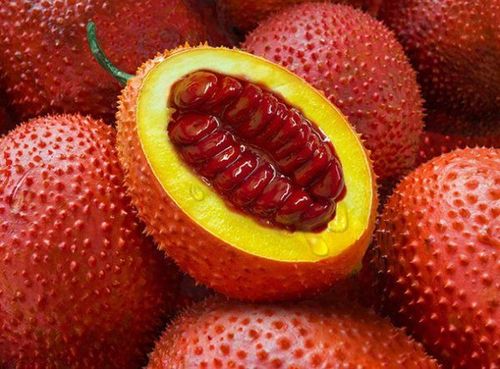
"Gac fruit is bright red, roughly the size of a watermelon, and covered with short spines; therefore, it is sometimes referred to in English as 'Spiny Cucumber' or 'Balsam.' The fruit is typically large, about 13 cm long and 10 cm in diameter, oval to spherical in shape, with a pointed end and a tough stem. When immature, gac fruit is green and turns orange-red to dark red as it matures and ripens. Each fruit weighs between 600 to 2500 grams. Usually, the outside of the fruit is spiny, while the inside contains pulp and seeds. The morphology of the gac fruit from the outside to the inside consists of a thick yellow mesocarp, followed by a small red cavity and a yellow core in the center. The seeds inside the cavities are flat, hard, and brown or black in color. The fruit has a mild flavor reminiscent of avocado.
According to folklore, gac fruit, its seeds, and leaves are used as traditional medicine in the regions where it grows. Today, due to its higher nutritional value, health benefits, and excellent flavor, it is cultivated worldwide in suitable environments.
2. What vitamins are found in gac fruit?
Gac fruit contains many essential nutrients and vitamins for the body. However, the most prominent component in gac fruit is carotene, a precursor to vitamin A. Carotene is abundant in the red membrane surrounding the gac seeds and gac oil.
Additionally, gac fruit also contains significant amounts of lycopene, vitamin E, and vitamin F. This makes gac oil a valuable ingredient in the food and pharmaceutical industries, such as in the production of nutritional supplements to combat malnutrition, anti-aging products, natural food colorings, and in the cosmetics industry.
In 100 grams of gac pulp, there are 15 mg of carotene and 16 mg of lycopene. As gac ripens, the carotene content may decrease or vice versa. The fruit also contains lycopene, which contributes to anti-aging, preventing dark skin, acne, dry skin, hair loss, and skin rashes. Furthermore, it is beneficial for skin nourishment, protection, and helps keep the skin rosy, youthful, and smooth. Many studies have shown that the compounds of carotene, lycopene, and vitamin E (tocopherol) found in gac oil can neutralize 75% of carcinogenic substances, especially breast cancer. In traditional Vietnamese and Chinese medicine, gac seeds can substitute for bear bile in treating injuries, swelling, pain, and mumps.

3. Health Benefits of Gac Fruit
Some health benefits of using gac fruit include:
- Cancer Prevention: The composition of gac fruit contains several nutrients that have been shown to prevent cancer and slow the proliferation of cancer cells. Recently, there is increasing evidence that this fruit contains a special protein that helps inhibit the growth of cancer cells. For this specific reason, gac is being researched for its potential role in cancer prevention and treatment.
- Anemia Prevention: Gac is rich in iron, as well as vitamin C and folic acid, making it beneficial for preventing anemia. Scientists have suggested investigating the causes of anemia, and depending on the patient's condition, they may begin to incorporate this fruit into their diet. Therefore, regularly consuming gac is very beneficial for addressing anemia-related issues.
- Cholesterol Reduction: Gac is recommended for individuals with high cholesterol levels. When consumed weekly, this fruit can help reduce the "undesirable" cholesterol levels in our bodies.
- Preventing Cardiovascular Diseases: As mentioned in the previous section, this fruit is rich in antioxidants, helping to prevent cardiovascular diseases. By consuming this fruit and maintaining an active lifestyle, our cardiovascular health will be ensured.
- Improving Vision: Enhancing vision is another benefit of gac. The vitamins, beta carotene, and other compounds found in gac are useful for improving eyesight and preventing cataracts and other vision problems.
- Combating Depression: Depression is a serious condition characterized by feelings of sadness, hopelessness, feeling unimportant, and the inability to live normally. However, regularly consuming gac can help alleviate neurological issues, as it is rich in selenium, minerals, and vitamins that are important for the nervous system and can help combat depression.
- Maintaining Youthfulness and Preventing Aging: In addition to its health benefits, gac also inhibits the aging process, boosts cell activity, reduces stress, maintains the youthful appearance of the skin, and rebuilds collagen structure beneath the skin.
- Reducing the Risk of Prostate Enlargement: Gac helps heal prostate fibroids and improves urine flow. The sweet pulp surrounding gac seeds contains lycopene that is 70 times higher than that found in tomatoes. Therefore, gac is recommended for regular use to combat prostate fibroid issues.
Gac is a very beneficial fruit for human health, supporting cardiovascular health, fighting diseases, and slowing down the aging process of the body. However, caution is needed when preparing gac, as some parts of the fruit, including the outer skin and certain areas of the gac, are inedible.
To arrange an appointment, please call HOTLINE or make your reservation directly HERE. You may also download the MyVinmec app to schedule appointments faster and manage your reservations more conveniently.