

Knee joint effusion occurs when the amount of fluid in the knee joint increases abnormally, causing restricted motion and potentially joint destruction. The condition has many causes, and if left untreated can lead to serious complications. Let’s explore the signs, causes and treatment methods in the article below.
This article is written under the professional guidance of MSc, MD Nguyen Thi Oanh, Rheumatologist, Department of Internal Medicine – Vinmec Times City International General Hospital.
1. What is Knee Joint Effusion? What Are Its Causes?
Knee effusion happens when the volume of fluid in the knee increases abnormally due to trauma or other causes, reducing the joint’s ability to move. Although this condition is not extremely difficult to treat, if it is not detected and addressed in time, it may lead to serious complications.
Common causes of inflammatory knee effusion include:
- Post‑traumatic effusion: Often occurs after sports activity, heavy physical work, occupational accidents or daily life accidents, leading to cartilage damage, anterior cruciate ligament (ACL) or posterior cruciate ligament (PCL) sprain/tear, meniscus tear or bone fracture.
- Effusion associated with joint disease: Chronic conditions such as osteoarthritis, joint infection, gout, rheumatoid arthritis or pigmented villonodular synovitis may lead to effusion in the knee joint.
- Infection: Bacteria, viruses or fungi may cause knee joint effusion. Common bacteria include tuberculosis bacteria, Mycoplasma, Staphylococcus aureus, Streptococci, etc.
2. How to Recognize Inflammatory Knee Joint Effusion?
The main signs of knee joint effusion are swelling, oedema and redness around the knee joint. Compared with the other knee, the affected knee often appears larger due to thickening of the joint capsule. The patient may feel a heaviness in the affected joint and difficulty in movement, especially when flexing or extending the knee. If not treated promptly, the surrounding muscles may weaken, making the joint even less stable and causing persistent pain.
Although patients can self‑recognize some of these signs, accurate diagnosis of knee joint effusion requires certain investigations:
- Complete blood count (CBC): Used primarily to identify infection or arthritis.
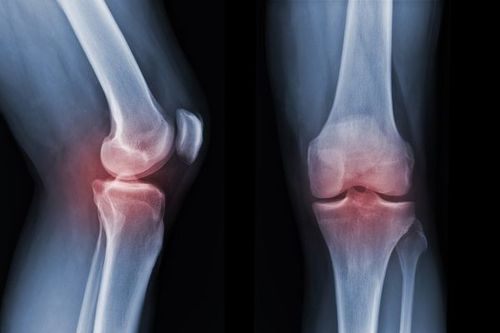
- X‑ray: Used to detect bone fractures, joint dislocation, osteoarthritis, or bone tumour‑related conditions.
- MRI: Used to detect detailed abnormalities of bone, ligaments, tendons and cartilage within the joint.
- Joint aspiration (arthrocentesis): Involves obtaining a sample of fluid from the joint for analysis, to determine the nature of the fluid and the underlying cause.
3. Is Inflammatory Knee Joint Effusion Dangerous?
In its early stage, inflammatory knee joint effusion can be treated effectively without serious complications. However, many patients are often complacent about their condition, so the disease worsens by the time they present at a medical facility.
Swelling and inflammation not only limit the knee’s motion but may also lead to complications such as septic arthritis due to repeated joint aspirations, or even joint destruction, adversely affecting the patient’s overall health.
4. Complications of Inflammatory Knee Joint Effusion
Depending on the cause of knee joint effusion, the complications may vary. Some of them include:
- Muscle wasting (atrophy): The effusion in the knee joint affects the function of the muscles, reducing thigh strength and causing muscle atrophy.
- Baker’s cyst: A cyst forming behind the knee, leading to pain and swelling.
- Reduced mobility: Swelling or tension of the synovial capsule in the patellar region caused by knee joint effusion can lead to pain when moving.
- Sepsis / bacteraemia: A complication due to infection which is not treated in time. This may lead to death.
5. Treatment Methods for Inflammatory Knee Joint Effusion
Choosing the treatment method for knee joint effusion depends on the cause, severity and stage of disease. Common treatment methods include:
5.1 Medical Treatment
Use of pain‑relief medications, anti‑inflammatory drugs, antibiotics in cases of at‑risk infection, and immunosuppressives for conditions like rheumatoid arthritis. The drug treatment process must be strictly monitored by a physician, especially for medications with serious side effects such as corticosteroids.

To arrange an appointment, please call HOTLINE or make your reservation directly HERE. You may also download the MyVinmec app to schedule appointments faster and manage your reservations more conveniently.