
Casting is a method of immobilisation used to treat injuries to the musculoskeletal system, particularly bone fractures. Once a cast is applied, the patient must keep the immobilised area still until healing occurs, and must monitor for signs that the bone is healing.
When a cast is used to treat a bone fracture, the question of “how long until union” and “what are the signs that the bone is healing so that one can return to normal activities and work” naturally become those of greatest interest. However, the process of bone healing depends on many factors and varies in each individual case.
This article has been reviewed by MSc, MD. Le Quang Minh, Orthopaedic Traumatology & General Surgery Department, Vinmec International General Hospital Danang. He has extensive experience in the diagnosis and treatment of musculoskeletal and traumatic injuries.
1. Understanding the casting method for fractures
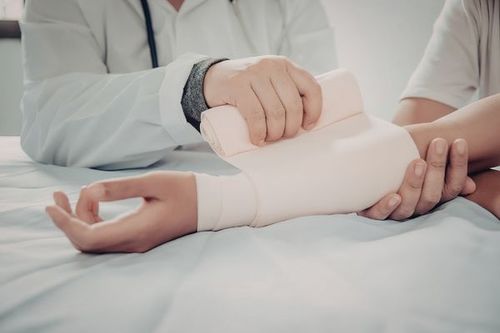
Casting is one of the most commonly used methods to treat patients with bone fractures. For this method, the patient’s fractured bone must be immobilised and maintained in an anatomical position to promote bone union. At the same time, the cast protects the injured area and helps the soft tissues (if injured) to recover quickly.
In particular, casting helps the patient by reducing pain, minimising muscle spasm after trauma, and reducing swelling. In some cases, a patient may be temporarily immobilised in a cast while awaiting surgery.
2. How does a bone fracture affect the body?
A fracture (often caused by an accident or external force rather than degenerative musculoskeletal disease) can affect the body mildly or severely depending on the extent of the fracture.
When a bone is broken, changes occur both in the bone and surrounding soft tissues: blood clots form, blocking small blood vessels around the injury; the vascular structure of the marrow is altered and reorganised. Some of the immediate consequences of a fracture may include:
The patient may go into shock from pain or blood loss;
- Pale skin, cold sweats may develop;
- If the pain is extreme or major bone loss has occurred, the patient may feel faint or lose consciousness;
- There may be damage to blood vessels due to the broken bone or compression;
- There may be embolism of the lung, kidney, brain or peripheral limbs as a consequence of the fracture.
3. What is the process of bone healing after casting?
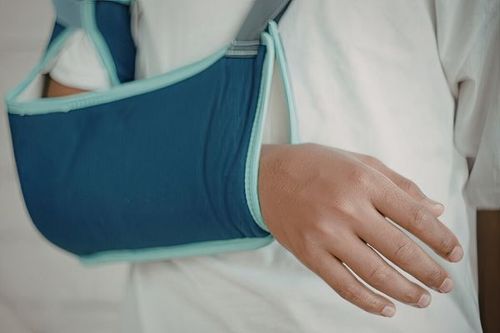
Within 24 hours of the fracture, bone‑marrow cells start to transform into polymorphic cells and tend to differentiate into osteoblasts. At the fracture site two processes (or phenomena) of bone healing appear: primary (direct) bone healing and secondary (indirect) bone healing.
3.1 Primary (direct) bone healing
Primary bone healing (also called direct healing) is the restoration of the cortical bone continuity. This type of healing requires very stable fixation of the fracture, which is why it is typically seen in patients who have undergone fixation of the fracture.
The signs of primary bone healing are: at the region of the two bone ends small blood vessels form; mesenchymal cells arise and differentiate into osteoblasts; at the fractured bone ends there is physiological bone resorption and gradually a direct bone bridge forms across the gap between the two ends.
This healing process is also called “gap filling”. Once primary healing is established, little callus formation occurs and the fracture site is replaced almost entirely by a new direct bone bridge.
3.2 Secondary (indirect) bone healing
Secondary bone healing (also called indirect healing) is a different process from primary healing and is closely related to the periosteum (bone‑covering membrane).
During secondary healing, the blood supply from the marrow is interrupted and the periosteum quickly becomes the main supplier of blood to the fracture site. Under rapid activation the periosteal cells form bone‑like structures similar to periosteal calcification and then form intramedullary bone structure. Simultaneously, with periosteal calcification around the fracture site a hard callus develops; as the hard callus gradually increases in size at the fracture site, new bone is formed in a process similar to normal bone development.
Typically, for all types of fractures both primary and secondary healing may occur. However, each case will have its predominant path: if internal fixation is used then primary healing dominates; while in conservative treatment or minimally invasive techniques, secondary healing predominates.
How quickly the bone heals depends on the severity of the injury and the patient’s age. Especially, for proper bone healing the patient must strictly follow the doctor’s instructions on mobilisation, daily activities and nutrition.
4. Important precautions after casting for a fracture
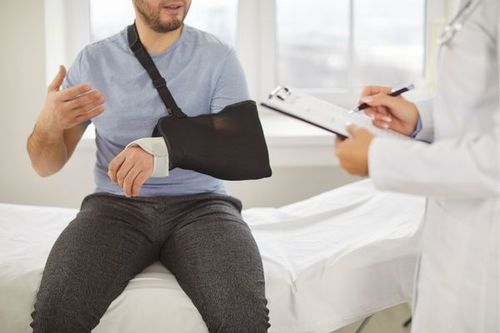
In addition to watching for signs that the bone is healing, the patient must also follow these important instructions to support the healing process:
- Within the first 72 hours after casting, the patient may feel tightness or pressure in the cast due to increasing swelling, which may cause the cast to tighten. If this occurs, inform the doctor so the cast can be loosened in time to avoid internal compression.
- Elevate the limb in the cast to avoid oedema.
- Regularly contract muscles within the cast appropriately to avoid nutritional disturbance, muscle atrophy and delayed bone healing.
- Try to move the parts of the body not immobilised to promote blood circulation and avoid joint stiffness.
- Keep the cast dry; if it becomes wet it may smell, deteriorate and become less effective.
- If you feel itching, do not insert objects into the cast to scratch, as this may lead to skin infection.
- Attend follow‑up appointments with the doctor as scheduled.
5. Methods to support faster bon
e unionIn some cases, even though the patient is in a cast, signs of non‑union may occur. Therefore, compliance with the doctor’s instructions and regular check‑ups are very important. In addition, the patient can adopt some natural supportive methods to help the bone heal faster such as:
- Increase nutritional intake;
- Perform strengthening exercises to stimulate biomechanical muscle activity which can facilitate fracture recovery by the mechanism of regeneration, and restore the structural strength of the bone once healed;
- Include calcium‑rich foods in the daily diet.
In summary, a bone fracture takes time to heal - possibly several weeks or several months. Initially, the patient may experience pain, but pain relief is not the same as complete bone union. Therefore, one should only remove the cast when the bone has healed sufficiently and under the supervision of an orthopaedic specialist. Do not attempt to remove the cast yourself even if you believe the bone is united, because doing so may injure the skin or result in incomplete union. After the cast is removed, rehabilitation exercises should follow to restore muscle strength and joint range of motion.
If you do not wish to use a cast for fracture treatment due to concerns about slow healing time, inconvenience, or risk of complications, you may choose surgical fixation under fluoroscopic guidance which is offered by Vinmec International General Hospital. This method has been applied in recent years and the advantages include:
- Minimal soft‑tissue injury, short operating time, precise exposure of the fracture site, reduced risk of infection, fewer days in hospital post‑surgery, less pain during and after the procedure, enabling early rehabilitation and allowing the patient to return to normal activities sooner;
- High aesthetic outcome: no cast required, fewer complications.
To arrange an appointment, please call HOTLINE or make your reservation directly HERE. You may also download the MyVinmec app to schedule appointments faster and manage your reservations more conveniently.