A fracture is a condition that has the ability to heal naturally, especially in children. The process of new bone formation begins only a few weeks after the injury, but the time for a complete fracture healing can take longer. Understanding the stages of healing and how long a fracture takes to heal helps adjust treatment methods appropriately at each stage.
This article is medically advised by MD, Specialist level II Duong Minh Tan - Orthopedic Trauma Surgeon - General Surgery Department at Vinmec International General Hospital Phu Quoc.
1. Overview of fracture
A fracture is a structural injury of the bone, which can be classified in various ways to help determine appropriate treatment. There are many ways to classify fractures, such as by soft tissue injury into closed fracture, open fracture, or by characteristics of the fracture site. Common classifications include:
- Incomplete fracture: The bone is partially damaged, with continuity still intact.
- Complete fracture: The bone is completely broken with loss of continuity.
- Epiphyseal fracture: The fracture occurs at the end of the bone. If the fracture line extends into the joint, it is called intra-articular fracture; if not, it is extra-articular.
- Metaphyseal fracture: The fracture occurs at the junction between the epiphysis and diaphysis.
- Diaphyseal fracture: The fracture of the bone shaft.
- Displaced fracture: The bone fragments move out of their original position.
- Non-displaced fracture: The bone fragments remain in place.
- Fracture line direction includes transverse, oblique, spiral, or impacted fractures (different orientations and shapes of the fracture line).
2. 4 stages of bone healing
After a fracture, a complex, continuous, and overlapping process takes place at the injury site. Generally, bone healing is divided into four main stages, each naturally interacting and following the previous one.
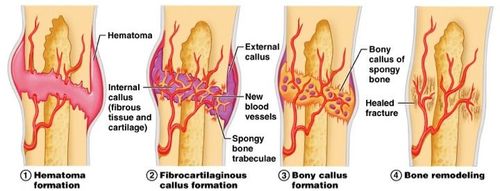
2.1 Hematoma formation (Day 1 - Day 5)
Immediately after the fracture, blood vessels in the bone and periosteum are damaged, causing bleeding around the fracture. This hematoma gradually clots, forming a temporary scaffold to support subsequent healing. Meanwhile, local white blood cells release chemicals stimulating the healing process and preparing for the next recovery stages.
2.2 Fibrocartilaginous callus formation (Day 5 - Day 11)
Chemical signals continue to stimulate the growth of a capillary network around the fracture, supplying blood and nutrients. Within the hematoma, granulation tissue rich in fibrin begins to develop, while mesenchymal stem cells differentiate into fibroblasts, chondroblasts, and osteoblasts. The primitive periosteum begins to form and expand, laying the foundation for complete recovery.
2.3 Bony callus formation (Day 11 - Day 28)
As cartilage forms at the fracture site, cells such as chondroblasts, osteoblasts, and osteoclasts become more active. This process allows the fibrocartilaginous callus to be resorbed and replaced by hard bone tissue through mineralization. New bone starts gaining strength and gradually matures.
2.4 Bone remodeling (Starting from Day 18, lasting months to years)
In this stage, under the action of osteoblasts and osteoclasts, the hard bone undergoes continuous remodeling and adjustment to reach optimal completion. The central bone tissue gradually becomes compact bone, while surrounding layers are replaced by cancellous bone, ensuring flexibility and long-term stability of the bone structure.
3. How does bone healing occur after fracture?
All fractures follow a natural healing process, whether caused by trauma or surgical bone resection. This process begins with the formation of fibroblasts, chondroblasts, and osteoblasts at the fracture site. These biological reactions do not happen simultaneously but overlap and support each other to restore bone structure.
Bone stability is maintained through prolonged remodeling lasting months or even years. During this phase, local biological factors stimulate angiogenesis, improve blood circulation, and provide nutrition to the injured area, promoting healing.
When the new periosteum is formed and visible on X-ray images, it indicates that bone healing is progressing relatively well. Patients are often encouraged to begin light activities such as standing, sitting, or walking to promote bone regeneration and increase bone strength.
Additionally, nutrition plays a crucial role in recovery. Supplementing calcium and vitamin D is essential to support bone strength and shorten healing time effectively. So, how long does a fracture take to heal?

4. How long does a fracture take to heal?
Besides understanding the stages and healing process, many people are concerned about how long a fracture takes to heal. Generally, it takes about 6 to 12 weeks for the bone to heal to a stable and acceptable level. However, children often heal faster than adults. The healing time also depends on factors such as fracture location, fracture type, treatment and orthopedic methods, as well as load-bearing function and movement of the bone.

During follow-up visits, orthopedic surgeons will assess the healing progress, determine when the fracture is sufficiently healed to bear weight or when the patient can return to normal activities, ensuring optimal recovery.
5. Factors promoting bone healing
When a fracture is treated surgically, doctors may apply some pre- and post-operative measures to optimize healing.
Patients are advised on diet and nutritional supplementation to support new bone development. In particular, quitting smoking and controlling blood sugar in diabetic patients are critical, as chemicals in cigarette smoke and high glucose levels can impede healing.
Immobilization and stabilization of the fractured limb are essential in treatment and affect healing time. Any movement may displace new bone fragments, delaying healing and affecting recovery outcomes.
Depending on the fracture type and surgical procedure, orthopedic surgeons may use fixation methods such as screws, plates, or wires to stabilize the fracture site. External immobilization like casting or rigid splints is also applied to prevent displacement, support daily activities, and protect healing bones.

Once sufficiently healed, physical therapy exercises are vital to restore bone function. A tailored rehabilitation program helps patients regain strength, balance, and safe range of motion, supporting complete bone recovery.
6. Factors that may delay bone healing
Many factors can slow bone healing, affecting how long a fracture takes to heal. If uncontrolled, these factors may cause delayed healing, significant malunion, and functional loss at the site. These include:
- Displacement of bone fragments due to inadequate immobilization or premature movement.
- Smoking, causing vasoconstriction and reduced blood flow to the fracture site.
- Diabetes mellitus.
- Use of certain medications such as corticosteroids and immunosuppressants.
- Complex fractures or severe bone trauma.
- Infection at the fracture site.
- Advanced age.
- Poor nutrition or malabsorption issues.
- Low calcium and vitamin D levels.

These factors require monitoring and appropriate management to support smooth healing.
7. Management of delayed bone healing
If the fracture site does not heal as expected or shows no signs of recovery, orthopedic surgeons may apply additional treatments to stimulate healing. These may include prolonged immobilization, bone growth stimulation, bone graft surgery, or the use of bone morphogenetic proteins.

To arrange an appointment, please call HOTLINE or make your reservation directly HERE. You may also download the MyVinmec app to schedule appointments faster and manage your reservations more conveniently.