In human anatomy, the lumbar vertebrae consist of 5 vertebrae, designated as L1 to L5. The lumbar vertebrae lie between the rib cage and the pelvis. The distinguishing characteristics of the lumbar vertebrae are that they do not have transverse foramina like the cervical vertebrae, and they do not have costal facets on the transverse processes and the body like the thoracic vertebrae. They function to support body weight and help the human body move more flexibly.
The article is professionally consulted by Assoc Prof, MD. Luu Hong Hai - Head of the General Surgery Department, Vinmec Hai Phong International General Hospital.
1. Location of the lumbar vertebrae
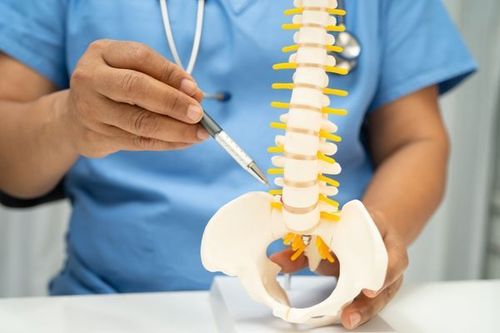
The lumbar vertebrae are located between the rib cage and the pelvis. The lumbar spine is a series of lumbar vertebrae arranged and connected together, bounded anteriorly by the vertebral bodies and intervertebral discs, posteriorly by the annular ligament and the vertebral arches, and laterally by the pedicles, the arches, and the intervertebral foramina.
1.1 General characteristics of a vertebra
Vertebral body.
Vertebral arch: pedicle, lamina.
Processes: transverse process, spinous process, articular process.
Vertebral foramen: the vertebral body and vertebral arch bound the vertebral foramen, allowing the spinal cord and spinal nerves to pass through.
1.2 Specific characteristics of the lumbar vertebrae
The lumbar vertebrae, in human anatomy, have five vertebrae between the rib cage and the pelvis, designated from L1 to L5. The distinguishing characteristics of the lumbar vertebrae are that they do not have transverse foramina like the cervical vertebrae, and they do not have costal facets on the transverse processes and the body like the thoracic vertebrae.
- The vertebral body is large, broad in width.
- The vertebral foramen is triangular, wider than that of the thoracic segment, but smaller than that of the cervical segment.
- Short pedicles with large diameter; the inferior vertebral notch is deeper than the superior vertebral notch.
- The transverse processes are thin, narrow, and long, increasing in length from the first lumbar vertebra to the third lumbar vertebra, then becoming shorter. The accessory process is located where the transverse process joins the vertebral arch.
- Accessory process: may be present on a few lumbar vertebrae.
- The spinous process projects horizontally posteriorly, broad, thick, and rough, rectangular in shape.
- The superior articular processes are flattened transversely; the outer surface has a mammillary process; the inner surface is concave.
- The inferior articular processes are cylindrical convex to adapt to the articular surface of the superior articular processes.
Specifically, the first lumbar vertebra has the shortest transverse process; the costal process is less developed than in the other vertebrae. As for the fifth lumbar vertebra, the height of the vertebral body is thicker anteriorly; the two inferior articular processes are farther apart than in the other lumbar vertebrae. The spinous process of the fifth lumbar vertebra is the smallest among the lumbar vertebrae.
2. Functions of the lumbar vertebrae
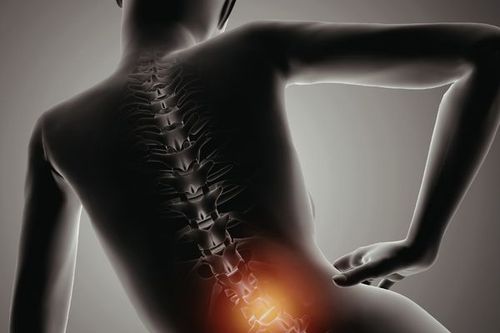
The lumbar spine functions to bear the weight of the entire body and to move a lot. It connects other bones together, helping human movement become flexible and diverse. Moreover, the spine helps protect the spinal cord; the spinal cord is a part of the central nervous system that governs the activities of the human body. The lumbar spine connects with the ribs to form a solid framework for muscles to attach to, in order to protect the internal organs inside the body.
3. Common diseases of the lumbar vertebrae
Lumbar spondylosis (Spondylosis)
A chronic disease in which the discs and joints degenerate, and bone grows on the vertebrae of the spine. These changes cause the patient pain and limited movement due to the nerves and other functions being affected.
According to the American Academy of Orthopaedic Surgeons, more than 85% of people over 60 years old have lumbar spondylosis.
Lumbar spondylosis occurs in different parts of the spine:
- Thoracic spine osteophytes affect the middle part of the spine.
- Lumbar spondylosis affects the lower back.
- Multilevel spondylosis affects many parts of the spine.
- The impact of degenerative spinal disease varies among individuals, but it usually does not cause serious problems.
The cause of spondylosis is that the articular cartilage and intervertebral discs are subjected to large pressure frequently and over a long period, leading to damage to the cartilage and subchondral bone, decreased or lost elasticity of the discs, and ligament sclerosis.
Most people with age-related spondylosis do not experience any symptoms. Some people have symptoms of lumbar spondylosis for a long time, but then they disappear. Sometimes, just a sudden movement can cause symptoms to appear.
Common symptoms such as joint stiffness and mild pain become more severe after not moving or limiting movement for a long time, such as sitting too much.
More severe symptoms include:
- Weakness in the arms or legs.
- Poor coordination between the hands and feet.
- Muscle spasms and pain.
- Headache.
- Loss of balance and difficulty walking.
- Loss of bladder or bowel control.
We cannot prevent the body from aging; however, many other measures can be taken to improve spinal health as follows:
- Follow the doctor’s treatment plan and continue the home physical therapy plan.
- Sit and stand properly.
- Learn how to lift objects.
- Exercise regularly.
- Achieve and maintain a reasonable body weight.
- Eat healthily.
- Quit smoking.
- Avoid excessive alcohol use.
- Take time to rest when the pain is severe.
In summary, maintaining a healthy lifestyle is the best way to protect the lumbar vertebrae, maintain spinal health, and reduce the risk of disease. If you notice any abnormal signs or persistent low back pain, seek medical care promptly for appropriate evaluation and treatment.
Vinmec International General Hospital is a general hospital with the function of examination and treatment of musculoskeletal diseases such as arthritis, degeneration, herniation, bone and joint pain,.... At Vinmec, diagnosis and treatment have also been performed with modern medical methods for musculoskeletal diseases, not only bringing high effectiveness but also minimizing the recurrence of complications.
Achieving great success is because Vinmec is always fully equipped with modern facilities; the examination and treatment processes are carried out by a team of doctors with high expertise and experience, bringing optimal treatment results to customers.
To arrange an appointment, please call HOTLINE or make your reservation directly HERE. You may also download the MyVinmec app to schedule appointments faster and manage your reservations more conveniently.